| 28 October 2014 |

| |
| BBC Homepage | | |
| |||
| Contact Us | | |
AbolitionYou are in: Dorset > Abolition > Bournemouth's freed slave 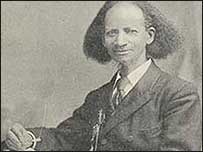 Johnson (Asbury Theological Seminary) Bournemouth's freed slaveBy Claire Price and Louisa Adjoa Parker Thomas Lewis Johnson spent 28 years as a slave in Virginia before becoming a British citizen and eventually settling in Bournemouth. Imagine being free after 28 years of slavery. Thomas Lewis Johnson didn’t have to imagine it. He lived it. Incredibly, he wrote about it too, giving us a remarkable insight into the life of a slave, missionary and human rights campaigner. Born in chainsThomas was born on 7 August 1836 in Rock-Rayman, Virginia to a slave mother and free father who was one-eighth black. His mother’s slave master refused to sell the pair to Thomas’ father. When Thomas was just 3 years old, he was forced to leave his mother and move to Alexandria, Virginia. It wasn’t until he was 9 years old that he saw his mother again. He hadn’t seen her for 6 years. Thomas describes how powerless she was: “My poor mother, to whom I looked for protection, could do nothing. I can remember how, after my being ill-treated, mother would say, with tears in her eyes, "My son, be a good boy." 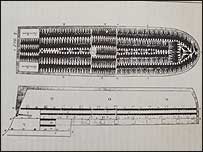 Slave Ship (Oliver Warner) Growing into a missionaryAs he grew up, Thomas became increasingly interested in Christianity: “I used to think how nice it must be in heaven, "no slaves, all free," and God would think as much of the black people as he did of the white.” After Emancipation, he moved to New York, then Chicago and eventually Denver where he was ordained. There he ministered to a small African-American congregation. Throughout his adult life, Thomas’ goal was to be a missionary in Africa. He and his wife moved to England to prepare for that calling. His move might have had something to do with Queen Victoria... “I heard that the Queen of England had given large sums of money to set the coloured people free... It may be of interest if I mention that we had the idea on the plantation that the Queen was black, because she was so kind.” After working briefly in Africa, though, Thomas’ wife died: “For months she had most faithfully and patiently watched over and nursed me until I recovered from an attack, and then she fell a victim to the fever.”
Returning to EnglandThomas returned to England, where despite his own ill health, he remarried and travelled throughout the United States and Europe. He continued his mission by giving lectures and sermons. He settled in Bournemouth in 1890s with his second wife Sarah. During this time, his autobiography went into its eighth edition. The newspaper publishers W. Mate of Bournemouth printed the 1908 version of ‘Twenty Eight Years A Slave’. The book was sold at meetings and by mail from Thomas’ house in Boscombe. It gives an account of his years of slavery in America, how he travelled to England, and his missionary work in Africa. From 1910 onwards he was wheelchair bound. He became a familiar figure around the streets of Bournemouth. For many local people he was the first black person they had seen up close. Thomas became famous for his comment “Shake hands - the black won't come off!” Although he died in 1921, the slave chains and whips that decorated his home and his Christian faith were remembered well into the 1980s. last updated: 03/10/07
|
| | About the BBC | Help | Terms of Use | Privacy & Cookies Policy |