| 13 November 2014 |

| |
| BBC Homepage | | |
| |||
| Contact Us | | |
Mining LivesYou are in: Bradford and West Yorkshire > Features > Mining Lives > "It totally changed my life" 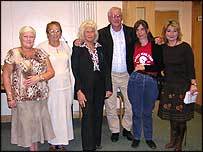 The book launch in Wakefield "It totally changed my life"by Chris Verguson In the mid-1980s, as a reporter, Triona Holden covered the Miners Strike. Her book Queen Coal looks at the experiences of some of the women involved. We caught up with her at the book's launch at the National Mining Museum in Wakefield... Triona focuses on a group of women who, during the 1984-1985 Miners Strike, joined their husbands and fathers on the picket lines. At the time Triona was a BBC radio reporter and her sister was married to a miner. Since then she has covered many important events across the world but this is the story she feels has touched her most personally. She is in no doubt that the strike made a profound difference to West Yorkshire's mining communities: "After the strike you saw a lot of pits closing and the people had to change once the jobs had gone. You are looking at something which was a way of life which went back generations. Many of the people here, their fathers and their grandfathers, went down the pit and the women would actually leave school young, very quickly start a job, marry a miner, have children young. That sort of hierarchy changed once the mines had gone, that community ceased to exist. " 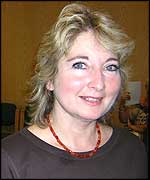 Triona Holden Triona believes the strike gave rise to a new type of community: "Out of something that died there was a rebirth and in it these women had found themselves. They actually discovered that the group [formed during the strike] Women Against Pit Closures gave them a voice. One lady, for instance, could hardly read or write and she went and addressed the House of Commons. After that she became a school governor, it got her out of the kitchen and took her out into the world. It made these women realise they were not just there to get married, have children and run the house – they had brains, they had voices. It opened up their horizons so, coming back 20 years on, it's fascinating to see the things they have done." One of the women who would admit to having found her voice during the strike was Betty Cook. Betty, who at the time of the strike lived near Woolley Colliery, was at the book's launch. She says: "It totally changed my life. I wouldn't have missed it for the world. There was a lot of laughter as well as a lot of tears but it gave me a confidence that I never realised I would ever have." Go here to find out what else Betty had to say about the Miners Strike: Triona feels it is time to acknowledge the important role women played in the strike: "There was the Full Monty, Brassed Off, Billy Elliott, all these plays and books, but it was all about the men and I kept on thinking, 'What about the women, what about their role?' because their role was massive. It really was. Even the TUC Conference at the end of the strike said that without the women the strike couldn't have continued as it did. The women gave 110% but nobody was writing about them. It seemed to me there was this big gap and I could relate to the women because parts of me overlapped with parts of them and, though I come from a different background, I'd lived alongside them and worked alongside them and part of my family had married into a pit family, so I had that perspective and I find it fascinating to see how they've changed all these years on." But it is not just the lives of the women who have changed. Triona talks about Cortonwood in the Dearne Valley - it was the proposed closure of the pit there which kicked off the strike: "The world's different, the mining community has long gone and I don't think we'll ever see the like again. The pithead now is a Morrisons, and there's a B&Q and a Matalan, and it's all squeaky-clean. Unless you knew there was a pit there, you wouldn't have clue. I'm 46-years-old – the majority of people shopping there wouldn't know. That way of life is buried and people have moved on because you do, don't you? You don't just leave a gap. You get a job as a meat packer or stacking the shelves at Morrisons, whatever you have to do to survive." 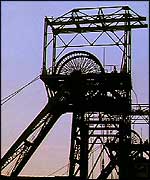 'Unless you knew there was a pit there' For many coal is not even a memory: "One of the women told me her granddaughter came in with this black thing and said, 'What's this, Gran?' and it was coal. She didn't recognise it for what it was. It is a tiny little vignette of how things have changed. It's funny - the book is history and it's something people will be studying at university, people who have never even seen a pit. A lot of people who come here to the National Mining Museum have never seen pit-winding gear before. A lot of the young ones here probably wouldn't know what a pit was. Some of the women from the mining groups have already died so that's a bit of history that's disappeared. At least I've put a marker in now highlighting their role." Triona believes that things are a bit different for women today than they were twenty years ago: "I think the next generation of young men and women have a different point of view than us. When I started out 25 years ago I was one of the few BBC women reporters – I remember being the first national BBC radio reporter to have a baby and that was a shock but now you do see more women holding down those kind of jobs. I'm a bit disappointed that there aren't more women in positions of power. "I think we've still got a long way to go and I think it's important that women of our generation remind women of the next generation, 'Look, you can still do it. Don't lose the ground that's been gained. Keep going. You can be that manager, you can be the foreman of your factory. There's nothing to stop you doing any of those jobs,' and to some extent that's what the book is about. It's a legacy, it's a piece of history which I hope will encourage women in the future to understand what can happen and not to allow themselves to be boxed in again to a role that's pre-ordained before they are even born." last updated: 09/01/2009 at 12:45 SEE ALSOYou are in: Bradford and West Yorkshire > Features > Mining Lives > "It totally changed my life" |
| | About the BBC | Help | Terms of Use | Privacy & Cookies Policy |