Religion and life
In this article, learn about how Buddhists view the origins of the universe as well as some of life's big questions for example what happens after we die, and how should animals be treated?
Key points about Buddhism - Religion and Life
- The Buddha taught that the universe is constantly evolving and changing, and has no beginning or end.
- Instead of wondering about the origins of the universe, the Buddha taught people to focus on freeing themselves from suffering, Suffering.
- The scientific theory that describes the early development of the Universe. can be compatible with Buddhist teaching.
Click here for a helpful tip!
Remember: Buddhists believe the key focus is not where the universe came from, but how to find peace and end suffering.
Quotation flashcards: Buddhist beliefs on life
Use this flashcard activity to learn key quotes from scripture.
Buddhist teachings on the origins of the universe

The Buddha taught that everything happens because of the unfolding process of causes and conditions, a teaching called All things are inter-related, nothing is independent. Also known as paticcasamupada, the principle of conditionality or dependent arising. or "paticcasamuppāda."
The Buddha taught that the universe is:
“Without discoverable beginning.”
Samyutta Nikāya 15 (Anamatagga Sutta)
By this he meant that the world has no beginning or end but evolves endlessly, depending on conditions.
When asked to explain the origin of the world, the Buddha replied that point of his teaching was to help people free themselves from suffering, not to speculate about the origins of the universe:
“Because it is not connected with the goal, it is not beneficial… I have not declared it.”
Cūḷa-Māluṅkyovāda Sutta, MN 63
In "The Parable of the Arrow" the Buddha compared speculation about the origins of the universe to a man with a poisoned arrow in his eye, who wastes time asking where it's come from and who shot it, instead of focusing on removing it.
The scientific theory that describes the early development of the Universe. is compatible with Buddhist teaching because both ideas do not attribute the creation of the universe to a creator god.
Exam-style question
Explain two Buddhist views on the origin of the universe. Refer to scripture or sacred texts in your answer.
Sample answer
One view is that the universe has no beginning or end, but goes in and out of existence dependent on changing conditions. This mirrors the teaching of samsara, the cycle of human birth, death, and rebirth.
Another view is that asking where the universe came from is a distraction. The point of his teaching was to end suffering (dukkha), not to answer big questions that don’t lead to freedom from suffering. This is shown by Buddha in the parable of the Arrow, where a man refuses help because he wants all his questions answered first. This shows the origins of the universe is not important to know about.
Buddhist teachings on the value of the world

The One of the Five Moral Precepts in Buddhism: Refrain from taking life. teaches Buddhists not to harm or kill living things. It encourages respect for life and care for the world.
Many Buddhists see the world as a place to practise the Duty in life. and the path to When a Buddhist finds a state of perfect wisdom and compassion, said to bring an end to suffering and the cycle of rebirth..
Some Buddhists see the world as valuable not because it was created by a god, but because it offers a context for progressing towards the wisdom and compassion of Enlightenment by practising the Dharma.
The Buddha taught that all things depend on a network of changing conditions. This is the teaching of All things are inter-related, nothing is independent. Also known as paticcasamupada, the principle of conditionality or dependent arising.:
“When this exists, that comes to be”
Samyutta Nikāya 12.15
Being born human is considered a fortunate opportunity to learn the Dharma and progress toward enlightenment. Buddhists believe that humans do not have the right to rule over nature.
Teachings such as the First Precept and the practice of Loving kindness encourage caring for the Earth and take only what is needed from it.
If people harm the world, they create bad The intentions behind actions and what the consequences of actions are. The idea that all actions (no matter how big or small) have consequences that can cause happiness or suffering.. This makes it harder to reach enlightenment for themselves and others.
Exam-style question
Explain what Buddhism teaches about care for the world.
Sample answer
Many Buddhists see caring for the earth as part of their training, leading towards enlightenment. They think harming the planet will cause suffering to themselves and others, leading to unpleasant karmic consequences and making it harder to make spiritual progress.
However, many Buddhists also remember that whatever they do, everything is impermanent. The earth is always changing anyway, depending on conditions. So they also have to learn to accept change, developing compassion and peace of mind.
Buddhist teachings on the environment
Buddhism teaches that all things depend upon a network of conditions. This is the teaching of All things are inter-related, nothing is independent. Also known as paticcasamupada, the principle of conditionality or dependent arising.. If the environment is harmed, living things which depend upon it will be harmed.
One of the Five Moral Precepts in Buddhism: Refrain from taking life. asks Buddhists not to harm living things such as humans and animals and by extension the plants and earth they depend upon.
The Buddha's Second Noble Truth teaches that greed is the main cause of suffering. Many Buddhists try to live simply and take only what they need to avoid harming the environment which will lead to unpleasant karmic consequences.
According to the teaching of , many Buddhists would avoid work that harms the Earth or living beings.
Important Buddhist concepts relating to the enviroment include:
- The First precept - refrain from taking life
- Karuna - show compassion and respect to all beings
- Karma - one negative action will cause another
Buddhist teachings on the treatment of animals
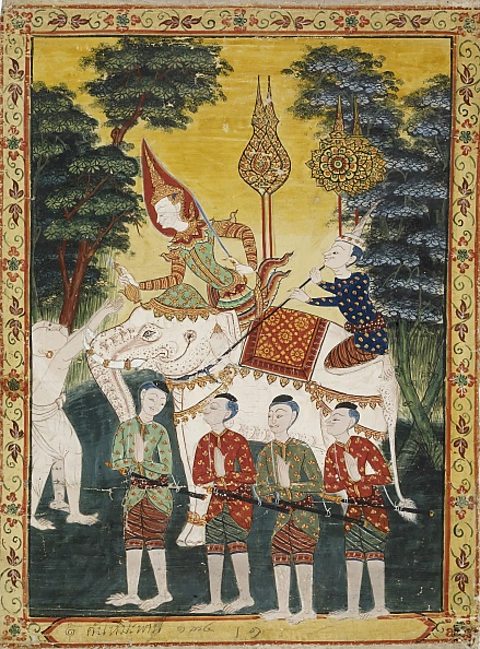
Buddhism teaches that all living beings including animals should be treated with kindness and respect. The idea that humans have dominion over animals or the Earth is not found in Buddhism.
Buddhist ethical teachings are based on the principle of A Sanskrit term meaning ‘non-harm’, used in Buddhism, Hinduism and Sikhism.. This means non-harming and includes not causing harm to living things. Causing harm will have unpleasant karmic consequences and slow down progress towards the wisdom and compassion of When a Buddhist finds a state of perfect wisdom and compassion, said to bring an end to suffering and the cycle of rebirth..
One of the Five Moral Precepts in Buddhism: Refrain from taking life. is to avoid killing or harming living creatures as far as possible. This is why some Buddhists choose to be vegetarian or vegan.
However, this varies across Buddhist traditions - and among Buddhists. The Buddha and his monks were not vegetarian because they had to accept whatever food they were given by householders, without any choice.
The Jataka Tales, which tell stories of the Buddha’s past lives, often show him as an animal, caring for other animals. These stories inspire many Buddhists to show compassion in daily life.
Exam-style question
Give two reasons why Buddhists believe it is important to care for animals.
Sample answer
One reason is the First Precept, which teaches that avoiding harming living beings and learning to care for animals will help Buddhists develop the wisdom and compassion of Enlightenment.
Another reason is the teaching of dependent origination, which says we are dependent on other living beings. Harming animals can therefore cause wider harm to plants and animals which depend on them.
Buddhist teachings on the origins and purpose of human life
The Buddha explained that everything comes into existence, changes or ends, dependent on a complex web of conditions. This is the teaching of All things are inter-related, nothing is independent. Also known as paticcasamupada, the principle of conditionality or dependent arising..
This means that there is no concept of a creator, or a god, who created the world.
Human life is seen as a cycle of birth, death and rebirth called The cycle of birth, death and rebirth., which ends only with the attainment of When a Buddhist finds a state of perfect wisdom and compassion, said to bring an end to suffering and the cycle of rebirth..
According to Buddhism, all beings are connected by a web of conditions in which they are interdependent. However, humans are specially significant because only humans can learn to live according to the Buddha's teachings, and therefore have the possibility of bringing an end to suffering by living with compassion and wisdom. This means they have the greatest responsibility to avoid causing harm.
Most Buddhists accept scientific views such as the theory of evolution and natural selection, because they fit with the teaching that everything is a constant process of change.
Exam-style question
Give two reasons why Buddhists believe animals are important.
Sample answer
One reason is the First Precept, which teaches Buddhists not to harm any living being. This means animals should be treated with kindness.
Another reason is the teaching of dependent origination, which says all things are inter-dependent. Harming animals can therefore cause wider harm to humans and nature.
Buddhist teachings on abortion
Video
Watch the video below to compare Buddhist, Jewish, and Christian attitudes towards abortion.
Buddhist presenter: How
Christian presenter: do different religions
Jewish presenter: view abortion?
Buddhist presenter: Hello, I'm Buddhist.
Christian presenter: I'm Christian,
Jewish presenter: and I'm Jewish.
Buddhist presenter: And we all believe that life, especially human life, is precious.
Christian presenter: Christians call this the sanctity of life,
Jewish presenter: which means it's holy and should always be protected. In Judaism, we call this pikuach nefesh, which means saving a soul.
Buddhist presenter: Abortion is legal in the UK.
Christian presenter: In specific circumstances which are set out in law.
Jewish presenter: But what do our religions say about it?
Buddhist presenter: Buddhism teaches that we live many lives in many bodies, but this life begins at conception, which is when a sperm fertilises an egg. The first of the Buddha's ‘five precepts’ says we should avoid taking life. So we try to live by the principle of ahimsa, which means ‘non-violence’ or ‘non-harming.’ And many Buddhists say this means abortion can't be allowed. However, some Buddhists believe that if a pregnancy is putting the life of a mother in danger, then an abortion is acceptable. This shows a Buddhist teaching called karuna, meaning compassion, which encourages us to reduce people’s suffering, if we can.
Christian presenter: In the Bible, the writer of Psalms 139 talks about God “seeing my unformed body in the womb.” So many Christians also believe that life begins at conception or soon after and should be protected. The Roman Catholic Church teaches that abortion is never allowed, no matter what the circumstances. Pope Paul VI wrote, all direct abortion are to be absolutely excluded, but in some cases, the Roman Catholic Church does support the principle of double effect. This is when, in order to do something good, something bad will also happen. For example, in the case of an ectopic pregnancy, when a fertilised egg grows outside the womb and puts the mother's life at risk, the church allows treatment to save the mother's life, even though it will result in the loss of the pregnancy. Protestant churches, like the Church of England, are also against abortion, but accept that there are reasons why it might be the best thing to do in some situations. It might be left to individual churches to give advice based on their own moral judgements.
Jewish presenter: An ancient collection of Jewish writings called the Talmud describes a foetus as ‘water’ for the first 40 days, and we take that to mean that it isn't a potential life until then. It isn't a life in its own right until birth. But we believe that a foetus is precious at all times because it's God's creation. So abortion should always be a last resort. Another book called the Mishnah says, “if a woman is having trouble giving birth, her life comes before the life of the child.” So if a mother's life is in danger, an abortion might be necessary to save her. But there are many other things to think about when deciding if abortion is an acceptable choice.
Buddhist presenter: Medical screening tests during pregnancy might show problems in the development of the foetus.
Christian presenter: The child might be born into extreme poverty or dangerous circumstances.
Jewish presenter: So religious believers might need to think about things that would affect quality of life.
Buddhist presenter: The Dalai Lama, the leader of Tibetan Buddhism, said “I think abortion should be approved or disapproved, according to each circumstance.” This shows another Buddhist teaching called Metta, which means loving kindness, and we believe that an aborted embryos, Vijñāna, their consciousness, will pass on to another life.
Christian presenter: Many Protestant Christians, including the Baptist, Methodist and United Reformed Church would agree that abortion is always a difficult choice to make, but it might be the best course of action in certain circumstances. There aren't always simple answers.
Jewish presenter: Some Jews would also say that an abortion should be allowed if the mother's physical or mental health might seriously suffer, or if the baby is likely to be born with a serious health problem. But each situation needs to be judged very carefully.
So all of our religions believe in the sanctity of human life.
Christian presenter: The Roman Catholic Church opposes abortion, but many Protestant Christians, including the Church of England, would say there are situations when it might be understandable.
Jewish presenter: Which is also the teaching in Judaism. Every case is different.
Buddhist presenter: And all of our religions teach us that every decision must be made with compassion.
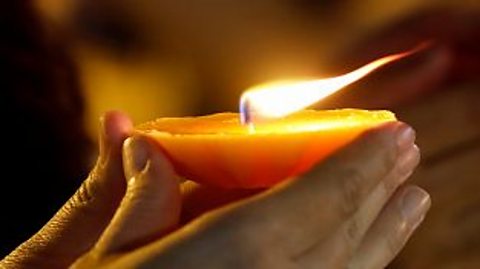
An abortion is a way of ending a pregnancy, and in the UK it is only legal under specific circumstances which are set out in law.
In the the Buddha taught that human life begins when consciousness enters the foetus in the womb. Buddhist traditions vary as to when this may occur.
Because abortion ends a life which could have led to When a Buddhist finds a state of perfect wisdom and compassion, said to bring an end to suffering and the cycle of rebirth., some Buddhists may see it as unethical and something which prevents spiritual progress.
However, the Buddha stressed the importance of intention behind actions. Therefore if an abortion is carried out to prevent greater suffering for example, to protect the mother from dying, some Buddhists may see it as a difficult but compassionate choice.
There are different views on abortion within Buddhist traditions, but most agree on the need for compassion on the issue.
Buddhist teachings on euthanasia
Euthanasia is the act of deliberately ending a person's life to relieve suffering. Euthanasia or assisted dying is currently illegal in the UK (March 2026).
Some Buddhists consider that euthanasia goes against the One of the Five Moral Precepts in Buddhism: Refrain from taking life. to avoid harming living beings. However, the Buddha stressed the importance of the intention behind actions.
Some Buddhists find it important to consider this matter on a case by case basis. They may believe that if euthanasia saves a person from a painful and undignified death, and enables them to have a peaceful and mindful death, this will lead to a calmer and happier rebirth. For this reason, some Buddhists would consider it a compassionate choice.
As the Part of the Pali Canon that includes some of the most famous teachings of the Buddha, including the Eightfold Path; it is a source of wisdom and authority. says:
“Mindfulness is the path to the deathless.”
Dhammapada 21
The Buddha taught that death should be faced calmly and mindfully, rather than avoided or denied. For many Buddhists this means focusing on accepting death and suffering, rather than choosing to end life by euthanasia.
While Buddhist views may be mixed, the Buddha taught the importance of compassion and mindfulness in relation to suffering and death.
Care for the elderly
Questions about euthanasia are often connected with how society cares for the elderly and those who suffer at the end of life. The First Precept relates to caring for all life, including the elderly and ill. Some Buddhists focus on supporting care that eases pain without causing death.
Exam-style question
Explain two Buddhist views on euthanasia.
Sample answer
Many Buddhists would see euthanasia as a breach of the First Precept. However, where a person is in unbearable pain some may see euthanasia as an act of compassion, enabling a person to die peacefully and mindfully. Others might say it would be better to enable a person to die peacefully and mindfully through end of life care.
Buddhist teachings on death and the afterlife
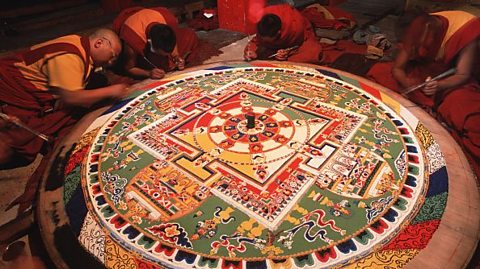
Buddhism teaches that human existence is a cycle of birth, death and rebirth known as The cycle of birth, death and rebirth..
This cycle is driven by a person's actions. This is the teaching of The intentions behind actions and what the consequences of actions are. The idea that all actions (no matter how big or small) have consequences that can cause happiness or suffering., ethical behaviour will have pleasant consequences and unethical behaviour will have unpleasant consequences, in this and future lives.
According to the Buddha's teaching of The teaching of no fixed self, one of the three marks of existence. nothing has any fixed self. including humans. However, although we have no permanent soul, there is a continuous and ever changing flow of consciousness from life to life. After death, the next life depends on karmic effects of the person's behaviour in their previous life the state of mind in which they died.
The Tibetan Wheel of Life offers a sort of map for thinking about this. It depicts six 'realms' of life into which a person may be reborn, including gods, humans and animals.
Of these, life as a human gives the best chance to follow the Buddha’s teaching, leading to When a Buddhist finds a state of perfect wisdom and compassion, said to bring an end to suffering and the cycle of rebirth., the end of all suffering.
Quiz: Buddhism - Religion and life
More on Buddhism
Find out more by working through a topic
- count2 of 3