What is an empire?
An empire is a group of countries or Piece of land ruled by a country or government. or peoples ruled by a single state or ruling power. Territories that become part of an empire are often seized by The act of taking control over a country or territory. or wars.
The British Empire
The foundations of the British Empire were laid in the 16th and 17th centuries - a period often referred to as the ‘Age of Discovery’. During Elizabeth I’s reign, Humphrey Gilbert travelled to Newfoundland and claimed it for England in 1583. Gilbert was an adventurer, explorer and Member of Parliament who lived from about 1539 to 1583. His half-brother, Walter Raleigh sponsored an expedition that attempted to establish a colony on Roanoke Island, in what is now part of North Carolina.
The empire expanded further during the reign of James I, as territories in North America and the Caribbean came under British control. Britain wanted to benefit economically from overseas trade and resources and to increase its influence around the world. The East India Company founded in 1600, was an example of this trading with territories in South East Asia. By 1913, around 412 million people lived within the British Empire, representing approximately 23 per cent of the world’s population.
The slave trade
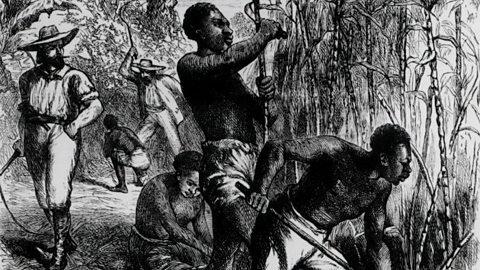
Large ships were used to transport enslaved people from Africa to the Americas in terrible conditions. Historians estimate that more than two million Africans died during the journey. Enslaved people were forced to work on plantations growing tobacco, rice and sugar, and were treated brutally.
The trade in enslaved people, and the sale of goods produced by enslaved labour, generated significant wealth for merchants and businesses. Some of this wealth was invested in Britain’s towns, cities and industries, contributing to economic growth in places like London.
Richard Pennant
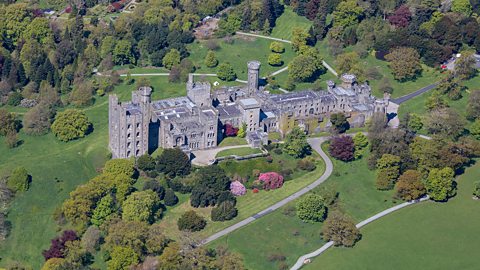
Richard Pennant, later known as Lord Penrhyn, was a politician and landowner who owned a number of slate quarries in north Wales. His family also owned six sugar plantations in Jamaica that relied on enslaved labour. He used the profits he made from these plantations to develop his slate quarries, as well as building Penrhyn Castle as a symbol of his wealth. As a Member of Parliament for Liverpool, Richard Pennant opposed the abolition of the slave trade, arguing that it would damage the economic interests of Liverpool and its port.
Sir Thomas Picton
Sir Thomas Picton was an army officer during the Napoleon was a French emperor (leader) between 1804 and 1815 and led France in an era of wars with other European countries.. He was killed at the Battle of Waterloo and buried at St Paul’s Cathedral, London.
During his time as the Governor of Trinidad he was criticised for his cruel treatment of enslaved people. In 2020, Cardiff Council voted to take down a statue of Picton at Cardiff City Hall and the Museum of Wales moved his portrait from public view.
The Bacon family
The Cyfarthfa Ironworks in Merthyr were founded by Anthony Bacon in 1765. He owned or part-owned ships that were used to transport enslaved people from Africa to the Caribbean. Wealth generated from this helped finance the development of the ironworks.
Welsh people opposed to the trade
William Williams, Pantycelyn
William Williams is considered one of Wales’ foremost hymn writers, having written some of the most influential Welsh language hymns of the 18th century. He was also an early critic of the slave trade. During the 1770s, he translated and published accounts by formerly enslaved people into Welsh, helping to draw attention to the suffering caused by slavery and the slave trade.
Iolo Morganwg
Another Welshman who spoke out against slavery was the founder of the Society of poets, authors and musicians established by Iolo Morganwg in 1792., Iolo Morganwg. He had a shop in Cowbridge and it is thought he avoided selling products linked to slavery, refusing to stock sugar produced by enslaved people. Despite this, Iolo’s brothers went to Jamaica and owned enslaved people. During a period of financial difficulties, Iolo initially refused money from his brothers because of its connection to slavery. However, he later accepted an inheritance from them after the slave trade had been abolished.
How did the slave trade end?
From the 1770s, a movement developed in Britain to bring the slave trade to an end. This became known as the abolitionist movement. The efforts of campaigners, politicians, ordinary workers, women and formerly enslaved people all contributed to the campaign against the slave trade.
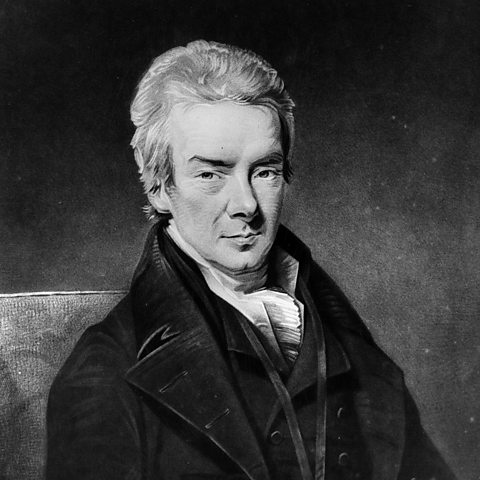
Leading abolitionists included Thomas Clarkson and Granville Sharp. In 1787, they helped establish the Society for Effecting the Abolition of the Slave Trade, who campaigned for the abolition of the slave trade. William Wilberforce was a Member of Parliament who began to introduce motions against the slave trade in Parliament from 1789 onwards.
The Quakers strongly opposed the slave trade in Britain and America.
Working-class people in Britain played a key role. In 1792, more than 500 Document asking for change, signed by many people., with around 390,000 signatures, were presented to Parliament in support of the abolition of the slave trade.
Formerly enslaved people such as Olaudah Equiano, Ottobah Cugoano and Phillis Wheatley campaigned for the abolition of the slave trade by publishing their experiences, speaking publicly and supporting abolitionist campaigns.
Enslaved people also found ways to resist slavery. Major revolts in places like Barbados, Jamaica and Demerara highlighted the brutality of slavery and influenced public opinion in Britain.
Many people, most of them women, became involved in the boycotting of sugar and other goods produced by enslaved labour.
Abolition of the Slave Trade Act 1807
In 1807, the British Parliament passed the Abolition of the Slave Trade Act. This made it illegal to buy and sell enslaved people within the British Empire. But it did not end slavery itself, and many people remained enslaved. Some enslavers and traders also continued to trade enslaved people illegally.
Slavery Abolition Act 1833
The abolition of enslavement in the British Empire was not largely achieved until the Slavery Abolition Act 1833. Under the Act, the British government paid £20 million in compensation to enslavers across the Empire, equivalent to billions of pounds today. In contrast, the formerly enslaved people received no compensation.
Quiz - Empire
More on Identity
Find out more by working through a topic
- count1 of 2

