Overview
Sequamur is a play written in English by Donald S Murray in 2015, and subsequently translated into Gaelic by Catriona Dunn.
It has been performed at the Edinburgh Festival and has toured the UK and Ireland. It has also been performed in Ypres, Belgium.
The text of the play was published in the drama anthology Dràma na Gàidhlig: Ceud Bliadhna air an Àrd-ùrlar: A Century of Gaelic Drama, edited by Michelle MacLeod, in 2021.
The play is structured in one In drama, an act is a section of the performance, usually made up of a number of scenes., and twelve In a drama, a piece of action that occurs in one place without interruption..
The play is rooted in real history:
- It is set in a real school, the Nicolson Institute in Stornoway in the aftermath of World War One.
- The title, Sequamur is the motto of the school. It is Latin for 'let us follow'.
- The central character William J Gibson (c. 1865 - 1944) was headmaster of the school from 1894 to 1925.
Looking for some quick revision? Try an interactive quiz for Higher English.
What is the plot of Sequamur?
Scenes 1 - 2
The play opens in the Nicolson Institute, a secondary school in Stornoway on the Isle of Lewis, where they are preparing to unveil a memorial to former pupils killed in the First World War. But two names are missing from the list written on the plaque.
The retired headmaster, William J Gibson, claims he can remember every boy whose name is on the memorial, but he struggles to remember one of the boys, Duncan Finlayson. This is a cause for concern and guilt - he has to give the speech unveiling the memorial but he also realises that if he can't remember him now, then the existence of the memorial is not enough to ensure he is properly remembered in future.
Findlayson's mother is very distressed about her son being forgotten. When Gibson does remember the boy, it is through reading the letters he was sent from the front line.
Scenes 3 - 6
The play uses a A scene enacting something that happened in the past; the enactment of a character's memory of a past event. to show the time when the boys were pupils in Gibson's class.
At first, Gibson is confident in the importance of the classical literature he teachers and quotes, and vocally in favour of the war, believing it will broaden the horizons and education of the young men, and lead to improvements in society. However, the letters he later receives from former pupils from the front line, telling him about the real horror of the war, begin to change his position.
The audience sees Gibson recalling these memories, and struggling with writing his speech for the unveiling of the memorial.
Scenes 7 - 9
The play introduces the ghosts of the former pupils, who appear as soldiers and speak with Gibson.
They point out to Gibson how different real warfare is from the ideas of war and heroism he has from Ancient Greece.
The conversion of Gibson's views on the war, from being initially in favour of boys enlisting, to realising the error of his ways through these experiences, is clear to the audience.
He encounters Jessie, sister-in-law of Duncan Finlayson. Jessie talks about the brutality she's suffered at the hands of a shellshocked husband who did return, and how she blames those like Gibson who encouraged them to go.
Scenes 10 - 12
The play concludes with Gibson being asked to give the speech at the unveiling of the memorial, and wrestling with what this means.
The final scene sees him speak at the memorial. He delivers a speech which does not depend on the quotes from Homer and Shakespeare he is so famous for, but rather his own words. At the same time, the ghosts of the pupils stack chairs in their own makeshift memorial, and lay a wreath beneath it.
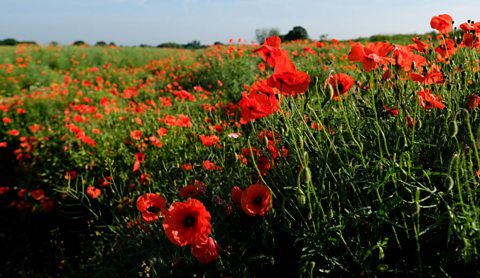
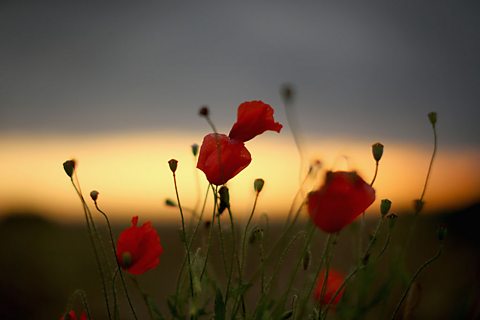
The final stage direction instructs that the audience sees the names of the 148 soldiers projected on a screen, and poppies fall on the audience, as a piper plays a lament.
Setting
The play is set in:
- a place: The Nicolson Institute, a real school in Stornoway, Lewis.
- a time: The period following World War One, although the narrative incorporates flashbacks to before and during the war.
The Nicolson Institute
The school in which the majority of the play's action is set, is the Nicolson Institute. This is a real school in Stornoway which still exists today. By placing the action of the play in a real school, Murray is making it clear from the outset that the audience can expect elements of this play to be based on real events. It also means that the play is rooted in a real town and community who were deeply affected by the events of the war.
Gibson's home
Additional scenes take place in Gibson's home, where he looks through old letters and struggles to write his speech. These scenes introduce a different side of Gibson, a married man whose wife, Mary, is loving but aware of her husband's faults. It is perhaps telling that it is in this personal space, away from the setting of the school, where Gibson projects a professional front, that Gibson's humanity and vulnerability begin to show.
Scenes from the battlefront
Although the play does not specifically move to the battlefield, some of Gibson's old pupils appear as soldiers and act out scenes from the trenches, and from Gallipoli. The setting of Gallipoli, thought to be close to the site of the original Troy, makes the contrast between how war is portrayed in classical literature, and the reality of modern warfare particularly stark and clear.
After World War One
The time in which the play is set is also crucial - in the aftermath of the real events of the First World War, telling the story through flashbacks rather than following the action in a linear narrative. This allows the audience to see Gibson reviewing his actions and opinions with the benefit of hindsight.
The close-knit community setting contrasts with the far away places the young men read about in their Classics books and eventually, those they fought and died in. The impact of their loss on such a small community is emphasised; and it becomes the duty of the local people to ensure their names are not forgotten.
Revise plot and setting in Sequamur
Revise plot and setting, and other aspects of Sequamur by Donald S Murray with interactive quizzes for Higher English.
Quizzes - Sequamur. quiz
Test your knowledge of the play Sequamur by Donald S Murray with interactive quizzes for Higher English.

More on Sequamur by Donald S Murray
Find out more by working through a topic
- count2 of 5
- count3 of 5
- count4 of 5

- count5 of 5

