Christian morality
Simon and Sarah discuss the importance of morality
Sarah:…Couldn’t see a thing, nearly got caught and she didn’t even care in the slightest.
Nothing to say.
No little lessons.
Simon: You're complaining about a girl in your class who wouldn't let you cheat.
Sarah: Yeah.
Simon: Well, that's morally wrong, isn't it?
Sarah: Oh here we go, can’t even cheat these days without the man on your back.
Simon: Well, morality is an important part of being human.
It guides how we treat ourselves and others.
In the Bible, God wants us to follow the morals of Jesus, to choose what is right and what is wrong in different situations.
Sarah: Okay, I've got a scenario.
Okay, so you and your sister.
Simon: I don't have a sister.
Sarah: Very funny.
It’s hypothetical.
Okay, so your sister gets your pocket money every week. Your older sister gets it from your dad and she gives me, I mean, you half of it.
Then you find out that your dad had been giving more recently, but Shannon was still only giving me the same amount.
I mean, your sister.
Simon: Okay, I think we've all established this happened to you.
Sarah: So do I tell her I found her out and sort it out without getting her in trouble?
Or do I tell dad so that I become in charge of the money?
Simon: Well what you have here, in some way, is a moral dilemma: a difficulty in finding out what is right from wrong.
As humans, we must consider our actions and their consequences and challenge what we think is right or wrong.
Sarah: Okay, so what does the Bible teach us about what is right or wrong?
Simon: God wants people to have the same sense of right and wrong, the same moral vision, as Jesus.
Jesus spells out his sense of right and wrong in what he teaches. He says:
"You must love God with all your heart and with all of your soul and with all of your mind and with all of your strength, and love your neighbour as yourself."
In these words, Jesus shares his moral vision with you.
He gives you a way of measuring what is right and what is wrong.
Before you make a decision, you can ask yourself:
"If I do this, will I be loving God?If I do this, will I be showing love to my neighbour?"
Christians also believe that prayer can change your way of seeing what is right and what is wrong. It can change your moral vision.
Sarah: But what guides your ability to make the right decision?
Simon: Our values, of course. As Christians, we believe in the values contained in the Ten Commandments.
We believe in respect for God.
We believe in the value of prayer and worship.
We also believe in respect for others.
This is seen in the way we respect values such as family, other relationships, property and reputation.
Above all, we respect the value of life.
We follow the values that Jesus taught us when he said:
"Treat others as you would like them to treat you."
Sarah: I guess it's all really a learning journey to go through life and figure out what is right and what is wrong through our experiences.
Simon: Exactly. That's very insightful.
Sarah: Fine.
I'll talk to Shannon and give her the opportunity to do what is right.
Simon: Oh, I thought it was all hypothetical.
Sarah: I thought it was all hypothetical.
Moral decisions fall into two main categories - absolute and relative
Absolute morality
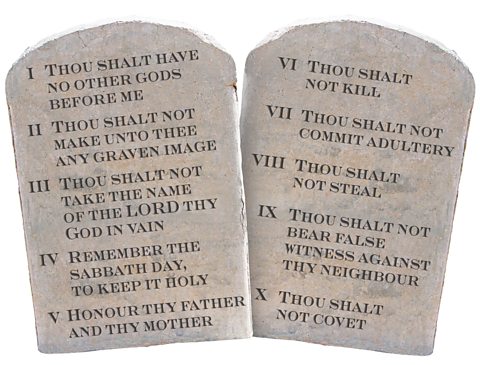
People who believe in absolute morality are called absolutists.
They believe that moral rules are fixed and never change.
They argue that what is right or wrong does not depend on the situation.
Absolutists argue that moral rules apply to everyone.
Religious rules are often absolute, e.g. the 10 commandments because they come from God.
Relative morality
People who believe in relative morality are called relativists
They do not take a black and white view of morality.
Relativists argue an action is right or wrong depending on the situation.
They believe that if the consequences are good, then the action is allowed.
What is a person's moral value?

A person’s moral value or conscience is their sense of what is right and wrong.
It is formed and influenced by a variety of different sources such as family, friends, culture and life experiences.
Many of the laws and rules in society today have their basis in religion, such as the The list of rules, revealed by God to Moses, found in the Old Testament books of Exodus and Deuteronomy. Also known as the Decalogue..
Moral value can be seen in the choices people make.
In Christianity, Jesus' moral value is seen throughout the Gospels where He was always willing to set aside the rules to do the most loving thing.
This frequently led Jesus into conflict with the Jewish Religious Leaders because he did not always follow their rules.
The Moral Vision of Jesus
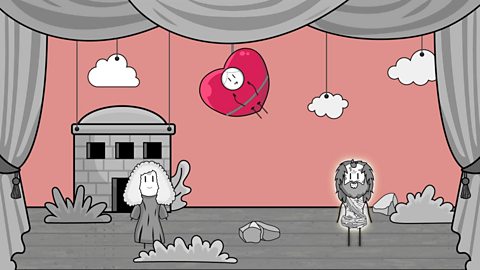
Jesus Heals a Man on the Sabbath (Matthew 12: 9-13):
Pharisee oral law said no one could work on the sabbath.
Performing a miracle was considered work.
Jesus healed a man’s shrivelled hand on the sabbath and so broke a cultural law.
Jesus' moral vision can be seen in his sense of right and wrong:
- He thought the most loving thing to do was to heal the man.
- It did not matter that he was offending the Religious Leaders.
- Jesus did what he thought was right, even though it affected his reputation.
Following Jesus' example is compelling for Christians when making moral decisions.
- He was selfless.
- He did not let what others thought of him dictate his actions.
- He always showed love to those considered to be outcasts in society.
- He followed through on his action regardless of the personal cost.
Quiz time!
More on Morality and ethics
Find out more by working through a topic
- count1 of 7

- count2 of 7

- count3 of 7

- count4 of 7

