Dialogue between religious and non-religious beliefs and attitudes
In this article, learn about how Christians view attitudes towards abortion and euthanasia.
Key points
- Christianity teaches that human life is sacred because humans are made in the image of God.
- Christianity teaches that life is sacred.
- There are various views on abortion and euthanasia within Christianity.
Click here for a helpful tip!
Many Christian views on abortion and euthanasia are shaped by the belief that life is sacred, though different denominations may reach different conclusions in different circumstances.
Christian teachings on abortion
Video
Watch the video below to compare Buddhist, Jewish, and Christian attitudes towards abortion.
Buddhist presenter: How
Christian presenter: do different religions
Jewish presenter: view abortion?
Buddhist presenter: Hello, I'm Buddhist.
Christian presenter: I'm Christian,
Jewish presenter: and I'm Jewish.
Buddhist presenter: And we all believe that life, especially human life, is precious.
Christian presenter: Christians call this the sanctity of life,
Jewish presenter: which means it's holy and should always be protected. In Judaism, we call this pikuach nefesh, which means saving a soul.
Buddhist presenter: Abortion is legal in the UK.
Christian presenter: In specific circumstances which are set out in law.
Jewish presenter: But what do our religions say about it?
Buddhist presenter: Buddhism teaches that we live many lives in many bodies, but this life begins at conception, which is when a sperm fertilises an egg. The first of the Buddha's ‘five precepts’ says we should avoid taking life. So we try to live by the principle of ahimsa, which means ‘non-violence’ or ‘non-harming.’ And many Buddhists say this means abortion can't be allowed. However, some Buddhists believe that if a pregnancy is putting the life of a mother in danger, then an abortion is acceptable. This shows a Buddhist teaching called karuna, meaning compassion, which encourages us to reduce people’s suffering, if we can.
Christian presenter: In the Bible, the writer of Psalms 139 talks about God “seeing my unformed body in the womb.” So many Christians also believe that life begins at conception or soon after and should be protected. The Roman Catholic Church teaches that abortion is never allowed, no matter what the circumstances. Pope Paul VI wrote, all direct abortion are to be absolutely excluded, but in some cases, the Roman Catholic Church does support the principle of double effect. This is when, in order to do something good, something bad will also happen. For example, in the case of an ectopic pregnancy, when a fertilised egg grows outside the womb and puts the mother's life at risk, the church allows treatment to save the mother's life, even though it will result in the loss of the pregnancy. Protestant churches, like the Church of England, are also against abortion, but accept that there are reasons why it might be the best thing to do in some situations. It might be left to individual churches to give advice based on their own moral judgements.
Jewish presenter: An ancient collection of Jewish writings called the Talmud describes a foetus as ‘water’ for the first 40 days, and we take that to mean that it isn't a potential life until then. It isn't a life in its own right until birth. But we believe that a foetus is precious at all times because it's God's creation. So abortion should always be a last resort. Another book called the Mishnah says, “if a woman is having trouble giving birth, her life comes before the life of the child.” So if a mother's life is in danger, an abortion might be necessary to save her. But there are many other things to think about when deciding if abortion is an acceptable choice.
Buddhist presenter: Medical screening tests during pregnancy might show problems in the development of the foetus.
Christian presenter: The child might be born into extreme poverty or dangerous circumstances.
Jewish presenter: So religious believers might need to think about things that would affect quality of life.
Buddhist presenter: The Dalai Lama, the leader of Tibetan Buddhism, said “I think abortion should be approved or disapproved, according to each circumstance.” This shows another Buddhist teaching called Metta, which means loving kindness, and we believe that an aborted embryos, Vijñāna, their consciousness, will pass on to another life.
Christian presenter: Many Protestant Christians, including the Baptist, Methodist and United Reformed Church would agree that abortion is always a difficult choice to make, but it might be the best course of action in certain circumstances. There aren't always simple answers.
Jewish presenter: Some Jews would also say that an abortion should be allowed if the mother's physical or mental health might seriously suffer, or if the baby is likely to be born with a serious health problem. But each situation needs to be judged very carefully.
So all of our religions believe in the sanctity of human life.
Christian presenter: The Roman Catholic Church opposes abortion, but many Protestant Christians, including the Church of England, would say there are situations when it might be understandable.
Jewish presenter: Which is also the teaching in Judaism. Every case is different.
Buddhist presenter: And all of our religions teach us that every decision must be made with compassion.
An abortion is a way of ending a pregnancy. Abortion is legal in the UK in specific circumstances, which are set out in law.
Christians have different views on whether abortion is acceptable. Christians believe in the The concept that life is holy, sacred and precious and belongs to God., meaning life is sacred and belongs to God. For this reason, the question of when life begins holds great significance for many Christians.
The Catholic Church believes life begins at The moment a sperm and an egg cell join, during a process known as fertilisation., so abortion at any stage is wrong. It teaches that life is sacred and only God should decide when it ends. A possible exception to the Catholic teaching on abortion might be ending a pregnancy to save a mother's life. The reasoning for this type of action would be guided by the 'principle of double effect,' the idea that something bad can be accepted if a good outcome is intended.
Some Chrisitans believe abortion is taking a life and breaks the commandment “Do not murder.”
Christian teachings on Euthanasia
Euthanasia is the act of deliberately ending a person's life to relieve suffering. Euthanasia or assisted dying is currently illegal in the UK (March 2026).
There are divergent views on euthanasia within Christianity.
The The holy book of Christians. It has 66 books split into two sections: Old Testament (39 books) and New Testament (27 books). teaches that humans are made in the image of God and that life is sacred, some Christians use this as evidence to support the view that euthanasia is morally wrong since God alone should decide when a life should end.
The Roman Catholic Church condemns Euthanasia:
“Euthanasia is a grave violation of the law of God, since it is the deliberate and morally unacceptable killing of a human person.”
Pope John Paul II, Evangelium Vitae, 1995
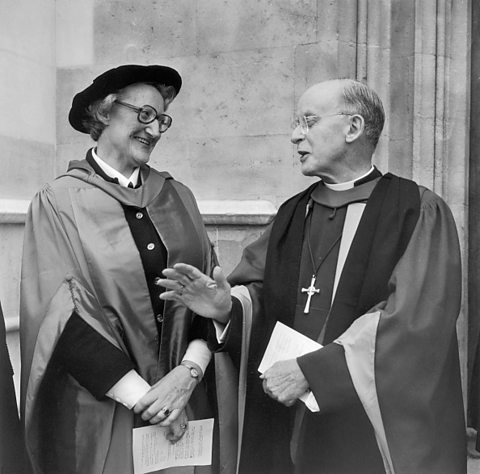
Many Christians point to the hospice movement as an example of caring for the dying without ending life deliberately. The modern hospice movement was founded by Dame Cicely Saunders, an Anglican Christian who trained as a nurse, social worker and doctor. She opened St Christopher’s Hospice in 1967, where she introduced the idea of relieving “total pain”, meaning that physical, emotional, social and spiritual suffering all need to be treated.
GCSE exam-style question
‘Sanctity of Life means that a religious person should never take away a human life’
Evaluate this statement. In your answer you
- Should give reasoned arguments to support this statement
- Should give reasoned arguments to support a different point of view
- Should refer to religious arguments
- May refer to non-religious arguments
- Should reach a justified conclusion
Sample answer
Many Christians believe that because of the sanctity of life, no human has the right to take away another person’s life. The Bible teaches that human life is holy because it is created by God. In Genesis 1:27, it says that people are made “in the image of God”, meaning every human life is special and valuable.
The Ten Commandments include the clear rule: “You shall not murder” (Exodus 20:13). This shows that taking a life is a sin and goes against God’s will. Christians who believe in following the Bible literally would say that all life belongs to God and only He can decide when it ends.
Many Christians are against abortion and euthanasia because they believe all human life should be protected from beginning to end. Some Christians also believe that suffering has a purpose and that people should trust God rather than try to end life.
Other Christians may accept abortion in certain circumstances such if the woman’s life is in danger or if the quality of life of the child might not be good for various possible economic or physical reasons. This can be described as the lesser of two evils.
Some Christians argue that euthanasia can be morally acceptable because they believe God has given people free will. If someone who is terminally ill chooses assisted dying, some interpret Jesus’ teaching to “love your neighbour” as a call to act compassionately.
In their view, helping to end severe suffering, especially when a person’s quality of life is expected to decline dramatically, could be seen as the most loving response. Many Christians believe that humans have been given free will by God, which means that a person can choose when to end their life.
Abortion and euthanasia flashcards
Use this flashcard activity to learn key quotes from scripture.
More on Christianity
Find out more by working through a topic