Why was cloth important?
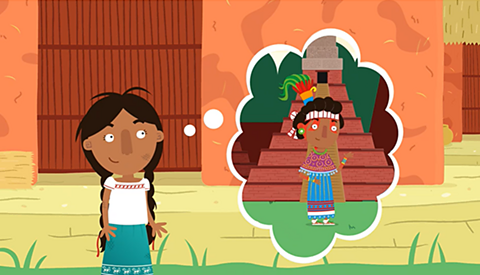
Cloth was important in Maya society because the type of fabric people wore helped to show how wealthy they were. Historians can examine clues about what people wore to learn about their lives.
Women were the traditional weavers in Maya society. They made cloth by weaving threads over and under each other to create fabric. Cloth‑making was a central part of daily life. Some of the earliest Maya weaving dates back to 1000 - 800BC - cloth had been important for a very long time.
In Maya society cloth also played an important part in religious beliefs and art.
Important words for the Maya civilisation
| Keyword | Definition |
|---|---|
| Archaeologist | A person who digs up and uncovers artefacts to help understand the past. |
| Generation | A group of people who are born and live around the same time. |
| Imitate | To copy what someone else says or does. |
| Indigo | A natural dye, with a bright blue colour, made from the leaves of plants. |
| Jade | A hard green gemstone used to make jewellery and art. |
| Mural | A large painting on a wall or building which tells a story. |
| Tapestry | A piece of heavy cloth with a pattern or picture woven into it. |
| Traditional weaver | Someone who makes cloth by hand. |
| Weaving | The process of making cloth by crossing threads over and under each other. |
How were the fabrics made?
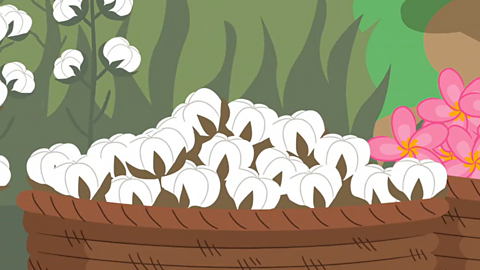
The Maya weavers worked mainly with cotton, which had to be washed and picked clean of seeds. This was hard work!
Cotton was associated with richer people.
The cotton was often dyed to make multi-coloured clothes.
Dyes were made of insects, shellfish, indigo and plants.
Richer women worked with feathers and pearl beads. They had to learn to weave tapestries and brocade (a rich decorated fabric).
What did people wear?
Men typically wore a loincloth around the waist with sometimes a cotton sleeveless shirt.
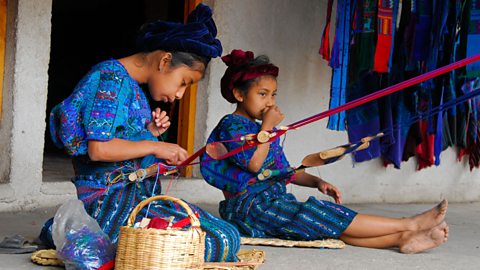
Women wore a huipil, a loose-fitting tunic with an opening for the head and arms, or a traje which reached to the floor, held in a place by a faja, or sash.
The huipil and traje are still worn today in Mexican culture.
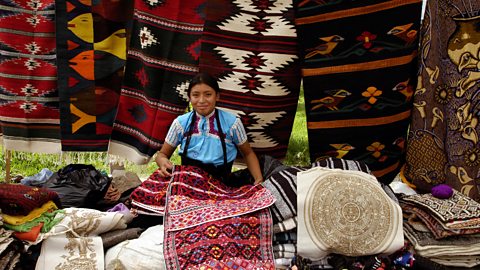
Image caption, A young Maya woman who is selling traditional goods at a market in Chiapas, Mexico.
1 of 2
Men and women wore sandals, the farmers wore moccasins.
Many women wore their hair long and in braids.
The priests and nobles wore decorative items such as jewellery.
Jewellery could be made from jade, wood or bone.
What clothing was religious?
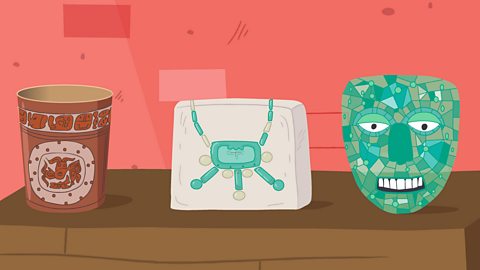
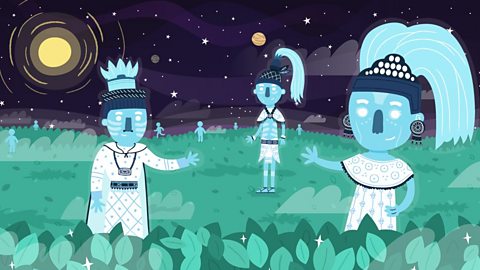
The deities (gods) were identified by their clothing and so were the humans imitating their appearance.
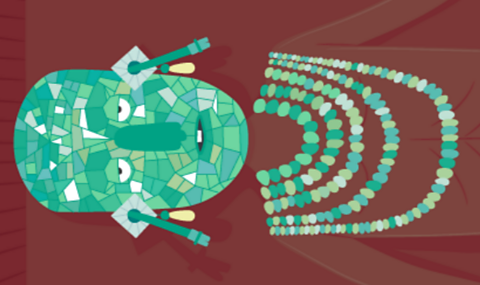
The Maize god was an example of this, who wore a netted overskirt made of green jade beads and a belt made of shell.
The Maize god was represented by kings and queens.
How do we know what the ancient Maya wore?
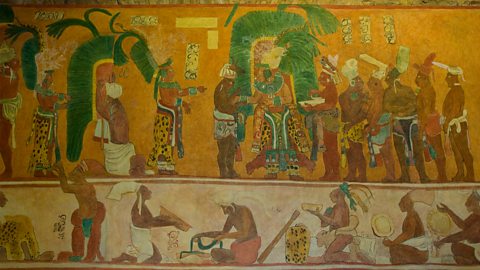
Archaeologists have learnt about different Maya clothing by looking at decorated pottery and wall paintings.
The way Maya people weaved was also passed on from one generation to the next.
This passed on knowledge, and discovery of artefacts, have helped archaeologists and historians understand what the ancient Maya may have worn and how they made their clothing.
Think like a historian

Have a look at the thinking points below and think about your answer to each question. You could even write them down on a piece of paper or discuss them with somebody else if you want to.
How do you think the discovery of decorated pottery and wall paintings helped archaeologists understand what Maya people wore?
The ancient Maya wore clothes that helped show who was rich or poor. What effect do you think this had on Maya people and their society?
Some Maya clothing is still worn today. What does this tell you about the importance of Maya clothing and how it has kept Maya culture alive today?
Did you think that the pottery and wall paintings helped archaeologists see the different types of clothes worn by the ancient Maya? Maybe you thought that the detailed drawings on them helped archaeologists know about the many different types of clothes worn by the Maya. They showed different patterns and designs on clothing, along with jewellery and headdresses.
Perhaps you thought clothing made it clear who was wealthier and powerful in Maya society. Wealthy people wore special items such as jade jewellery, while less wealthy people wore simpler clothes and accessories. Did you think that it also helped show what type of a job a person had in Maya society? Clothing could also show what job a person had, as farmers, priests and rulers dressed differently. Clothing helped the Maya easily understand a person’s role and status in society.
Did you think that wearing and making traditional clothing can help people remember their history and feel proud of their culture? As people can see clothes all the time it is an important way to show culture, who a person is and what culture they come from. Wearing traditional clothing shows how beliefs and traditions have been passed down through time and are still valued today.
Quiz – Maya clothing
Let's find out what you know about Maya clothing in this quiz.
Grown-ups corner
Are you a parent, carer or teacher?
Take a look at some of the links below on KS2 History which are packed full of knowledge, videos, quizzes and activities.
History Explorer: Secrets through time
History Explorer: Secrets through time: KS2 History
What has been found from the Indus Valley?
KS2 History
Horrible Histories: Raid and Trade game! game
Play Horrible Histories: Raid and Trade KS2 History
More on Maya Civilisation
Find out more by working through a topic
- count7 of 10
- count8 of 10
- count9 of 10
- count10 of 10