Quick version
Global population distribution can be influenced by various factors falling into two main categories:
Physical factors
- climate
- relief (landscape)
- natural resources
- soils
Human factors
- jobs
- tourism
- transport
Population distribution is the spread of people across the world, that is where people live.
Population density is the number of people living in a particular area – usually one square kilometre – and can be written as total population ÷ land area.
Video - Factors affecting population density
Watch this video to learn about the physical and human factors that affect population density.
In 2022, the global population passed 8 billion, but people aren't spread evenly across the world.
Most live in developing countries.
Some countries and regions have a high population density and some have a low population density.
This is due to a combination of physical and human factors.
Higher population densities are found in temperate climates, which are neither too hot nor too cold.
Where there are fertile soils, like South East England, crops can grow more easily and support larger populations.
Flat areas like this are also easier to build on, which means they are more likely to have better infrastructure such as roads, railways, ports and airports.
Areas with abundant natural resources such as freshwater rivers and lakes, forests and raw materials to mine or coastal regions with transport links and fishing industries, attract essential workers.
Outstanding natural landscapes also attract tourists, creating more job opportunities.
Meanwhile, places with extreme temperatures and rainfall make farming difficult, meaning people rarely live in areas like the Sahara Desert or Arctic Canada.
Mountainous areas or those that are geographically hard to reach hinder construction and so are less populated.
But it's not just physical factors that impact where people live.
Human factors are also crucial.
When cities like Rio de Janeiro develop strong transport links, industries and trade, their population density increases, as more people are drawn there in the hope of finding better opportunities for work and education, and more services and amenities like healthcare, leisure and entertainment.
Would you expect to find low or high population density in temperate climates?
Higher population densities are found in temperate climates, which are neither too hot nor too cold.
What is the difference between population distribution and density?
- Population distribution is the spread of people across the world, ie where people live.
- Population density is the number of people living in a particular area.– usually measured as the number of people in one square kilometre.– it can be written as total population ÷ land area.
What is the global population?
- In 2022, the population of the world reached 8 billion people
- The vast majority of the world's population lives in the Global South
- The world’s population is spread unevenly across the globe with concentrations of large numbers of people living in the same area
- The world as a whole has more ‘empty’ areas than ‘crowded’ areas
- There are several physical and human factors to explain this
This world map highlights population density.
Physical factors influencing global population distribution
Climate
People prefer to live in Climates that are mild. Temperate places rarely experience extremely hot or extremely cold temperatures. climates where there is:
- enough rainfall
- no extremes of temperature
A lack of fresh water for drinking or irrigation stops people living in an area.
Very high temperatures
- farming is difficult
- dehydration and heat stroke are issues
- areas with high humidity are uncomfortable places to live and can be affected by diseases such as malaria
Very cold temperatures
- make it difficult to grow crops
- make it difficult to build homes and transport links as the ground may be frozen for much of the year
- frostbite makes it difficult to work outside for any length of time, and protective clothing would need to be worn
Relief
Relief refers to the way the landscape changes in height. This can have an affect on population distribution.
Steep slopes
- have thinner soils, making growing crops difficult
- make it difficult to:
- use machinery, for example farm machinery or construction equipment
- build houses, roads and railways
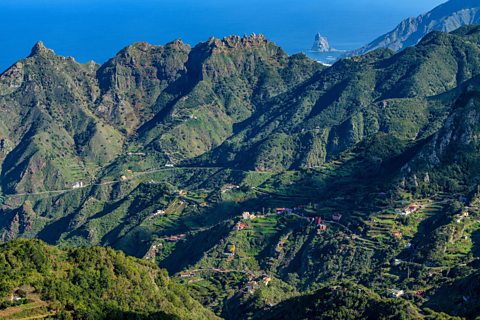
High, mountainous areas are often:
- too cold, which makes it difficult to grow crops
- remote, which makes them difficult to access
Flat, low-lying areas
- have deeper soils that make it easier to grow crops
- are warmer than higher altitudes
Natural resources
Nearby natural resources, such as coal or iron ore, in an area means that:
- industry can develop without high transport costs
- industry brings direct employment, and job opportunities in related industries and services
Few natural resources means there is a lack of:
- industry
- employment opportunities
Scenery is a natural resource and can:
- attract tourists
- bring job opportunities
Soils
- Areas with Soils that contain nutrients. Crops grow well on fertile soils., eg river deltas, are good for growing crops to feed the population.
- Poor soils with few nutrients mean there will be a low agricultural output. Settlements tend not to have developed as much in areas with poor soils.
Human factors influencing global population distribution
- Jobs (eg in manufacturing and service industries) encourage people to move to find work.
- Tourism can also attract visitors to an area, providing local people with jobs.
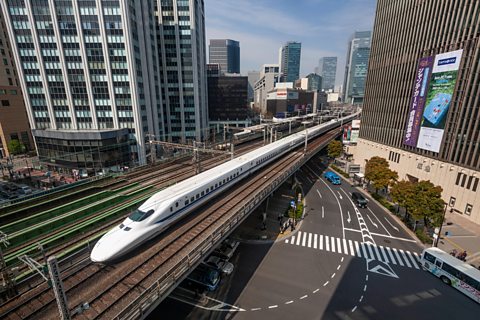
- Areas with good transport links, such as roads and railways, will attract people and industry. Attracting industry creates employment opportunities.
- Remote areas which are isolated and have poor transport links do not attract people or industries.
What are population patterns?
According to the An organisation that brings most of the countries around the world together to talk about, and try to agree on, world issues. more than half of the world's population now live in urban areas, most notably in high-density cities. This number is expected to increase to 60 per cent by 2030.
Globally, more than 4 billion people live in urban areas. This is projected to increase to more than 7 billion by 2050. When somewhere becomes more urban. This means a greater percentage of people live in cities and towns rather than the countryside. rates are increasing rapidly in the Global South as people migrate from rural to urban areas.
- In the Global South, many people still live in rural areas. There are large numbers of people working in primary industries such as farming.
- In the Global North, most people are employed in service industries.
Source: '68% of the world population projected to live in urban areas by 2050, says UN', United Nations, 2018
Quiz
Recap
Global population distribution can be influenced by various factors falling into two main categories:
Physical factors
- climate - More temperate conditions are easier to live and work in than areas with extremes of temperature or precipitation.
- relief (landscape) - Lower, flatter land is easier to build on, live on and move around.
- natural resources - Physical resources like coal or metal ores, or scenery, encourage industry and attract people for work.
- soils - Deeper, richer soils encourage agriculture and settlement.
Human factors
- jobs - More people will move to areas where they think they can find work opportunities.
- tourism - Locations that attract visitors will encourage people to settle and work in related services and industries.
- transport - Good transport links attract more people to an area, and make moving there easier.
Population distribution is the spread of people across the world, that is where people live.
Population density is the number of people living in a particular area – usually one square kilometre – and can be written as total population ÷ land area.
More on Population, distribution, growth and change
Find out more by working through a topic
- count3 of 3