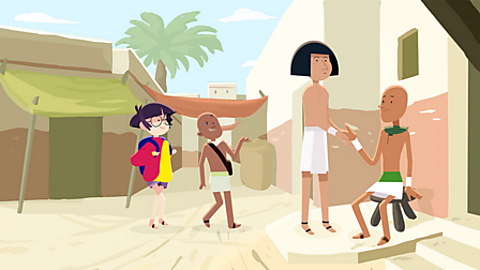
Who were the gods?
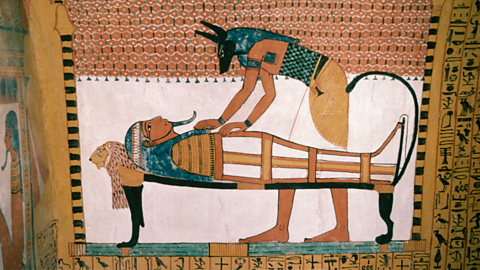
The Ancient Egyptians believed in many gods and goddesses.
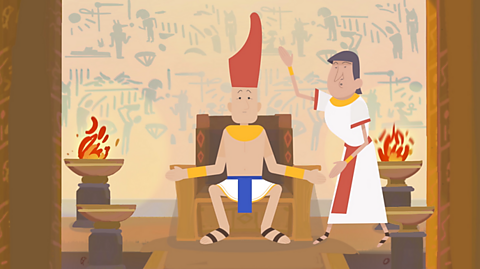
They believed that the Pharaohs were chosen by the gods.
The gods represented natural forces such as storms, thunder and death.
The Ancient Egyptians pleased the gods through offerings, like food and rituals so that natural order or maat (things like truth, balance, order, harmony, law, mortality and justice) could be kept.
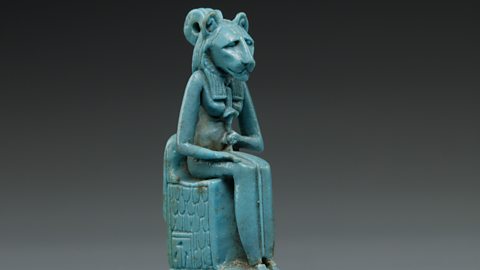
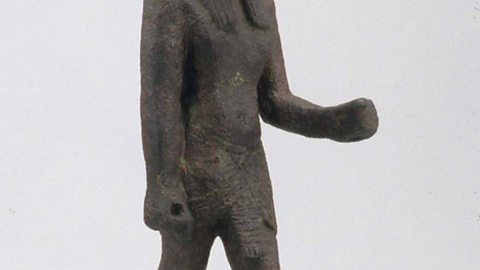
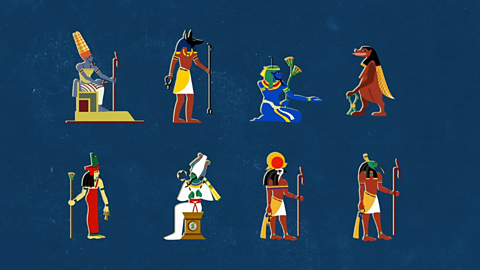
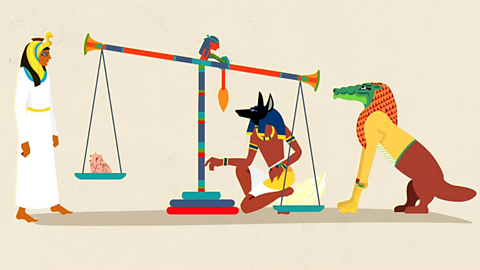
The gods and goddesses often looked different, for example, Anubis is commonly shown in art as a man with the head of a jackal (dog).
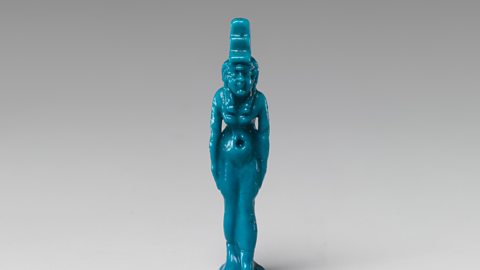
Amulets (an ornament or small piece of jewellery thought to give protection) featuring gods and goddesses were commonly worn by all of Ancient Egyptian society including Pharaohs, nobles and officials.
Important words
Important words on what the Ancient Egyptians believed in.
| Keyword | Definition |
|---|---|
| Afterlife | A belief that a part of a person continues to exist after their body dies. |
| Amulet | An ornament or small piece of jewellery thought to give protection. |
| Divine | Meaning of or like God. Examples of synonyms: spiritual, supernatural, eternal. |
| Maat | Sometimes written as 'ma’at'. It means many things, like truth, balance, order, harmony, law, mortality and justice. Maat was also a goddess who represented these things. |
Watch: Ancient Egyptian beliefs
Watch the video to learn more about what the Ancient Egyptians believed in.
THE ANCIENT EGYPTIAN GODS
The gods of old Egypt rule over us here,
Bringing us wisdom and wonder and fear.
They look like the things that
The natural world shapes,
Like jackals and beetles and lions.
And apes!
Babi watched over his troupe of baboons,
Ihy, would charm with his beautiful tunes,
Thoth was the scribe god of reading and writing!
Sekhmet the lioness, war god, she liked fighting!
Anubis took care of the recently dead,
Rah wore the sun on the top of his head!
The stories align to the planets and stars!
The sun and the moon, in the timeless stone we'd carve.
Great statues, such forms, we revere, we adore,
The ancient Egyptian gods.
For 3000 years they watched over these lands,
Holding the fate of the world in their hands,
Horus would watch with his all-seeing eye,
Nut moved the moon and she held up the sky,
Isis taught humanity, and healed us when we're hurt,
Osiris , god of life and death, controlled the underworld,
Ptah built the Earth and created us all,
Seth, god of chaos, was an evil so and so!
The stories align to the planets and stars,
The sun and the moon, in the timeless stone we'd carve.
Great statues, such forms, we revere, we adore,
The ancient Egyptian gods,
The ancient Egyptian gods!
How important were the gods to the Pharaohs?
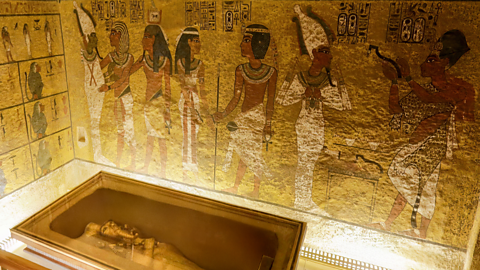
Around 3100BC, the Pharaohs said they represented the gods and controlled the temples where the rituals were carried out.
Temples were filled with images of the gods and only the Pharaoh and the priests could go inside.
The Pharaoh was divine. This meant that people believed he had been chosen to rule by the gods.
Pharaohs built temples and performed rituals to keep maat (order), and keep the gods happy.
All of the Pharaohs had artwork of the gods and goddesses on the walls of their tombs and as jewellery, to help guide them in the afterlife (belief that a part of a person continues to exist after their body dies).
The Pharaoh Tutankhamun was buried in his tomb wearing 20 different amulets. That's a lot of divine protection!
A closer look: Ra and Horus
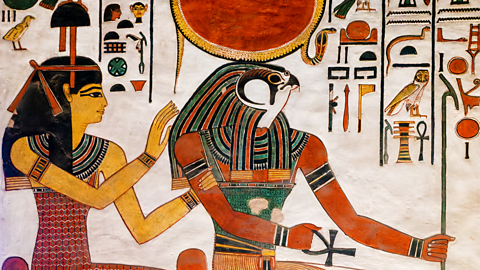
Ra
Ra was the Ancient Egyptian god of the sun.
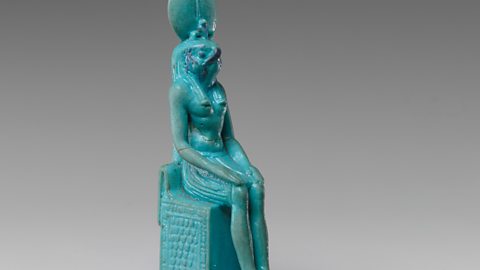
He was shown as a man with a falcon’s head and a sun on top.
Ancient Egyptians believed that Ra gave light, warmth and life and was the creator of the universe.
This made him the most important and most worshipped god.
His daily journey across the sky in his boat explained the rising and setting of the sun each day.
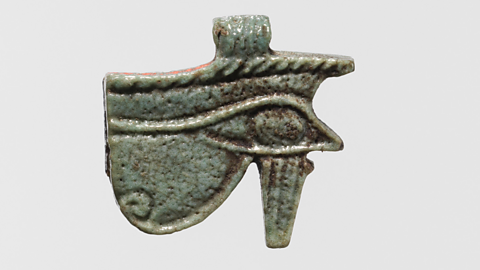
Horus
Horus was the son of Osiris and Isis.
He was known as the god of the sky and war.
He was also often shown as a falcon or a man with the head of a falcon. He doesn't have a sun crown like Ra, though.
Horus’ main job was to protect the Pharaoh.
He had two magical eyes.
His right eye was the sun eye, which represented power and his left eye was the moon eye, which represented healing.
The eye of Horus (the wedjat eye) was used a lot in Ancient Egypt and is thought to be a powerful amulet that protected people.
When did beliefs change?
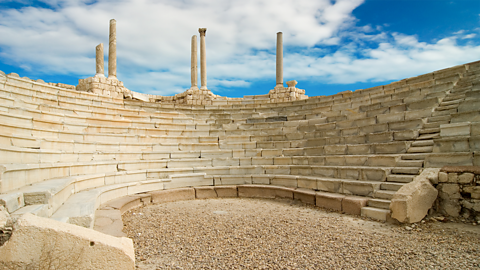
There was a mixture of gods and rituals in Egypt under Greek and Roman rule from 300BC onwards.
The Roman Empire officially became Christian in the 4th century AD (AD301 - 400).
The Ancient Egyptian temples and gods had mostly gone out of favour by the 6th century AD (AD501 - 600).
Slideshow: The gods and goddesses of Ancient Egypt
Click through the slideshow to learn more about some of the gods and goddesses of Ancient Egypt.
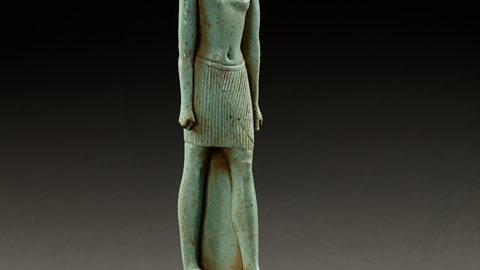
Image caption, Thoth
Thoth was often shown with the head of a baboon or an ibis (a wading bird with long legs and a long beak). He was the scribe for the other gods and the ancient Egyptians believed that he invented hieroglyphs.
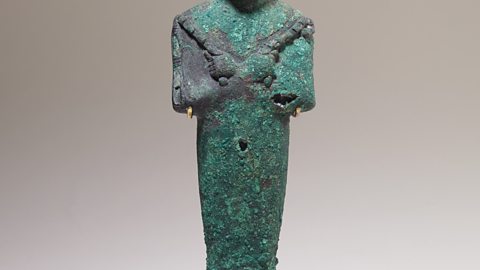
1 of 6
Think like a historian
Have a look at the thinking points below and think about your answer to the questions. You could even write it down on a piece of paper or discuss it with somebody else if you want to.
What evidence do we have that shows what the Ancient Egyptians believed about their gods and the afterlife?
Why did the Ancient Egyptians believe in so many different gods and goddesses?
Perhaps you thought about what the Ancient Egyptians left behind? They wrote stories in hieroglyphs about their gods and painted pictures on tombs and walls. They also made statues of the gods to show their importance. The Ancient Egyptians mummified bodies and filled tombs with food, clothes and treasures so the dead could use them in the afterlife (life after death).
Maybe you considered the many different roles gods and goddesses had? Some gods controlled the sun, sky or river, like Ra, who gave light, warmth and life. Others were responsible for death and the afterlife, like, Osiris and Anubis. Some gods looked after healing and protection, like Sekhmet. The Egyptians believed that each god had a special job to protect and guide them in their daily life and afterlife.
Activities
Activity 1: Name the gods
Match the god to their name below.
Activity 2: Quiz – Ancient Egyptian gods
Activity 3: History Explorer game
Play this game to test your knowledge and learn even more facts about Ancient Egypt.
History Explorer: Secrets through time
History Explorer: Secrets through time: KS2 History
Grown-ups corner
Are you a parent, carer or teacher?
Take a look at some of the links below on KS2 History which are packed full of knowledge, videos, quizzes and activities.
KS2 History: Ancient Egypt
BBC Bitesize for Teachers
KS2 History: Ancient Egypt - Gods and goddesses
BBC Bitesize for Teachers
KS2 Music: Ancient Egypt. Song: 'So many gods and goddesses'
BBC Bitesize Schools Radio
Horrible Histories: Raid and Trade game! game
Play Horrible Histories: Raid and Trade KS2 History
More on Ancient Egypt
Find out more by working through a topic
- count10 of 18
- count11 of 18
- count12 of 18
- count13 of 18