Matters of life and death
In this article, learn about how Jewish people view the origins of the universe as well as some of life's big questions.
Key points
- Judaism teaches human life is sacred because people are made in , giving every person value, dignity and moral responsibility.
- The five books of Moses, known as the Hebrew Bible. teaches that God created the world and human life with purpose, and that people are responsible for The understanding that religious believers have a duty to look after the environment, as commanded by God. .
- The focus for many Jewish people is on living according to the , working for justice and .
- Jewish people hold a wide range of views on scientific ideas like evolution. Many may see science as describing how life develops, while believing that God gives life its purpose and meaning.
- Judaism teaches about the importance of the sanctity of human life, including the concept of .
Video
Watch the video below to compare Muslim, Jewish, and Sikh attitudes towards whether humans have the right to use the planet however they want.
Muslim presenter: Should humans have the right…
Jewish presenter: to use the planet…
Sikh presenter: however they want?
Muslim presenter: Hello, I'm Muslim,
Jewish presenter: I'm Jewish,
Sikh presenter: and I'm Sikh
Muslim presenter: And our religions all teach that God created the world for us to live in and care for.
Jewish presenter: But does that give us the right to do whatever we want with it?
Sikh presenter: Especially if that means damaging the environment for future generations?
All: Our planet is home to over 8 billion people and counting, and we're quickly using up its resources.
Forests have been destroyed and the seas are polluted.
The summers are getting hotter and the winters are getting wetter.
Muslim presenter: Climate change is real and it's caused by humans.
Jewish presenter: It puts the planet and us all at risk.
Sikh presenter: So what do our religions say about this?
Jewish presenter: Should humans have the right to use the planet however they want?
Muslim presenter: Muslims are taught that Allah created the world to provide us with everything that we need and to be a place of worship. It's our job to be khalifahs or stewards, which means that we have a responsibility to look after the earth. Muslims believe that we'll be judged by Allah on how well we've lived up to his trust.
Jewish presenter: Judaism also teaches that the earth belongs to God and we're his stewards. And not only that, the Torah says that the world was given to humans to rule over. But it comes with responsibilities because we must work the land and take care of it. An important Jewish principle is bal tashchit, ‘don't waste’ or ‘don't destroy’, which means we should care for the Earth's resources and avoid harming the environment.
Sikh presenter: The Guru Granth Sahib ji is the sixth Scripture and our eternal guru. The first words are ‘Ik Onkar’, which means everything is one. We're taught that God created the world and the world is part of God. All things are part of this oneness. Everything is connected, the worlds, the animals, and plants, us. So if we harm the planet, we harm the oneness we are part of. Sikhs follow the principle of Seva, which means selfless service. So to serve humanity, we need to protect the world we all share.
Muslim presenter: As Muslims, we believe that we should care for even the smallest of animals, the Prophet Muhammad, peace be upon him, said “whoever kills anything bigger than a sparrow, without just cause, will be accountable to Allah”, which means animals should only be killed for food.
Jewish presenter: A Jewish rabbi called Moses Maimonides once wrote, “it is forbidden to cause pain to any animal, although we are allowed to eat meat too.”
Sikh presenter: Guru Nanak Dev ji, the founder of Sikhi, wrote, Air is the guru, Water the Father, Earth the Great Mother. Nature provides everything we need and deserves respect. Many Sikhs do this by living simply and making choices that reduce harm to the environment, like being vegetarian.
Every Sikh temple, called a Gurudwara, has a free community kitchen called Langar. The food is always vegetarian, so that people of any background can share the same meal as equals.
Muslim presenter: But it's not always easy to know where our food has come from or how it was produced.
Jewish presenter: And have you ever wondered how your clothes are made?
Fast fashion and food choices can also have an impact on the environment.
Muslim presenter: Pesticides, deforestation, cheap labour.
Sikh presenter: However, it can be more expensive to buy food and clothing that have been ethically produced.
Jewish presenter: But our religions teach us that we should try and make the right choices.
Muslim presenter: So we could decide to save up, do without, or eat less meat, for example.
Sikh presenter: One of our most important principles is Kirat Karna, earning an honest living. That means we should never take advantage of people or damage the environment to make a profit.
Jewish presenter: A Jewish principle that's relevant here is Tikkun olam, which means repairing the world. We believe that we're partners with God in making the planet a better place.
Muslim presenter: I've actually been really anxious about climate change recently. I think lots of people are. It's when you realise that the damage we've done to the planet might be irreversible, and that humanity has got to wake up. My faith reminds me that I have a responsibility to change my habits and do something about it.
Jewish presenter: All of our religions teach that this planet is special
Sikh presenter: and we can't do whatever we want with it,
Muslim presenter: so we need to look after our planet, our home, and each other.
Religion and Life scripture
The origins of the universe
Judaism teaches that God created the universe Out of nothing, as described in the Torah. The creation story is found in Genesis (known as ) in Hebrew, the first book of the Torah, which states:
“In the beginning God created the heavens and the earth.”
Genesis 1:1
This teaching shows that the universe has purpose and meaning because it comes from God, and that God is all-powerful.
The Torah teaches that God created the world in six days and rested on the seventh day, establishing the pattern for The Jewish holy day and day of rest; It runs from sundown on Friday and ends when stars are visible on Saturday evening. Except for certain cases, work and using electrical devices is not allowed in Shabbat.. This shows that rest and reflection are built into creation itself. Many Orthodox Jews believe that the creation story describes exactly how God created the world.
and Jews are more likely to interpret the creation story symbolically or metaphorically, seeing it as conveying spiritual truths about God's relationship with creation rather than scientific facts. However, they still believe that God was responsible for creating the universe and gave it purpose and meaning.
The The scientific theory that describes the early development of the Universe. in science states that the universe emerged in one moment from an event known as the Big Bang.
Some Jewish people accept scientific theories such as the Big Bang theory alongside their religious beliefs. They see science as explaining how the universe developed, while their faith explains why it exists and gives it meaning. They may argue that since the Big Bang theory suggests the universe had a beginning point then it could have been God who caused it to happen.
However, some and traditional Jewish people do not accept scientific theories such as evolution or the Big Bang. They believe that the Torah's account is literally true and that God created each species separately exactly as described in Genesis. They see the Torah as the ultimate authority on how the world began.
Exam-style question
Give two Jewish teachings about how the universe began.
Sample answer
Judaism teaches that God created the universe out of nothing.
Genesis teaches that God created the world in six days and rested on the seventh.
The value of the world

Judaism teaches that the natural world has deep spiritual value because it reflects God's wisdom and creative power. The Torah states:
“God saw all that He had made, and it was very good.”
(Genesis 1:31)
This teaches that the world belongs to God and has been entrusted to humans to care for.
Judaism teaches that humans have been given Humanity's God-given authority to rule over the Earth's resources and life. over the natural world, as described in Genesis 1:28. However, many Jewish people understand this as a responsibility called The understanding that religious believers have a duty to look after the environment, as commanded by God. , therefore humans are caretakers of God's creation, not its owners. This means they must look after the world carefully and pass it on in good condition to future generations.
Judaism teaches that God has permitted humanity to use the world’s resources, but only in a responsible and sustainable way. A key Jewish principle is , which means “do not destroy”. It teaches Jewish people to avoid waste and protect the environment that God has created.
Treatment of animals and the environment
The environment
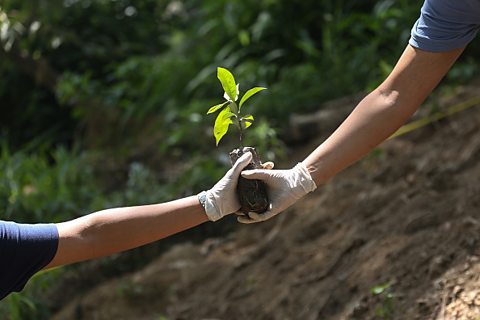
A key Jewish principle linked to environmental responsibility is , meaning “do not destroy.” It comes from a command in the Torah:
“Do not destroy its trees by putting an axe to them.”
(Deuteronomy 20:19)
Many Jewish people believe that although animals and plants were created by God to be used responsibly, humans hold a higher status. This is based on the concept of , the belief that humans are made in the image of God.
Jewish teaching also links environmental care to social responsibility. The Torah command to "love your neighbour as yourself" (Leviticus 19:18) is understood to include caring for the environment so that it remains healthy for current and future generations.
Global warming is the dramatic increase in the Earth’s average surface temperature, caused by greenhouse gases such as carbon dioxide and methane being released into the atmosphere as emissions. Many Jews see this as a moral issue because it is harming God’s creation and threatening future generations.
Exam-style question
Which principle in Judaism means “do not destroy”?
Sample answer
Bal Tashchit means do not destroy.
Animal rights
Many Jewish people believe that although animals and plants were created by God to be used responsibly, humans hold a higher status. This is based on the concept of , the belief that humans are made in the image of God.
Judaism teaches that animals are part of God’s creation and should be treated with care and kindness. The principle of requires Jewish people to avoid causing unnecessary suffering to animals. This means that Jewish people have regard to animal welfare, but don't go so far as granting animals rights in the same way as humans.
A key verse from the Tenakh states:
“The righteous care for the needs of their animals.”
Proverbs 12:10
The principle of is one of the most important values in Judaism. Because saving human life overrides almost every other commandment, many Jewish people believe that animal testing can be acceptable if it is necessary to develop life-saving medical treatments.
However, this should only be done with great care, using the smallest number of animals and avoiding unnecessary pain, in line with tza’ar ba’alei chayim. Some Jewish people are opposed to animal testing in any form, believing that causing harm to animals is never justified, even for medical research.
Judaism permits eating meat, but only if the animals are treated humanely and slaughtered according to laws. These rules are seen as a way of respecting the animal and following God’s commandments.
The origins of human life
Jewish scripture teaches that humans were created in the image of God ,, which means people have a soul and a moral awareness that reflect God’s qualities.
“The Lord God formed the man from the dust of the ground and breathed into his nostrils the breath of life.”
Genesis 2:7
The five books of Moses, known as the Hebrew Bible. teaches that the first humans were Adam and Eve, created by God with a special purpose and responsibility.
Some Orthodox Jews believe the Genesis account is literally true and that all humans are descended from Adam and Eve.
Other Reform and Liberal Jews may interpret the Adam and Eve account symbolically, for example the humans are special and have moral responsibility.
There are a range of views within Judaism about how scientific explanations relate to the teachings of the Torah.
In the 19th Century Charles Darwin proposed the Theory of Evolution, with evidence that is now widely accepted, including amongst Christians.
Some Jewish people reject evolution arguing that the Torah gives a literal account of how human life was made by God.
Other Jewish people may accept evolution. Many Jewish people believe that science and religion do not need to conflict. They think the Torah explains why human life exists, its purpose and spiritual meaning, whilst science explains how life developed, the processes.
Exam-style question
Explain two religious teachings about the origins of human life. Refer to sacred writings or another source of religious belief and teaching in your answer
Sample answer
Judaism teaches that humans were created b'tzelem Elohim, in the image of God, as stated in Genesis 1:27: "God created mankind in his own image." This belief teaches that every human being has inherent dignity and value because they carry God's image, which is the foundation for the Jewish teaching on the sanctity of life.
Judaism also teaches that God gave humans a unique purpose and responsibility in creation. Genesis 2:7 teaches: "The Lord God formed the man from the dust of the ground and breathed into his nostrils the breath of life." This shows that human life comes directly from God and that humans were created with the specific responsibility to care for God's creation as stewards. This belief influences how Jewish people view their duty to protect both human life and the natural world.
Abortion
Video
Watch the video below to compare Buddhist, Jewish, and Christian attitudes towards abortion.
Buddhist presenter: How
Christian presenter: do different religions
Jewish presenter: view abortion?
Buddhist presenter: Hello, I'm Buddhist.
Christian presenter: I'm Christian,
Jewish presenter: and I'm Jewish.
Buddhist presenter: And we all believe that life, especially human life, is precious.
Christian presenter: Christians call this the sanctity of life,
Jewish presenter: which means it's holy and should always be protected. In Judaism, we call this pikuach nefesh, which means saving a soul.
Buddhist presenter: Abortion is legal in the UK.
Christian presenter: In specific circumstances which are set out in law.
Jewish presenter: But what do our religions say about it?
Buddhist presenter: Buddhism teaches that we live many lives in many bodies, but this life begins at conception, which is when a sperm fertilises an egg. The first of the Buddha's ‘five precepts’ says we should avoid taking life. So we try to live by the principle of ahimsa, which means ‘non-violence’ or ‘non-harming.’ And many Buddhists say this means abortion can't be allowed. However, some Buddhists believe that if a pregnancy is putting the life of a mother in danger, then an abortion is acceptable. This shows a Buddhist teaching called karuna, meaning compassion, which encourages us to reduce people’s suffering, if we can.
Christian presenter: In the Bible, the writer of Psalms 139 talks about God “seeing my unformed body in the womb.” So many Christians also believe that life begins at conception or soon after and should be protected. The Roman Catholic Church teaches that abortion is never allowed, no matter what the circumstances. Pope Paul VI wrote, all direct abortion are to be absolutely excluded, but in some cases, the Roman Catholic Church does support the principle of double effect. This is when, in order to do something good, something bad will also happen. For example, in the case of an ectopic pregnancy, when a fertilised egg grows outside the womb and puts the mother's life at risk, the church allows treatment to save the mother's life, even though it will result in the loss of the pregnancy. Protestant churches, like the Church of England, are also against abortion, but accept that there are reasons why it might be the best thing to do in some situations. It might be left to individual churches to give advice based on their own moral judgements.
Jewish presenter: An ancient collection of Jewish writings called the Talmud describes a foetus as ‘water’ for the first 40 days, and we take that to mean that it isn't a potential life until then. It isn't a life in its own right until birth. But we believe that a foetus is precious at all times because it's God's creation. So abortion should always be a last resort. Another book called the Mishnah says, “if a woman is having trouble giving birth, her life comes before the life of the child.” So if a mother's life is in danger, an abortion might be necessary to save her. But there are many other things to think about when deciding if abortion is an acceptable choice.
Buddhist presenter: Medical screening tests during pregnancy might show problems in the development of the foetus.
Christian presenter: The child might be born into extreme poverty or dangerous circumstances.
Jewish presenter: So religious believers might need to think about things that would affect quality of life.
Buddhist presenter: The Dalai Lama, the leader of Tibetan Buddhism, said “I think abortion should be approved or disapproved, according to each circumstance.” This shows another Buddhist teaching called Metta, which means loving kindness, and we believe that an aborted embryos, Vijñāna, their consciousness, will pass on to another life.
Christian presenter: Many Protestant Christians, including the Baptist, Methodist and United Reformed Church would agree that abortion is always a difficult choice to make, but it might be the best course of action in certain circumstances. There aren't always simple answers.
Jewish presenter: Some Jews would also say that an abortion should be allowed if the mother's physical or mental health might seriously suffer, or if the baby is likely to be born with a serious health problem. But each situation needs to be judged very carefully.
So all of our religions believe in the sanctity of human life.
Christian presenter: The Roman Catholic Church opposes abortion, but many Protestant Christians, including the Church of England, would say there are situations when it might be understandable.
Jewish presenter: Which is also the teaching in Judaism. Every case is different.
Buddhist presenter: And all of our religions teach us that every decision must be made with compassion.
An abortion is a way of ending a pregnancy, and in the UK it is legal under specific circumstances which are set out in law.
A central Jewish text that is the source of civil and ceremonial Jewish Law. teaches that a fetus is not yet considered a full person before birth. It has potential for life, but its status is different from that of the mother, so Judaism does not forbid abortion.
The principle of means that protecting the mother's life takes priority. If the mother's life is in danger, abortion is therefore permitted.
“As long as it has not come out into the world, it is not called a living being, and it is permissible to take its life to save its mother.”
Rashi on Mishnah Ohalot 7:6
Judaism also recognises the concept of quality of life alongside value and sanctity of life. Whilst life is sacred, some Jewish people believe that when making difficult ethical decisions about abortion, the quality of a person's life - including their suffering, health, and wellbeing should be considered.
Euthanasia
Euthanasia is the act of deliberately ending a person's life to relieve suffering. Euthanasia or assisted dying is currently illegal in the UK (March 2026).
Judaism teaches that human life is sacred because it is created by God. As a result, most Jewish people believe that deliberately ending a human life is wrong.
“You shall not murder.”
Exodus 20:13
Because of this, euthanasia, directly causing death, is generally forbidden in Judaism. Life is seen as belonging to God, so only God should decide when it ends.
Judaism distinguishes between prolonging life and prolonging dying. Some Jewish scholars teach that whilst it is forbidden to speed up death, there is no obligation to prolong the dying process through artificial means if the person is suffering greatly.
This view is supported by a Talmudic story in Ketubot 104a, where obstacles to a dying rabbi’s death were removed so he could die peacefully. This is often understood to mean that removing barriers to death is different from actively causing death.
Many Jewish people to reject active euthanasia because of the implications for the value and sanctity of life. This belief may be held even in cases of extreme suffering, while allowing limited decisions that do not directly cause death, as maintaining respect for God’s authority over life remains central.
Death and the afterlife
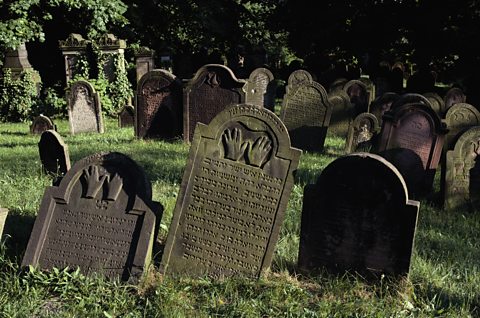
Life after death is not a central focus In Judaism and it is not explicitly mentioned in the Torah. How Jews live their lives on earth, following God's commandments and living ethically is generally considered more important.
However, although not a focus, there are various views on the afterlife in Judaism, but no single view has ever been officially agreed upon.
Some Jews may believe in olam ha-ba (“the world to come”), a future state of peace after God’s judgement. Others believe in resurrection or reincarnation, while some think the details of the afterlife are unknown and not essential to faith.
Belief in judgement or a world to come encourages some Jewish people to act responsibly, but many are motivated by the idea that life itself is sacred and meaningful.
Test your knowledge on Judaism
More on Judaism
Find out more by working through a topic
- count2 of 3