Humanitarian concerns
Being enslaved was a harsh and cruel experience. Up to a third of enslaved people died on the Middle Passage. Another third died on the plantations within a few months of arriving. Others died from demanding, sometimes dangerous work.
Enslaved African people were regarded as the property of their white owners and had no rights.
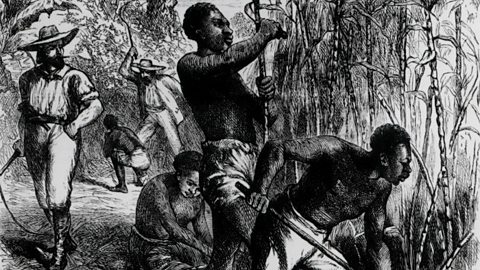
An enslaved person's first experiences
This involved imprisonment in the slave factories of the West African coast. On a slave ship, enslaved people had to endure the horrific ordeal of the Middle Passage:
- overcrowded conditions in the hold with little light or fresh air and no sanitation
- mistreatment and violence from the crew
- sickness and disease
Enslaved people then faced the frightening experience of their auction in the Caribbean ports. Friends and families were separated, often never to see each other again.
Enslaved people who weren’t bought in the auctions were treated very poorly - sometimes plantation owners bought them cheaply to work them to death.
Enslaved people who were viewed by slavers or plantation owners as disobedient or difficult could be sent to ‘seasoning camps’. People who were too weak or sick to be sold were sometimes just left to die.
