Geometric forms
Whether they are real or implied, all forms are either geometric or organic.
Geometric forms are pure, mathematical objects including cubes, pyramids and spheres. Geometric forms appear man made and can suggest something solid, balanced and permanent.
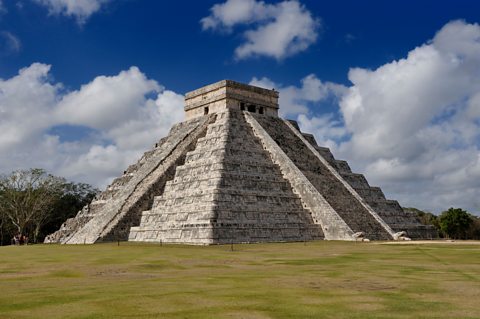
The Temple of Kukulcan in Chechen Itza, Mexico (constructed 9th – 12th Century) is an example of a real geometric form.
It is a pyramid that has been constructed by people. It is not a natural form.
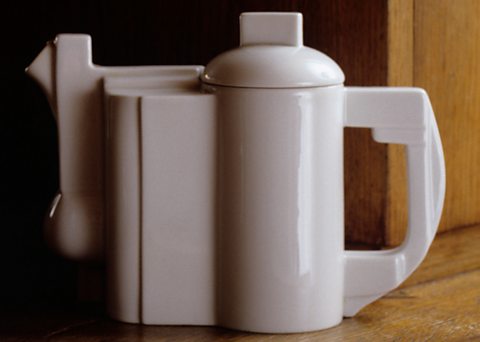
This An art movement started in Russia around 1915 which aimed to directly represent the modern world through abstract use of shapes, forms and materials. teapot (Kasimir Malevich, 1923) is a real geometric form.
The main body is made from an interlocked cylinder and cuboid with a spout created from a sphere, cuboid and triangular prism. All these are mathematical rather than natural forms.
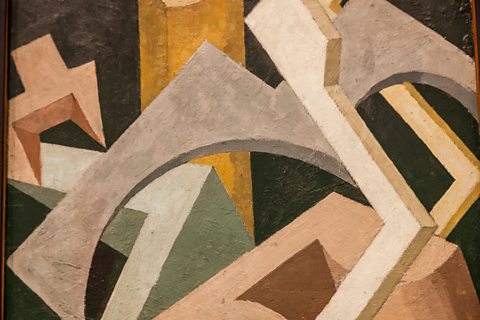
Abstract Composition (Jessica Dismorr, c.1915) shows a number of objects that could be parts of buildings or other structures. These are geometric forms.
Although they are irregular, they are made up of straight faces, sharp angles and perfect curves. This is a two-dimensional work so these are implied forms rather than real forms.
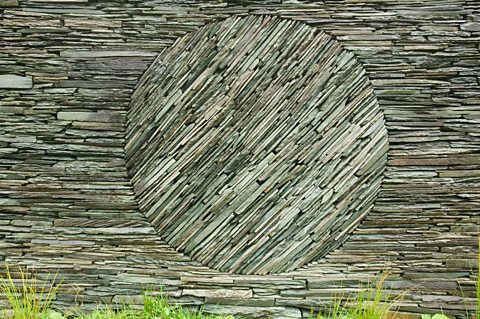
Andy Goldsworthy created a geometric form in Slate Fold (2013) by placing pieces of slate in an order that made a circular section of a wall.
