Surface treatments and finishes
There are a number of A process applied to the surface of a material to improve its properties, alter its aesthetics or protect it. and A protective or decorative layer added to a product such as varnish or paint. that can be applied to materials to improve their performance, eg enhancing The ability to be hardwearing., alter their How something looks., or protect them, eg from Iron oxide formed on iron or steel, orange coloured, flaky., chemicals or fungi:
- Papers and boards can be Enclosing in a thin film of a different material. or At least two layers of material bonded together. with foils or polymers
- timbers can be painted, stained, waxed, oiled and varnished to protect them as well as changing their aesthetic
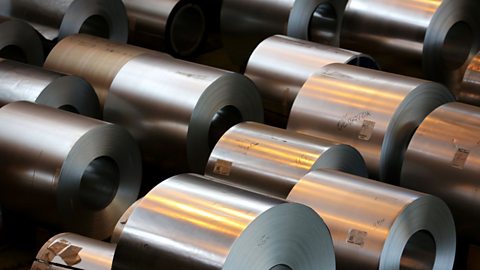
- metals can be Coated with a protective oxide layer by a chemical or electrolytic process. , The process of covering metal, usually steel, with a layer of zinc plating to provide protection from rusting or painted to protect them or alter their aesthetics
- polymers can be applied as adhesive coatings, eg as vinyl stickers or ‘wrappers’ to protect a product or to alter its aesthetics
- fibres and fabrics often are given protective coatings to protect them, eg from staining or to reduce flammability
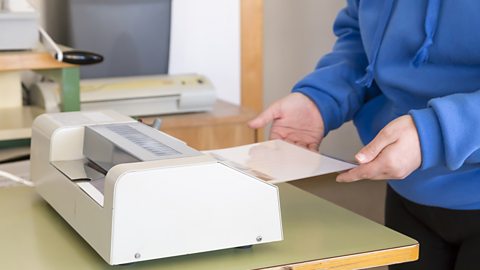
Image caption, Laminating paper
1 of 2
End of image gallery
