The effects of industrialisation
In the late 18th and 19th centuries, Britain experienced its industrial revolution. With it came a rapid growth in population as well as a huge movement of people from rural areas to industrial towns.
Though great progress was made in industry and technology, living and working conditions remained poor and were a major cause of illness and disease.
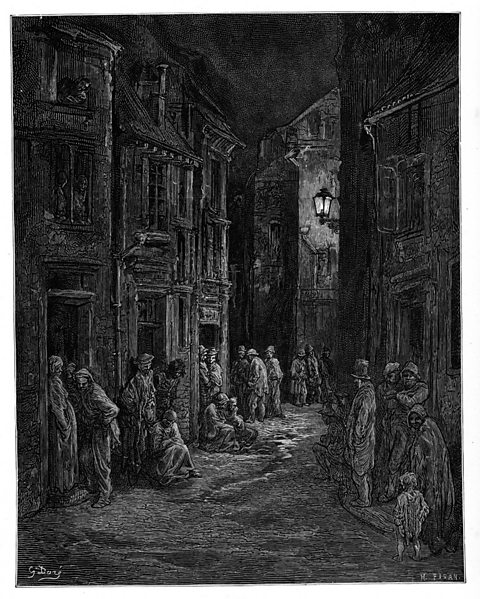
Industrial towns, like Merthyr and Cardiff, grew rapidly without planning and were overcrowded. The government believed in Translated as 'leave well alone' or 'let the people choose'. A government policy of interfering as little as possible in the economy. . This meant that public health schemes were not introduced until the latter part of the 19th century. There were no regulations about the basic standards for housing, sewage and water supply. In the slum areas of cities, diseases like cholera, typhus and diphtheria were A disease which is always present in the population, eg chickenpox.. Some could be linked to poor sanitation (cholera) and poor housing (TB) while others were spread by body lice (typhus).
In addition, there were the new industrial diseases. In Wales, coal miners and slate quarrymen died from a range of lung diseases, eg silicosis and pneumoconiosis, while copper workers in Swansea suffered from TB and bronchial conditions. Employers wrongly argued that not only was copper smoke harmless, it was actually healthy.
With dangerous working conditions and little attention to health and safety, industrial accidents also left many dead or injured for life.
There were many reasons why industrial towns were so disease-ridden.
- Streets were narrow, often built in courts, with little air or sunlight. Families shared houses so overcrowding was common.
- Houses had no clean running water and families shared standpipes which often ran dry in hot summers.
- Families also shared A toilet located in a small shed outside a house or other building.. These often overflowed on to the street or into the wells from which people drew water.
- There was no refuse collection, so rubbish piled up, attracting rodents.
- Graveyards were overcrowded, especially during an epidemic, and bodies were not buried deeply enough.
- The houses were Badly or hastily built with inferior materials. , with the aim of making money for landlords rather than providing warm and healthy accommodation for workers.
- Houses were damp inside and hard to heat. Roofs and window frames often leaked.
- The cellar dwellings were very damp and sometimes flooded with rain or sewage.
- The diets of the working population remained poor as they could not afford fresh food.
- People rarely washed themselves or their clothes, so became infested with lice and fleas.
Victorian slum housing