All about capybaras
Today, it’s hard not to spot a capybara in a viral video on social media, or as a character figure on some form of merchandise. In recent years, the large rodents have become somewhat internet sensations, driving demand to see the curious creatures in person.
The cute mammals have short legs, coarse brown fur and are known for their calm, friendly demeanour. But how much do you know about capybaras?
Here, BBC Bitesize shares a number of fun facts about capybaras that you may not know. We’ve also taken a closer look at how they’ve been at the centre of several trends and stories.
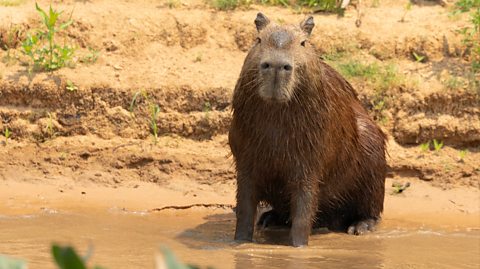
What is a capybara and where are they native to?

Native to South America, the capybara is a semi-aquatic mammal often compared to a giant guinea pig. Capybaras belong to the family Caviidae, which includes several species native to South America.
There are two species of capybara, the greater capybara (Hydrochoerus hydrochaeris) and the lesser capybara (Hydrochoerus isthmius). Their scientific genus name, Hydrochoerus, comes from Greek and translates to “water pig.”
Capybaras inhabit areas close to water such as wetlands, open grasslands and forests and have webbed feet for swimming. The animal is known for its calm, social and relaxed nature.
How big is a capybara?

The greater capybara is the world’s largest rodent. According to Guinness World Records, they can reach up to 1-1.3 metres with their head and body length.
The second-largest rodent in the world is the beaver – and a capybara can grow to be nearly twice its size. Female capybaras tend to grow slightly bigger than the males.
The average weight of a greater capybara varies, but most sources claim they can grow to weigh anything from 70lbs to well over 100lbs. Guinness World Records state that one female capybara in Brazil reached 201lbs!
What do capybaras eat?
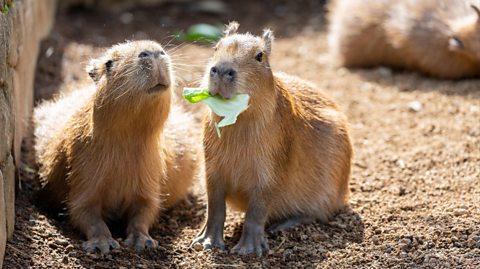
Capybaras are herbivores, meaning they only eat plants. They primarily graze on grasses and water-based plants.
In dry seasons, they are also known to eat grains and various fruits. Although they are not ruminants like cattle or giraffes, capybaras still regurgitate food to chew it a second time.
They consume their own faeces, which is high in protein and allowing them to digest their food twice.
Other fun facts about capybaras
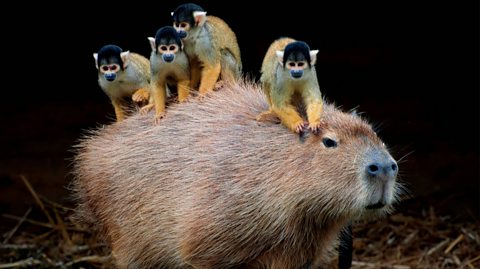
Capybaras are curious animals and while they have become internet sensations in recent years, there’s still a lot people don’t know about them. There are so many cool facts about capybaras to mention, but here’s just a few.
A group of capybaras is called a herd. They are social animals and usually live in small family groups of around 10.
Widely thought to be the friendliest animals in the world, they get along with a variety of animals like small birds and monkeys. They have big front teeth that never stop growing and are worn down by eating tough plants.
They look large and stocky, but they are surprisingly fast and can reportedly reach speeds of up to 22 mph. Their predators are jaguars, anacondas and caimans.
Their lifespan is usually around a decade long and female capybaras typically live longer than males. They are not endangered and, on the IUCN Red List (the International Union for Conservation of Nature), they are listed under Least Concern.
Why are capybaras so popular?

Known for being extremely friendly and calm, it’s no wonder capybaras have gained popularity across the globe. In recent years, they’ve become among the internet’s most famous animals.
One TikTok song released in 2023 attracted hundreds of millions of views and from there, there has been a rapid rise in demand to meet capybaras in animal parks and zoos worldwide. There are numerous capybara petting experiences around the globe and in 2026, the UK’s first capybara-dedicated cafe is to open in Norfolk.
They've also influenced the food world through one artistic viral food trend - a capybara shaped jiggly pudding that originated in parts of Asia. Like foxes, koalas and sloths, today it’s not unusual to see them on animal-themed merchandise like toys, mugs, pyjamas, mobile phone cases and more.
In film, we’ve also been introduced to characters like Chispi in Disney’s Encanto. In the 2021 animated film, Chispi is a capybara living in Antonio Madrigal's magical tree house.
Several capybaras living in the UK have also captured the hearts of millions. One example is Cinnamon, who captured the world’s attention when she escaped her home at Hoo Zoo and Dinosaur World in Shropshire in September 2024.
The escaped capybara sparked an extensive seven-day rodent hunt. But her story led to internet memes, a song, merchandise, a book and a cartoon.
Capybaras are without a doubt social media icons and have been at the centre of many viral memes, as well as AI generated videos. Scrolling through your feed today, you’ll likely find an AI video of a capybara in some form, doing everything from skateboarding to dancing, extreme sports and more.
To find out more about AI trends taking over social media – and how to navigate fake news and information – visit Bitesize’s Other Side of the Story section here.
This article was written in March 2026
