Sweet facts about chocolate
We eat it when we're happy, sad, celebrating or commiserating. Yes, we're of course talking about chocolate.
It's an incredibly important - and delicious - aspect of people's lives across the world and there's always a new trend around the corner, like Dubai chocolate. But have you ever thought about where chocolate comes from?
Here, BBC Bitesize takes a brief trip back in time to take a closer look at the history of chocolate. From its origins to the invention of the chocolate bar, you can find out more fun facts below!
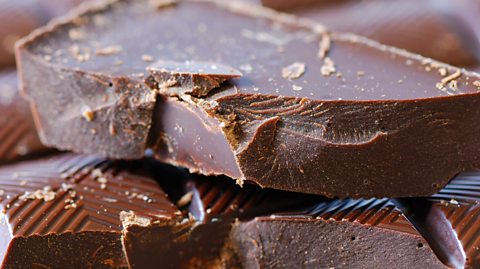
What are the origins of chocolate?
We have the ancient Maya of Mesoamerica (which was made up of countries in what we now know as Central America, and southern Mexico) to thank for chocolate. Although the Maya weren’t scoffing the bars we know and love today.
It all starts with the cacao bean. Yes, we spelt that right - cacao is the Spanish word for chcahuatl, which is what Aztecs called the beans chocolate is made from. It’s thought that English traders misspelt cacao when they brought the beans home, and so cocoa stuck.
Example Aztec price list might look like:
- 1 bean = 1 ripe avocado
- 4 beans = 1 pumpkin
- 10 beans = 1 rabbit
- 100 beans = a turkey hen
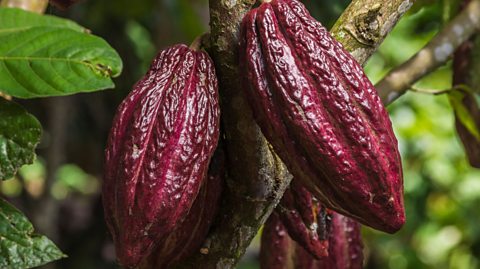
Back to the Maya though. They would dry, grind, and mix the beans with water to create a drink. You might think yum, hot chocolate - in fact it was quite bitter and frothy, and was often mixed with chilli. After the Aztecs conquered the Maya, they went berserk for the stuff.
The Mayans and the Aztecs believed (and perhaps some people still do) that chocolate was a gift from the gods. The Aztecs in particular revered the drink - they gave it to victorious warriors after battle, would use it during religious rituals, and even used cacao beans as currency. Cacao beans were highly prized and even used as a form of currency. Next time someone says money doesn’t grow on trees, you’ll know what to tell them.
The Aztec word for the bitter drink is ‘xocolatl’ which some think the modern word chocolate comes from. It bears a resemblance… sort of. Others think chocolate comes from the Aztec word ‘choqui’, which means warmth.
How did chocolate make it to Europe?
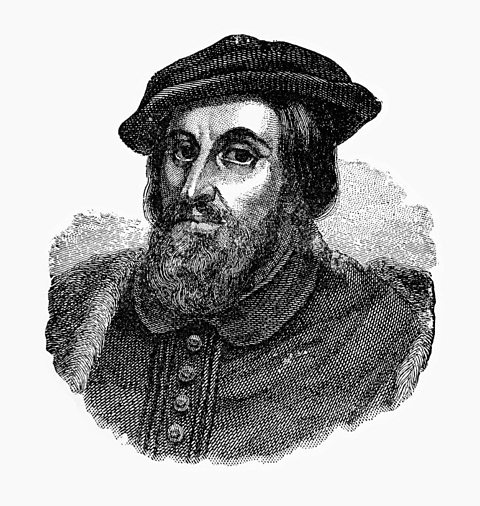
So how did it make its way to Europe? Well, during the 16th century a man called Hernán Cortés travelled to Mesoamerica to establish Spanish colonies, and when he arrived he was greeted with gallons of the spicy drink. He took some home with him to Spain and it became a hit.
Initially, it was often used as a medicine, but its bitter taste led people to try sweetening it. So, some added sugar, vanilla or honey. This made it absolutely delicious, and it soon became very fashionable at the Spanish court.
How was chocolate revolutionised?
Chocolate was ‘the’ drink of the European aristocracies - no upper-class home was complete without chocolate making and drinking paraphernalia. Up until this point, chocolate had only ever been consumed as a drink.
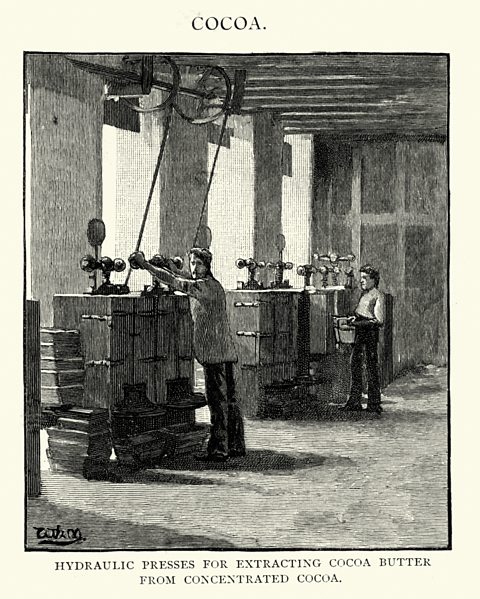
But things started to change in 1828. Coenraad van Houten from Amsterdam was the man who changed the game: he invented the ‘cocoa press’, which could separate the fat from a cacao bean, leaving behind a fine powder.
This made cocoa drinks smoother and easier to prepare, and people started adding milk to it instead of water, making it more like the hot chocolate we’d drink today. This method also meant chocolate could be mass-produced, which made it cheaper and so the wider public could buy and enjoy it. Some called this the democratisation of chocolate.
Who invented the chocolate bar?
In 1847 British chocolatier J.S. Fry and Sons had the novel idea of recombining the fat and liquor, and adding sugar. He set this in moulds, and voila! The chocolate bar was born.
The chocolate made through this method resembled a mild dark chocolate. The next big episode in the chocolate saga came when Swiss chocolatier Daniel Peter put powdered milk in the mix, creating the world’s first milk chocolate bar.
Chocolate’s popularity soared from then on, and it’s never really declined.
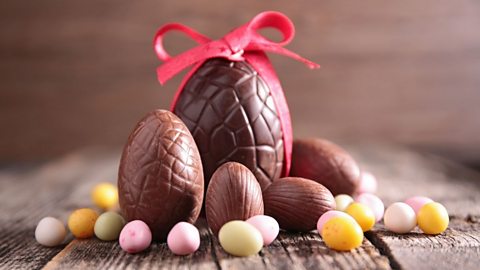
J.S. Fry and Sons are not only responsible for the first chocolate bar - but also for the first chocolate Easter egg. Decorating eggs at Easter time had been a popular Christian tradition for centuries, but in 1873 Fry decided to create a chocolate version.
Fry then merged with a big chocolate company, who started the mass production of Easter eggs in England. What was the company you ask? None other than Cadbury’s.
When is World Chocolate Day?
Yes - there is a day dedicated to chocolate!
Every year, 7 July marks World Chocolate Day, an annual celebration of all things chocolate. The date is said to mark the anniversary of when chocolate was introduced to Europe, centuries ago in 1550.
In the UK, many chocolate businesses offer promotions to mark the occasion. However, there are many other chocolate day celebrations that exist - such as National Chocolate Day in the USA, which takes place every 28 October.
More fun facts about chocolate
- The inventor of the chocolate chip cookie, Ruth Wakefield, reportedly sold the recipe to Nestlé for $1.
- White chocolate isn’t actually chocolate, because it doesn’t contain cocoa solids. Sorry.
- The largest chocolate bar in the world weighed in at 5792.5 kg. Thorntons made it for their 100th birthday.
- The phrase ‘death by chocolate’ could have applied to Winston Churchill - during World War 2, the Nazis plotted to assassinate him using an exploding bar of chocolate.
This article was published in April 2019 and updated in July 2026
