What is the United Nations?
The United Nations (UN) is an international organisation founded in 1945. Its member countries have acted together with the aim of ensuring global peace and security since the end of the Second World War. Its headquarters are in New York City.
The UN is responsible for international cooperation and, since its formation has set out several goals aimed at achieving worldwide equality.
Between April and June 1945, as the Second World War drew to a close, representatives from 50 countries met at the San Francisco Opera House to draw up the A formal statement which outlines the rules and guidelines, these are agreed to and signed by each member of the United Nations.
It established the primary purpose, governing structure and overall framework of the United Nations.
On 26 June 1945, the charter was signed by the representatives of the 50 countries involved. It didn’t come into force until 24 October 1945, when the terms of the charter were To agree to a treaty or contract, making it official. This is the date now celebrated as United Nations Day.
Members of the United Nations
There were 51 members when the UN was founded, after Poland was allowed to join in October 1945. Since then, it has grown considerably and as of 2021, it has 193 member states.
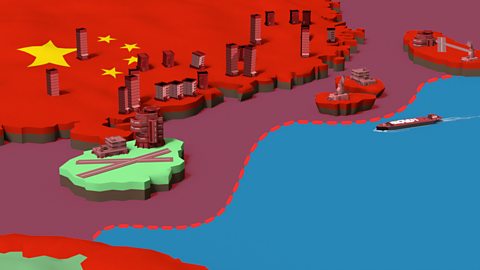
The A group of 15 member countries who determine the existence of a threat to peace or act of aggression has responsibility for international peace and security. It has 15 members, five of whom have permanent seats:
- United Kingdom
- United States of America
- China
- France
- Russia (which took the Soviet Union’s seat in 1991)
The aims of the United Nations
Since it was established, the United Nations has developed a range of goals and agreements to encourage its member states to work together to address global challenges.
The most recent of these are the Sustainable Development Goals. These were introduced in 2015 with the intention of promoting security and sustainable development around the world.
The 17 Sustainable Development Goals are:
- No poverty
- Zero hunger
- Good health and wellbeing
- Quality education
- Gender equality
- Clean water and sanitation
- Affordable and clean energy
- Decent work and economic growth
- Industry, innovation and infrastructure
- Reduced inequalities
- Sustainable cities and communities
- Responsible consumption and production
- Climate action
- Life below water
- Life on land
- Peace, justice and strong institutions
- Partnerships for the Goals
Source: UN Sustainable Development Goals
UN Peacekeeping projects - South Sudan
The United Nations has conducted over 70 peacekeeping missions since 1948.
South Sudan gained independence from the Republic of Sudan in 2011, making it the most recent country to join the UN (as of 2021) and its 193rd member. Since its formation, the country has experienced periods of civil wars and conflict since independence.
On 8 July 2011, the UN’s Security Council decided that the situation in South Sudan presented a threat to international peace and security in the region. The United Nations Mission in South Sudan (UNMISS) was established as a peacekeeping initiative to maintain peace and reduce conflict in the country.
The UNMISS identified several key priorities in supporting South Sudan including:
- ensuring the country has the support it needs for peace and can work on longer-term state building and economic development
- supporting the government with its responsibilities for addressing conflict and protecting its people
- supporting the government in developing its capacity to provide security, establish the rule of law, and to strengthen security and justice within the country
The UN would not be able to undertake these missions without the help of its member states. Many countries from across the world have contributed soldiers and police personnel to help maintain peace in South Sudan. A majority of these come from countries such as Rwanda, Nepal, Ethiopia and India.
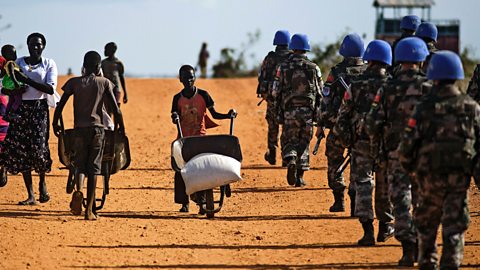
Signing a new peace agreement in 2018, and having a government of national unity in place, reduced the level of political violence across the country. UN Protection Sites, which were built to protect those in imminent danger during intense conflict, were gradually redesignated as more conventional camps for those people who had been displaced.

More on Conflict and peace
Find out more by working through a topic
- count2 of 2