What you need to know about teeth
Whether it's tucking into a Sunday roast or chowing down on a favourite snack, few things play a more vital role in our day-to-day lives than our teeth.
Made up of several different layers, our pearly whites are among the hardest and most brittle parts of our bodies, requiring frequent brushing and a healthy amount of dental care to keep them solid and shining.
So, here at BBC Bitesize, we thought we'd delve into some of the most queried questions about teeth, including what they're made of, how many we have and when adult teeth and wisdom teeth come through.

What are teeth made of?
Teeth and bone may look and feel relatively similar, but the two are actually quite different. Teeth are made up of several different layers, including enamel, dentine, cementum and pulp.
Enamel is the hard outer layer of the tooth, shielding the inner more sensitive layers from damage. Enamel is actually the hardest substance in the human body, even more so than bones.
Dentine makes up the bulk of the tooth's structure, surrounding the soft inner pulp and supporting the enamel. Pulp is a living tissue that serves as the innermost part of the tooth, containing nerves, blood vessels and connective tissue.
Cementum is a bone-like structure surrounding the root of the tooth, attaching it to the surrounding jawbone to help keep the tooth in place.
A key difference between teeth and bones is that bones are able to heal and repair themselves, in a way that teeth cannot, due to the lack of living tissue in the enamel. To avoid damage to your teeth, check out this article from Newsround with five top tips for looking after your teeth.

How often do I need to brush my teeth?
Brushing your teeth regularly is an important part of good oral hygiene, helping to prevent issues like gum disease and tooth decay.
The NHS recommends brushing your teeth twice a day, once before you go to bed, and once on another occasion. You should brush your teeth for around two minutes each time, making sure you get to every surface to maximise the benefits.
Alongside brushing, the NHS recommends flossing regularly, helping to ward off gum disease, tooth decay and bad breath. However, it’s important to follow the advice of your dentist, who will be able to give you more specific guidance on your dental health.

How often do I need to see a dentist?
It's commonly thought that everyone needs a regular dental check-up every six months, but, according to the NHS, this isn't actually the case.
The length of time between dental check-ups should be decided by your dentist, and can vary from three months to two years. Generally, this will be decided based on your dental health, with healthier patients having less frequent check-ups.
This is different from dental treatments, which may require additional appointments, such as fillings and tooth removal. If you experience any problems between check-ups, you should contact your dental surgery to make an appointment. You can find more information on the NHS website.
How many teeth do dogs have and which animal has the most teeth?
Like in humans, adult dogs and puppies have different sets of teeth, with their baby teeth eventually falling out to make way for their adult teeth. Adult dogs have 42 teeth in total, with 20 teeth on their upper jaw and 22 on their lower jaw. Puppies, by contrast, have only 28 teeth, which usually fall out when they're around six or seven months old.
As far as land mammals go, the toothy trophy goes the giant armadillo of South America, which has up to 100 teeth planted in its jaws. However, the reigning ruler of the animal kingdom, when it comes to the topic of total teeth, is actually the snail, which has thousands upon thousands of teeth on their tongue. The average garden snail has around 14,000 teeth, while other species of snail can have even more!

How many teeth do humans have?
Humans have two different sets of teeth in our lifetime, our milk teeth, sometimes known as baby teeth, and our adult teeth. Generally, children will have 20 milk teeth, 10 on the top row and 10 on the bottom, which tend to come in between the ages of six and 12 months.
Milk teeth then tend to fall out around the ages of five or six, with adult teeth coming in shortly thereafter. Adults have more teeth than children, totting up to 32 teeth, with an equal amount across the top and bottom.
For the most part, people will have a full set of adult teeth by their teenage years, made up of eight incisors, four canines, eight premolars, and 12 molars. To find out more about the different types of teeth, check out this guide from BBC Bitesize.
Why do we have wisdom teeth?
Wisdom teeth are the third set of molars which sit at the back of the mouth, generally being the final of our 32 adult teeth to come through.
In the modern day, wisdom teeth aren't thought to have a great deal of purpose, and are often removed by dentists due to pain or discomfort they might cause - so why do we actually have them?
Well, scientists believe that early humans needed these additional teeth to chew and eat tougher foods, such as plants and raw meat. Due to this tougher diet, early humans had wider jaws than we do today, accommodating their wisdom teeth without pain or discomfort.
Humans have evolved since then, now sporting smaller jaws, leaving less room for our wisdom teeth and diminishing their importance in our eating habits.
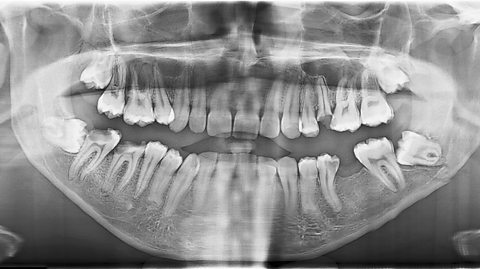
Does everybody have wisdom teeth and when do they come in?
No, not everybody develops wisdom teeth, with some adults failing to develop all four, whilst others don't get any wisdom teeth at all!
Sometimes known as third-molar agenesis, it isn't known exactly how many people go without developing wisdom teeth, though research suggests around 35% of people are born without them. Scientists aren't sure why this occurs, but it's very likely to be a result of genetics.
Other explanations include chewing functions, environmental factors, diet and disease. So, we know what wisdom teeth are, but when do wisdom teeth come in?
Wisdom teeth tend to come through later than the rest of our adult teeth, and actually tend to start growing somewhere between the ages of seven and 10.
Wisdom teeth usually come through, or 'erupt', between the ages of 17 and 25, with the name referring to the increased wisdom developed during that time.
Generally, wisdom teeth will erupt earlier in men, with the upper molars tending to be the earlier debutants. Wisdom teeth may need to be removed if they don't have enough space to fully come through into your mouth. If your wisdom teeth are causing you any pain or discomfort, be sure to contact your dentist.