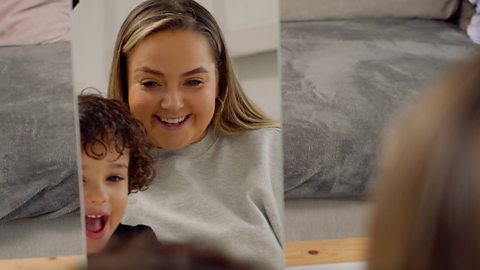
Yasmin's son Oliver was diagnosed with autism and sensory processing differences when he was two-and-a-half years old.
"Speech was probably the biggest barrier for us," Yasmin tells us. At first, Oliver could say "a few little words", but not long afterwards "he lost it all".
Watch Yasmin's story below…
“Love needs no words and I do truly believe that. [Oliver's] connection and interaction speaks volumes.” – Yasmin
Watch Yasmin and Oliver's story here
We may think speech is the main way we communicate, but communication is much more than spoken words, says Neha Mistry (formerly Makwana), a highly specialist speech and language therapist.
“If your child doesn’t talk or only uses a few words, it doesn’t mean they’re not communicating or don’t understand you,” Neha says.
“Facial expressions, eye contact, gestures such as pointing, signs, writing or using pictures are all ways they communicate.”
What does ‘non-verbal’ mean?
'Non-verbal' is a term sometimes used to describe someone who doesn't use spoken words to communicate.
However, ‘non-verbal’ is often seen as a broad label that does not capture the full range of communication experiences.
In reality, it isn’t so binary - children may use speech and other forms of communication in many different ways, explains Neha.
“For example, your child may communicate through gestures, facial expressions, sign language, writing and communication devices, or they may use single words, repeat phrases, or only speak in certain situations or with certain people.”
“Autistic children may speak but find it challenging in some situations, particularly when they are emotionally dysregulated or experiencing sensory differences.”
Because ‘non-verbal’ is so simplistic, some people, particularly in the autistic community, prefer other terms, adds Neha. “Currently these include ‘minimally speaking’ or ‘non-speaking’.”
'Pre-verbal' is another term typically used for young children who have not yet developed spoken language.
Why might a child not speak or use minimal words?
“It’s rarely down to one cause, but several overlapping factors,” explains Neha.
“These include developmental disabilities and autism. A child may have differences in language development, hearing differences, a genetic or neurological condition or difficulties with the mouth, throat or tongue, meaning they’re not able to produce certain speech sounds.
“These may include developmental differences or disabilities such as autism, differences in language development, or hearing differences.
“A child may also have a genetic or neurological condition, or structural differences affecting the mouth, throat, or tongue, which can make it difficult to produce certain speech sounds.
“They could have motor planning difficulties – problems with how the brain sends messages to their mouth, called childhood apraxia of speech. Or differences in attention, sensory processing or regulation.”
As it’s so complex, it’s hard to say how many children are non-speaking or only speak a few words. But we do know that problems with speech and language are incredibly common and affect around two million children in the UK.
If a child is autistic are they more likely not to speak?
However, their experience is unique to them and causes vary, explains Neha.
“Some children may develop speech and language along a similar timeline to other children, some may develop them over time, others may remain minimally speaking or non-speaking.
“These differences can relate to a range of factors, including differences in sensory processing, motor planning and coordination, and anxiety, overwhelm or stress.”
How to communicate without words
“View communication through a wide lens and focus on building connection – a strong relationship does not depend on spoken language,” says Neha.
“Your goal is to help your child express themselves, respond, feel understood, build relationships and participate.”
1. Be observant
“Look at the ways your child communicates in their own unique way – their eye gaze, facial expressions, gestures, reaching, or using other behaviours,” says Neha.
“You may notice that your child gets really frustrated or excited in certain environments. When you understand what’s causing these feelings and why they communicate in a certain way, you can respond in a meaningful way.”
“My advice to other parents would be don’t forget to be present and to enjoy those moments of when your child is young because you don’t get them back. – Yasmin
2. Prioritise playtime and follow their lead
Having fun together is one of the best ways to build connection, says Neha.
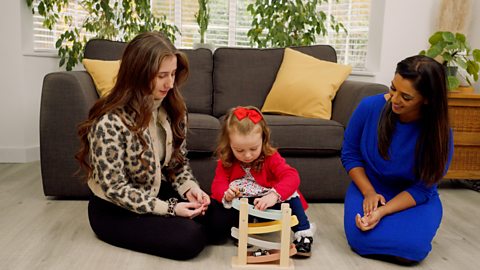
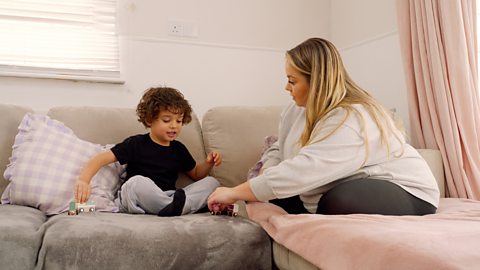
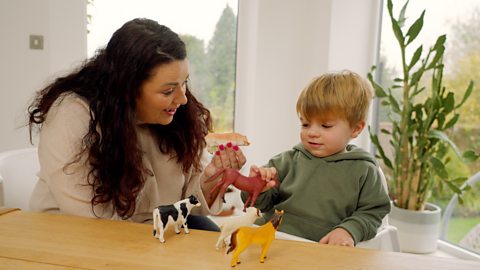
“Let your child take the lead and join in with them. This will help them feel safe and understood and create opportunities for turn-taking and interaction.
“Offer choices and try not to anticipate their need. See what sparks their interest and let it develop naturally. Keep things casual – rather than there being a set beginning and end to an activity. If something doesn't work out, just move on.
“For example, if you’re looking at a book and they’re distracted by a toy car, don’t worry about finishing the book. You could use the book as a tunnel and push the car through. Or keep it fun and interactive by doing the actions shown in the book.”
3. Be patient and responsive
“Children are often more likely to communicate when they don't feel tested,”explains Neha.
Always simplify your language and be clear.
“Model words or phrases, but don’t pressure your child to repeat them. Match what you say to them. So, if they’re not speaking yet, use single words. If they use single words, then use two words.
“Some children find eye contact quite uncomfortable. So don’t assume that because they’re not looking at you, that they don’t understand or aren’t listening.”
4. Get support
“As well as professional guidance, connect with other families who might be on a similar journey – it will remind you that you’re not alone,” recommends Neha.
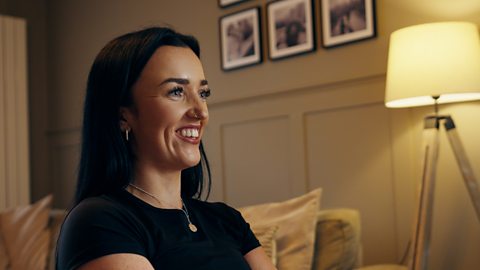
I know there are so many families out there, living that life we once were. I want to show them that there is a light at the end of the tunnel and there is help there. – Yasmin
5. Find out about AAC
Augmentative and Alternative Communication (AAC) is a range of tools and approaches that can support communication.
“It can be ‘unaided’ where no equipment is needed, such as signing and pointing; using low-tech tools, like objects, photos, pictures or communication books; or using high-tech tools, like tablets and computers,” explains Neha.
“You may worry these could replace speech and discourage your child from speaking. In fact, they work alongside speech, taking the pressure off when they can’t express themselves verbally.
“Don’t think of AAC as the last resort. As soon as you feel your child may benefit, a speech and language therapist can help you find the system that works best for your child and their needs.”
6. Celebrate small steps forward
“Identify that little win and praise your child – celebrate that they’re trying hard,” says Neha.
“A big thing for your child might be when they look at someone to share enjoyment or make a choice when you offer two items. Or maybe they use a new gesture or take part in a family activity, even if it’s brief.”
“He has made me grow into such a better person.” – Yasmin
7. Encourage shared play with siblings
With support and understanding, siblings can play a valuable role.
“Talk openly with them about the different ways we communicate, model patience and waiting for a response and how to celebrate all forms of communication – ‘Your brother isn’t talking, but he pointed to show us the aeroplane and that was amazing’,” recommends Neha.
“This shows that not everyone communicates in the same way and there's no ‘right’ way to communicate. You’re building empathy.”
“The thing that probably means the most to me is when the boys interact together… That’s really special.” – Yasmin
8. Look after your own wellbeing
In all of this, take care of yourself and seek professional support if you need it, stresses Neha.
“It can be emotionally demanding. Acknowledge what you’re experiencing. Parents often describe a mix of emotions, including worry, grief, pride and hope.
“Try not to feel guilty about taking breaks and doing something for yourself. You cannot pour from an empty cup, so it's so important that your cup is filled so that you can give your best to your child.”