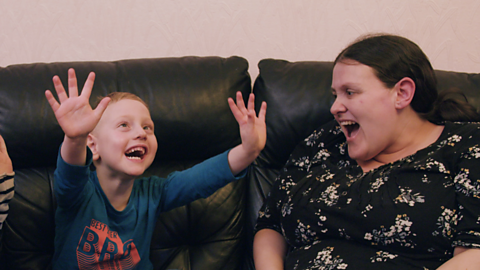
Attachment describes how humans form emotional bonds with one another, and they are developed in childhood through our earliest relationships with our parents and carers.
Clinical psychologist Dr Emma Svanberg shares her tips and insights to help understand the importance of attachment styles.
In this episode of Parenting Helpline, Dr Emma chats with Holly Hagan-Blyth and Charlie Hedges about the fascinating science behind attachment, what it means for us and our children, and how we can connect and build stronger relationships.
So, how can parents ensure they nurture a secure bond and create positive relationships with their children?

1. Respond promptly to your child’s needs
When your child needs comfort, reassurance, or attention, it’s important to show them that you are there for them whenever possible.
Responding to your little one’s needs helps them understand that their feelings matter to you.
Over time, this consistency builds a strong foundation in your relationship and helps your child learn to trust your words and actions and to feel safe to express themselves.
Even when you can’t respond straight away, acknowledging their feelings helps children to feel seen, heard, and valued.
Establishing these patterns early creates a predictable and structured environment for your child.
2. Encourage your child to form relationships with each parent or carer
“It becomes less about somebody just coming and meeting a need and more about you allowing that toddler or child to go off and explore.” Dr Emma Svanberg
If your child tends to go to one parent more often, that is perfectly normal.
Talk it through together and try not to worry as these apparent preferences usually change over time.
Make sure to keep up shared routines so that your child feels safe and secure with both of you.
When both parents or carers share caring tasks, your child learns that comfort and safety can come from multiple people.
If you are co-parenting, it’s important to continue to communicate and put negative emotions to one side for the sake of your children.
3. Talk through big emotions
Allow your child to express distress or frustration without immediately trying to fix it, giving them space to experience their feelings fully.
By remaining calm and composed, you are letting your child know that all emotions, no matter how difficult, can be managed with communication.
Gently label their feelings. It can be really useful to draw or make faces together, showing them feelings like ‘happy’, ‘sad’ and ‘angry’.
Encourage simple coping strategies, like deep breathing or pausing to reflect, so they learn healthy ways to manage strong emotions.
Over time, they will understand that feelings come and go, and that they can rely on you for guidance and support to work through their worries.
4. Understand it takes a village to raise a child
Whether it’s nursery staff, relatives, or close friends, make sure your child has a circle of trusted adults who consistently demonstrate care and warmth.
Secure attachments can develop with a variety of caregivers, not just parents.
Through this broader network of support, your child has the opportunity to observe others showing kindness and reliability.
Encouraging safe and nurturing connections beyond the immediate family can also ease the transition to school.
Clinical psychologist Dr Emma Svanberg is a guest on the CBeebies Parenting Helpline podcast