Simple moments can help your child to understand qualities such as kindness and empathy.
Everyday activities can lead children to pick up new words and make sense of the world around them.
In Hamza Love Animals, wildlife expert Hamza meets a whole host of exotic creatures in Africa, including lions, elephants and monkeys.
Watch our exclusive film with Hamza, to gain ideas for moments of shared play and conversation.
HAMZA:
Welcome to Kenya, where all sorts of social situations are playing out between the animals here.
When we studying animals in groups, we start to notice bonds and connections, just like humans.
Animals love and care for each other, just like we do.
By observing their behaviour, children begin to understand their own relationships.
They can develop empathy and compassion for others.
Let me and my animal friends show you how you can help your child develop those skills by watching 'Hamza Loves Animals' together.
Throughout the series, there are many examples of animals caring for each other, like when the baby zebras welcome a shy newcomer.
(child's voice over Zebra) "I feel scared because I'm new here and don't know anyone."
(child's voice over Zebra) "Well I'm … " (gives Zebras' names)
HAMZA:
This is a great opportunity to talk to your child about looking out for others.
Why not see if your child can spot other caring actions by the animals, such as grooming, cuddling or sharing space?
"It might look rough when they're playing with each other, but they're really bonding as a big family."
By watching animals and their behaviours, children can notice bonds and make connections with their own lives.
This helps strengthen children's social and emotional learning.
You can use all sorts of moments from the series to 'spark' conversations with your child - about empathy, kindness, and building healthy relationships.
So give it a try and see where the conversations take you.
Watching CBeebies shows together
Watching CBeebies shows together like Hamza Loves Animals is a great way to start conversations and games with your child.
Just like in the film above, you could pause the show and chat about the different animals you've seen together and what your favourites were.
You can use moments from the series to talk with your child about how animals might feel about things that happen and each other.
Four social skills your child can learn from nature and animal families
1. Empathy and kindness
Nature is full of moments where animals show care — from sharing food, grooming and cuddling, to protecting and nurturing their young.
Spotting these moments with your child can help them to understand what kindness looks like.
Talking about how animals care for one another could also encourage children to talk about other people's feelings and needs.
For example, you could ask how the animals are helping each other and what humans can do to be kind.
These conversations help children to develop empathy and encourage them to show kindness in their own lives - whether helping a friend, sharing a toy, or comforting someone who is upset.
2. Understanding relationships and connection
Watching animal families can give children a chance to see how living things bond and depend on each other.
Talking about these moments can help children relate what they see to their own family and friendships.
It can encourage them to think about the people who care for them and the different ways they support one another.
For example, you could ask your child, 'Who helps this animal?' and, 'How do these animals work together?'
These conversations help children to understand relationships and belonging.
They also support children's social development by encouraging them to recognise the important connections that they have with their own family, friends and their wider community.
3. Curiosity and awareness of the world
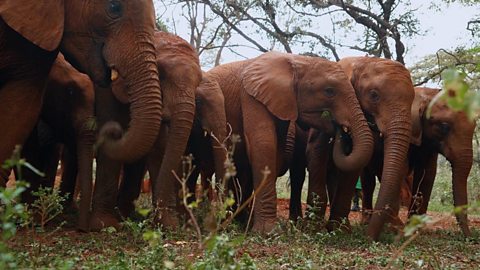
Spending time with nature encourages children to notice, wonder and explore the world around them.
You could encourage this by talking about different environments and animals and asking your child what is happening around them.
These simple moments of shared attention help children to slow down and observe the world.
Over time, this builds curiosity and encourages them to ask their own questions about what they can see, hear and experience.
This supports early thinking skills such as paying attention, memory and problem-solving, while also helping children to feel more confident about making sense of the world around them.
4. Naming feelings
Watching how animals interact can help children to recognise behaviours such as sharing, bonding and looking out for others. Seeing these behaviours in nature gives children simple, visual examples of how relationships work.
These moments support emotional understanding, communication skills and confidence in expressing ideas.
Encouraging your child to talk about what they see helps to strengthen these skills. It gives them opportunities to name feelings, describe actions, and begin to understand why others might behave in certain ways.
You could ask “How do you think that animal feels, and what are they doing together?”
Such conversations help children to connect what they observe to their own experiences with friends and family - building stronger social awareness and emotional confidence over time.