When you’re up too early on a weekend morning with your little one, it’s hard not to be incredibly grateful for CBeebies.
But as well as entertaining the nation’s children in the early hours and beyond for more than 20 years, there’s also plenty of things they can learn while watching their favourite TV programmes.
We’ve chosen five CBeebies’ shows that can help your child to explore their emotions and the world around them.
1. Something Special
All children develop their speech at a different pace – with studies estimating that one in 10 children develop speech, language, and communication difficulties.
This is something that is, in part, addressed by Something Special, which helps children learn how to communicate and develop their language skills.
Mr Tumble, ably assisted by Justin Fletcher, uses a sign language called Makaton throughout the episodes, which see Justin meeting different children on a variety of exciting days out.
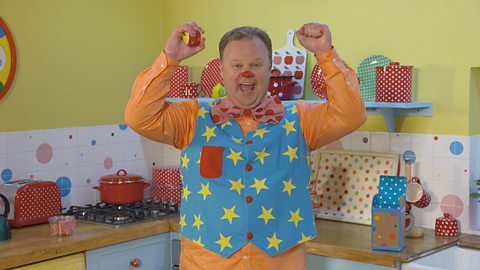
Makaton uses symbols, signs and speech to enable people to communicate. It supports the development of key skills, such as attention and listening and can also help comprehension, memory and recall. Not just for kids but for adults learning along too!
And why should you and your child be the only people to enjoy the wonders of Mr Tumble? The more people in your child's life who learn the signs and symbols, the more chances your child will have to communicate.
Find out more about communicating with children who are finding spoken words harder to understand.
2. Hey Duggee
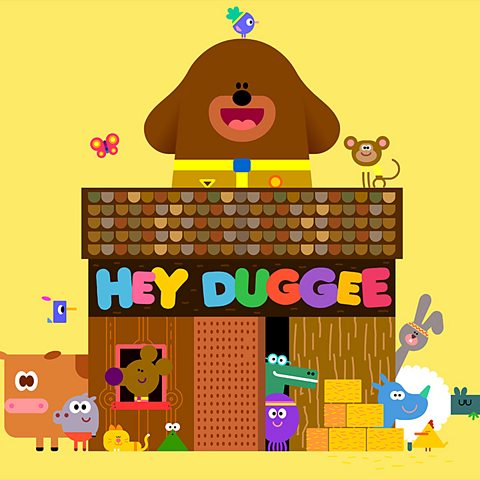
Hey Duggee has delighted children (and adults) since it first hit screens in December 2014.
While your kids enjoy the adventures of Duggee and his friends, you probably prefer the show’s many film and TV parodies hidden within each episode.
But alongside all the Clubhouse fun and games, there are some opportunities for children to discover feelings of acceptance and inclusivity too.
From a character using a wheelchair to an adopted Squirrel and a married gay couple, the show celebrates our differences and allows our little ones to see everyone represented on their screens.
Our website has loads more advice on talking to your child abut about LGBTQ+ families, as well as starting a conversation on race and religion.
3. Love Monster
Rachel Bright’s Love Monster books made their way to Cbeebies in 2020.
Love Monster lives in the charming world of Fluffytown and enjoys many an adventure with his friends, including the likes of Tiniest Fluffiest Bunny and Bad Idea Puppy.
But as the only monster in a world of cute fluffy things, sometimes Love Monster feels a little out of place - but knows he can rely on his friends when he needs them.
The show explores friendship, problem solving and understanding emotions - helping children to explore feelings of empathy and kindness as part of their emotional development. It also shows children that having doubts or being unsure about something is completely natural.
Being able to recognise and express these emotions is a key part of a child's development.
Reflecting on how people in their favourite TV show might be feeling can be a great way to help your child label and understand different emotions - while also considering the feelings of others.
4. Tee and Mo
The jungle adventures of Tee and Mo – a three-year-old monkey and his mother – see them take on daily challenges with a musical twist.
The programme has seen the duo tackle typical parenting challenges, such as bedtime routines and trying to rally your child to tidy up or get ready to go out.
But one of the biggest challenges that Tee and Mo have tried to take on is to tackle climate change.
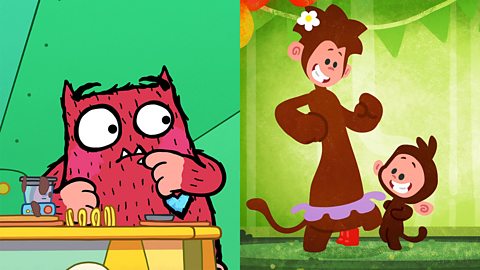
The pair’s song, Help our Little World, sees Tee ask his mum what he can do to help the environment and protect their home and lives.
Mo suggests a few simple things that can also be tried at home with your little ones. These include recycling paper or bottles, choosing more sustainable transport instead of going by car or making sure taps and lights are turned off when no longer in use.
We might be little, but we’ve got big ideas for doing lots of little things to help our great big world.
5. Bluey
The global phenomenon that is Bluey has taken the world by storm in recent years.
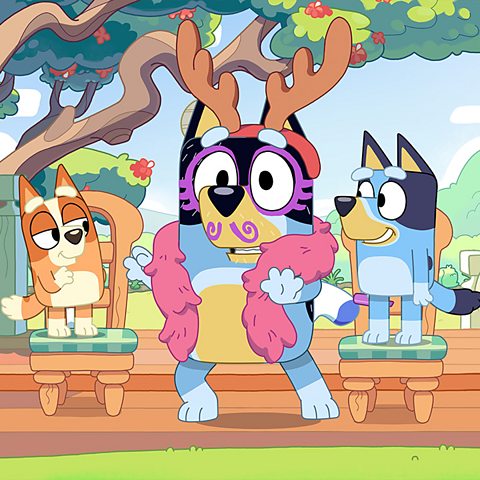
Audiences can’t get enough of the adventures of the Brisbane-based Heeler family and their friends.
But while the show is incredibly popular with children, parents and guardians everywhere have been enamoured by Bluey’s mum and dad, Bandit and Chilli.
Most episodes focus on the family and their imaginative play. Bandit and Chilli join their children to play games of hospitals, hotels and even the magical asparagus game, where the vegetable has the power to turn people into an animal.
The parents aren’t shown as perfect – there’s often a sigh or a longing look at the cricket on TV when asked to join in with the games – but most of all, when they can, they make time to play with their children.
Role play scenarios and games can help to expand a child’s imagination and develop their communication skills.
Just as importantly, it can be a lot of fun for children (and parents) and lead to plenty of laughter and happy memories.