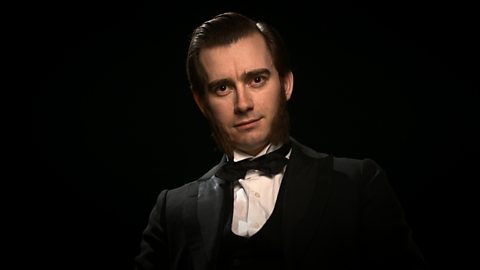
Teachers please note that this film explores Florence Nightingale's inspiration for becoming a nurse and through drama, shows Nightingale's experience of the hospitals of the Crimean War and the extremely poor sanitary conditions there. We recommend reviewing the film before sharing with your class as some pupils might find these scenes upsetting.
Florence Nightingale:
I’m going to tell you something about my life.
My name is Florence Nightingale.
I was born in the year 1820 in Italy, and named after a famous city there, but I grew up in England in a large country house. The story I will tell you starts when I was still a girl, when I began to imagine the life I could lead, when I got hold of the idea that I might do something with my life, and I wouldn’t let it go.
I grew up with my sister Parthenhope, who was also named after an Italian town.
We were a wealthy family and our father insisted on educating us himself. From a young age I loved to read, and I wanted to learn. I was neat and orderly, and liked everything to be in its place. My sister on the other hand just wanted to play around. In lessons she did her best to distract me. But I would not be distracted. I had this idea that I would do something with my life and I wouldn’t let it go.
Wherever I was I was only happy if I had a book in my hand, much to my sister’s frustration. They said I was a ‘book worm’.
But it was more than that – I knew even then, I didn’t want to be like other girls. I grew up with my head in books, and over time I formed a very clear idea of what it was that I wanted to do.
What I wanted to do was to work, and the work I wanted to do was nursing. My family didn’t approve. What they expected of me, all they thought I should aim for in my life, was to find a respectable man to marry me. knew that being a wife and mother would never be enough.
I had this idea that I would do something with my life and I wouldn’t let it go. I stuck to my books, and refused to give in. I would not change my course. At that time nurses got no training at all, but I had other ideas.
So long as my father refused to let me work, I stuck to my books, refining my ideas about how I would teach nurses to help the sick. Eventually I got the chance that all these years I’d been waiting for.
I was asked to train a team of nurses for work in the Crimea – a place far away where there was a war. There was a hospital there near the battlefield where injured soldiers were brought in, but were never getting better.
I trained my nurses in fundamental principles of cleanliness and hygiene. I wanted them neat and orderly, and everything just so.
Soon we were packed and ready to leave, for a war that had until now had seemed so far away, in a country most of them had never even heard of….even I had a little apprehension, not so much for what we might find, but because I knew this was my chance to prove my worth as a nurse.
The journey to Scutari in Turkey took several weeks. We arrived and it was hot. The hospital itself was in the shell of an old army fort, close to the battlefield. As we walked towards it I didn’t quite know what we’d find. Whatever we had imagined, this was worse.
The first thing to hit you was the smell, the stench of sickness and filth. Soldiers lay on the floor in pools of blood, undressed wounds were covered in flies, sheets such as there were, were crawling with lice or maggots… it was a hell on earth. I knew in an instant what needed to be done.
First I had to persuade the doctor to let us get to work. I knew what I wanted to do and I wouldn’t let it go. He resisted, but in the end he said that things had got so bad he was willing to let me try.
Here was my chance to prove what I believed were the first principles of good nursing: cleanliness and hygiene. I set my nurses to cleaning every inch, every crevice, every corner of the place. First we swept.
I believed that when the wounded came to us they should expect not dirt and disease, but good food and clean sheets and fresh air and the chance for nature to heal their wounds.
Then we scrubbed. That way we would be in charge, order would prevail, and health could be restored. I wouldn’t let my nurses rest until the place was spotless. I was strict with them, and I suspect they found me rather stern. Finally we brought in fresh sheets. And once clean the hospital would stay clean.
This was how I’d imagined it. Clean and hygienic, and everything in its place. Now we could concentrate on tending to the soldiers wounds, and nursing them back to health. The change in the hospital was immediate.
I may have been stern with the nurses, but at night I walked amongst the soldiers on the wards. I would sit with them if they wanted, or read to them, or take their hand if they called out. After all, it was for them that we were there at all, and I so wanted each of them to get better.
Because of my lantern, and my nightly rounds, they started to call me ‘The Lady of The Lamp’. Soon we were reward for all our efforts. Soldiers that would have died before were getting better, and some were able to leave their beds.
It gave me such satisfaction to watch them leave. I’d never felt more complete. After the war ended, I stayed until every last soldier was well enough to leave. When I got back to England I was astonished to find that I was famous!
Not only were people talking about my work, but there was a trust fund that had been set up in my honour! It was a good deal of money, and I used it to start the first ever Nurses Training School in London. What I did changed nursing for good.
It became a real profession, with strict principles and standards, and all the better for the health of the entire Nation. As a girl I had decided that I wanted do something with my life. I’m glad I took hold of that idea and I never let it go.
Video summary
Florence Nightingale tells the story of her life and work, and how she become a nurse during the Crimean War.
The story is told in the first person, and brought to life with a mix of drama, music and movement.
We see Florence as a child and follow her determination to become a nurse.
She trains other nurses to go to the Crimean War.
They make the hospital clean, and care for wounded soldiers.
Florence describes how she worked at night with her lamp.
Florence tells us how this changed nursing forever.
Teachers please note that this short film was originally broadcast in 2012 as part of BBC Two's Learning Zone. The film is broadly suitable for teaching KS2 pupils and older (Second Level in Scotland), but we recommend review prior to use in class. This film explores Florence Nightingale's inspiration for becoming a nurse and through drama, shows Nightingale's experience of the hospitals of the Crimean War and the extremely poor sanitary conditions there. We recommend reviewing the film before sharing with your class as some pupils might find these scenes upsetting.
Teacher Notes
Questions to consider whilst watching the film
Depending on the focus of your lesson, you may wish to ask the following questions after the video, or pause the short film at certain points to check for understanding.
- Why it was such a shock to her family what Florence Nightingale wanted to do?
- How did Nightingale want to change the way nurses were trained?
- Which event gave her the opportunity to be a nurse?
- What were conditions like when Nightingale arrived at Scutari, and what changes took place?
- How may she have been regarded differently by the nurses, and by the soldiers?
- What happened when she returned to England?
- Why is Florence Nightingale remembered today?
- Does she deserve to be famous?
- What lessons can we learn from the life of Florence Nightingale?
Learning activities to explore after the video
History is a subject which can lend itself to a wide range of cross-curricular links. As a teacher, you will have a greater awareness of how this topic may act as stimulus for learning in other subjects. However, the suggestions below relate solely to ways of developing the children’s historical knowledge and understanding. Key Question: Why is Florence Nightingale historically significant?
Concept of historical significanceOne of the least explored and understood concepts in history is significance. It is sometimes used as a synonym for importance or consequence, but in the history classroom the key is to evaluate why the person, or event, is still remembered in the present day.
As the Historical Association states, pupils should be “encouraged to evaluate the relevance of the contribution of different individuals or how an event came to affect future generations… It is vital that children identify what makes a person or event significant rather than just narrating an individual’s life or reconstructing the event. It is also important to make the distinction between fame and significance. The focus is on effect rather than celebrity.”
Florence Nightingale provides a rich learning opportunity to explore this concept as her name is still used today when discussing nursing. For example, one way in which the country tried to deal with the Covid pandemic was to set up ‘Nightingale Hospitals’.
There are a wide range of resources available for study. In 2020, the Arts and Humanities Research Council (AHRC) funded a major project on Florence Nightingale, and one strand of this was educational. The project collated 131 online sources which can be used to study Florence Nightingale, and the learning resource guide for the KS2 classroom directs the teacher to the relevant sources for each lesson. The activities suggested are inter-disciplinary, covering Art, Computing, English, Geography, Mathematics, PSHE and Science. One of the history suggestions, 'What was the impact of Florence Nightingale’s work?', links directly to the concept of significance.
Once the pupils have a good background knowledge of Florence Nightingale from the video and have studied the range of sources, they should be able to make a valid judgement as to her historical significance. It is useful to have some criteria for assessing the significance of an individual. History educators have made many suggestions of what these could be, but the ones applicable for study in a primary classroom would be:
- Relevance: why the achievements of the person are still relevant today.
- Remembered: why the name of the person is still known today.
- Durability: the effects of the life of the person have lasted well beyond the time they were alive.
- Quantity: how many lives have been affected by this person.
Rather than tackling all of these criteria at the same time, as a teacher you may wish to choose one or two as a focus for discussion.
Learning aims or objectives
England
From the History national curriculumPupils should:
- understand historical concepts such as …significance.
- understand the methods of historical enquiry, including how evidence is used rigorously to make historical claims.
Northern Ireland
From the statutory requirements for Key Stage 2: The World Around UsPupils should be enabled to explore:
- Change over time in places.
To provide a balance of experiences in History pupils could study:
- Reasons for and effects of historical events.
Teaching should provide opportunities for children as they move through Key Stages 1 and 2 to progress:
- from sequencing events and objects on a time line in chronological order to developing a sense of change over time and how the past has affected the present.
Scotland
From the Experiences and Outcomes for planning learning, teaching and assessment ofSecond Level Social Studies:
- I can use primary and secondary sources selectively to research events in the past.
- I can investigate a Scottish historical theme to discover how past events or the actions of individuals or groups have shaped Scottish society.
- I can discuss why people and events from a particular time in the past were important, placing them within a historical sequence.
Wales
From the new Humanities Area of Learning and ExperienceSchool curriculum design for History should:
- develop rich content across the time periods, through which learners can develop an understanding of chronology through exploring … historical significance.
Principles of progressionDescriptions of learning for Progression Step 2
Enquiry, exploration and investigation inspire curiosity about the world, its past, present and future:
- I can collect and record information and data from given sources. I can then sort and group my findings using different criteria.
Events and human experiences are complex, and are perceived, interpreted and represented in different ways:
- I can recognise and explain that my opinions and the opinions of others have value.
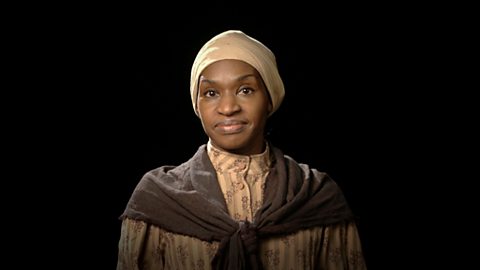
Harriet Tubman. video
Harriet Tubman explains how she escaped slavery and then helped others to do so.
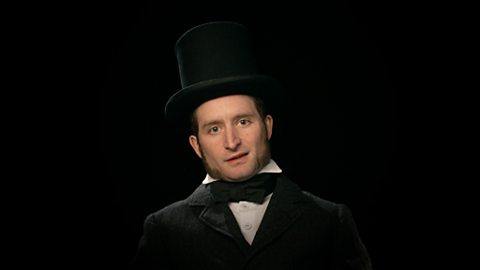
Isambard Kingdom Brunel. video
Isambard Kingdom Brunel shares how he became an engineer and tunnelled through Box Hill.
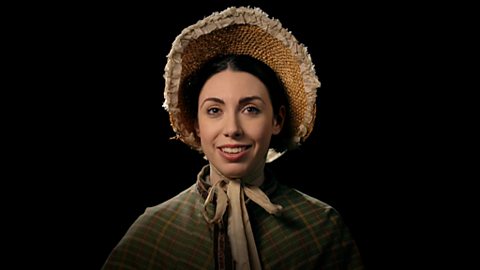
Mary Anning. video
Mary Anning describes how her astonishing fossil finds changed scientific thinking.
Edward Jenner. video
Edward Jenner tells the dramatic story of his life and how witnessing the victims of smallpox as a child motivated him to help others.
Elizabeth Fry. video
Elizabeth Fry describes how she reformed life for prisoners and their families in prison.
Grace Darling. video
Grace Darling describes the night she and her father rowed out in a boat to save sailors.
Rosa Parks. video
Rosa Parks describes how her refusal to give up a seat on a bus changed the rules of American society.
Thomas Barnardo. video
Thomas Barnardo tells the story of setting up his first home for London's street children.
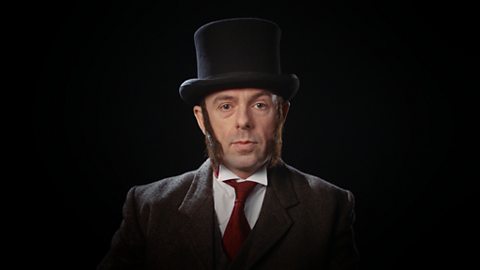
Alexander Graham Bell. video
Alexander Graham Bell tells the story of his life and describes how he invented the telephone.