:: Have your say » | What do you think of this article? Send us your opinion...
Have your say |
| | It's Black History month in October, when the story of this country's ethnic minorities is celebrated and remembered.
One famous contribution to the establishment of positive race relations can be found in south Staffordshire with the story of Samuel Johnson and Francis Barber.
| BBC Legacies | | BBC Legacies looks back at some of the more interesting stories to have emerged from this area. See the full story of Sam Johnson and Francis Barber - Click Here |
In the late 18th Century, the value of black people in Britain was measured in terms of slaves, sugar and spice, all part and parcel of the highly lucrative "golden triangular trade".
Yet years before this, Francis Barber lived as a free man in Samuel Johnson’s London & Lichfield households...
Early years
Johnson, widely acknowledged as the father of the dictionary and great literary talent of his day, took Barber into his house as a small boy.
Francis Barber (also known as Frank), born on a sugar plantation in Jamaica around 1735, was owned by the father of Johnson's friend, Richard Bathurst. Bathurst sent him to work for Samuel Johnson who's wife had just died.
 |
Although a free man, (the plantation owner died and in his will he left Francis £12 and his freedom), Barber effectively fulfilled the role of servant, companion and surrogate son to Johnson.
Against the convention of the day, Johnson educated Barber both religiously and academically.
It is clear that Johnson was very fond of Francis because he paid for his education which cost £300 pounds, a large sum at the time.
When Barber left school he went to work for Johnson, not just as a valet but as a secretary and personal assistant.
Barber's rebellious youth
However, in Barber's rebellious youth, he fled from Johnson's service on several occasions, most notably when he ran away to sea.
Johnson later successfully fought, at great personal cost, to discharge Barber by using the influence of contacts within the Government.
During their time together, Johnson treated Barber as an equal - more like a good companion rather than a slave
On Johnson's death in 1784, Barber inherited a sizeable slice of Johnson’s fortune. Johnson left Francis £70 pounds per year and a Gold watch.
In later years, Francis moved to Burntwood parish, near Lichfield where he taught at the local school.
 |
He died in Stafford infirmary in 1801, but many of Barber's descendants still live in the south Staffordshire area.
After Johnson's death, it would seem fair to think that Barber lived the rest of his life in modest comfort and security.
However, Barber was actually subject to racism which stripped him of his small fortune and he ultimately died in relative poverty.
Black History month
October has been devoted to expanding knowledge about black British history with an array of special events, plays, concerts and educative schemes.
In Staffordshire, Resurrection, which tells the story of Johnson and Francis Barber runs at the Lichfield Garrick theatre.
Paul Everitt, Artistic Director at the Lichfield Garrick notes: “The historical contribution of Britain's ethnic minority communities has been overlooked for far too long.
"In association with Black History Month, the themes of Resurrection celebrate the impact that black history has had on today’s cultural landscape.”
Maureen Lawrence
Playwright Maureen Lawrence used her personal experience of institutionalised racism (she has two adopted black boys of her own) when she set about writing Resurrection.
The impetus to write the play was augmented when she discovered that Barber actually had his inheritance taken away from him in the subsequent years after Johnson's death.
In fact, what they play demonstrates is that for all Johnson's humanity and abhorrence of slavery, he was ultimately unable to protect Barber in a hostile white world.
 |
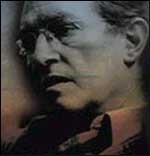
Corin Redgrave (pictured left), who stars in this Lichfield Garrick production of Resurrection notes: “Resurrection is not just about Samuel Johnson, it’s about race and the two characters’ individual fights to find a ‘home’ in a harsh and ever changing society.”
Complex relationship
The tragedy delves into the depths of the personal struggle of Samuel Johnson and Francis Barber as they grapple with the bonds of their complex interdependence
Paul Everitt sees the play like this: “The complex relationship between the two men is central to this moving play. Two men, so dissimilar, yet so alike."
But ultimately, the play begs the following question: could a free black man ever really find true freedom in a society riddled with slavery, racism and danger? |