BBC HomeExplore the BBC
This page has been archived and is no longer updated. Find out more about page archiving.

13 November 2014

BBC Homepage


Contact Us

History of Radio Stoke

You are in: Stoke & Staffordshire > Radio Stoke > History of Radio Stoke > 1968 – The Birth of BBC Radio Stoke
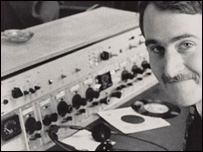
Studio at Radio Stoke 1968

Radio Stoke 1968

1968 – The Birth of BBC Radio Stoke

It was in 1968 that the experiment in BBC Local Radio began, and Radio Stoke on Trent, as it was known then, was (almost) the first BBC local station to launch. Let’s look at a scrapbook of the heady moments of that year…

Radio Stoke-on-Trent (as it was then known - it is now called BBC Radio Stoke) began life at 5pm on March 14th 1968 - to the tinkling sound of tea cups.
This pre-recorded sound was the station's first 'jingle'... and was meant to represent the area’s pottery industry.

The first voice on air was the then manager Harold Williams.
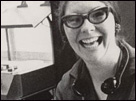
But it was the veteran broadcaster John Snagge who made the first humorous remark. 
John had, amazingly, also been broadcasting in Stoke forty years earlier. He had been on the staff of the short-lived 6ST - a local station for the city - which was one of the BBC's first experiments in radio. Snagge could not resist about making a joke about the long break in transmission!
(6ST ran from 1927 to October 30th 1928).

Radio Stoke, 1968

Incredible to think now, but local radio broadcasting was regarded as a rather doubtful experiment by BBC chiefs, who refused to underwrite it.
So the day to day costs for the first two years of the station’s life were paid for - not by the licence-fee payers - but by Stoke on Trent City Council. The council wanted a way of raising the city's expectations of itself.
While the BBC paid for capital equipment, the council paid the station’s running costs.

In fact the council was to be hugely disappointed that Radio Stoke-on-Trent was NOT to be the first BBC local radio on air. 
So the story goes, the station would have been first, had it not been for an outbreak of Foot & Mouth disease in the surrounding countryside.
This meant permission had been denied to the engineers who wanted to go into fields at Alsager's Bank, where the high-powered FM transmitter was located, and kick-start it.
As it was, the station had finally to go on air still using their other, low-powered, FM transmitter - which was on Hanchurch Water Tower (near Trentham Park).
(The station was not given a medium-wave frequency until a number of years later.)

John Abberley was one of five production assistants appointed to launch the station.
John is of course possibly the most well-known reporter to have been in Radio Stoke’s employment.
A local man (educated at Longton High School) he was a great influence in the early newsroom and over the next twenty years.
He has since returned to his first love, the local newspaper the Evening Sentinel.

Another Production Assistant, Owen Bentley, came to Radio Stoke as a self-confessed failed musician, having once led “an unsuccessful Dixieland jazz band”.
He rose thorough the ranks quickly though, and went on to influence hugely the BBC’s policy in the West Midlands as one of its top managers.

In 1968, BBC Radio Stoke team only broadcast for four hours a day. The rest of the day was taken up by other BBC services.
Now the station broadcasts for eighteen hours a day; only overnight does the service switch, to BBC Five Live.

The first staff roster, in 1968, comprised just sixteen members. Despite the fact that the experiment was such a sensitive one, a strong signal was immediately sent to listeners about how the station would see itself – over half the staff were either locally-born or bred.

last updated: 09/11/2009 at 10:16
created: 05/02/2008

Have Your Say

What do you know about the first year of BBC Radio Stoke? Got a fact we don't know?

The BBC reserves the right to edit comments submitted.

You are in: Stoke & Staffordshire > Radio Stoke > History of Radio Stoke > 1968 – The Birth of BBC Radio Stoke
Radio Stoke
100 Club

100 stories from 100 people of every age


About the BBC | Help | Terms of Use | Privacy & Cookies Policy