Bezos-backed consortium buys a third of Liverpool
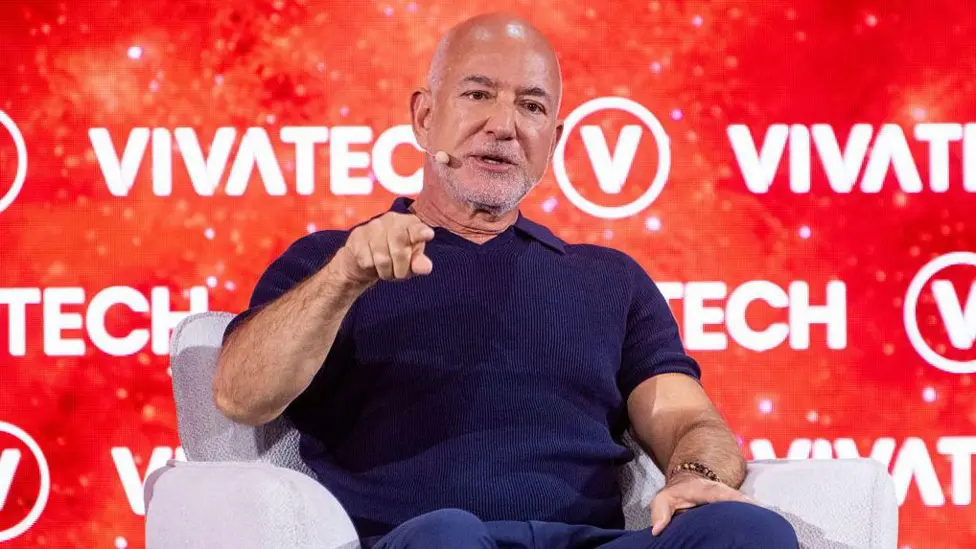
Jeff Bezos founded Amazon in a garage in Seattle in 1994
- Published
Liverpool's owners have agreed to sell about a third of the club to a consortium including billionaire Amazon founder Jeff Bezos.
In a statement, Fenway Sports Group (FSG) confirmed it had entered into a "definitive agreement" for the sale of a "strategic minority investment" to 1892 Holdings.
The group is led by British-Indian millionaire businessman Amit Bhatia and also includes billionaire Facebook co-founder Eduardo Saverin.
Bhatia is set to become Liverpool's vice-chairman, and will join an expanded board pending regulatory approval.
The son-in-law of Indian billionaire businessman Lakshmi Mittal, he had been a director and co-owner of Queens Park Rangers for 18 years before relinquishing his stake in the club last month.
American businessman Bezos, founder of e-commerce giant Amazon, is the fourth-richest person in the world, with an estimated net worth of $256bn (£192bn). This marks his first foray into sports ownership, although he will not join Liverpool's board.
However, Bryan Baum, founder of venture capital firm K5 Sports - through which Bezos is investing - will join the Anfield board, alongside Saverin's wife Elaine. Bezos is the biggest investor in K5 Sports.
BBC Sport has been told that the transaction will have no impact on the club's approach to the transfer window, and that there is no new or separate transfer budget associated with the investment.
The agreement includes an option for the consortium to increase its investment in the future. That suggests the group will be in pole position to become majority shareholders if Fenway wants to sell up, but according to one source, no commitments have been made to do so.
The deal is said to value the club between £5bn and £6bn.
Reaction to the deal from those involved
FSG says the deal "supports Liverpool's long-term growth ambitions by bringing together experts from across global business, technology, and investment".
"The consortium partners will work with FSG and the club's leadership team to evaluate opportunities that enhance the club's objectives on and off the pitch," it added.
"FSG continues to retain majority ownership and operational control of Liverpool."
FSG, which bought Liverpool in a £300m deal in 2010, previously sold a minority stake in the Anfield side to global sports investment firm Dynasty Equity.
Mike Gordon, FSG president, said: "Liverpool has always been built by thinking beyond one season and making decisions with the club's long-term interests in mind. That approach continues to attract interest from respected investors and business leaders around the world.
"As we considered this opportunity, it became clear that Amit and the consortium shared our long-term philosophy and appreciation for what makes Liverpool special.
"Their experience and perspective will complement the strong foundation already in place, and we look forward to working together."
Bhatia said the consortium was "proud to be investing in Liverpool".
"We have the utmost respect and admiration for FSG as owners and for everything they have achieved at Anfield," he said.
"To be welcomed as a partner in a club of this stature is a huge privilege. We are making this investment because we believe deeply in Liverpool and its leadership, and we look forward to supporting the club's continued success for years to come."
In January, Liverpool became the top-earning Premier League club for the first time, according to analysis from financial firm Deloitte.
The following month the club announced record revenues of £703m for the 2024-25 financial year.
BBC Sport has been told that while FSG was not seeking investment out of financial need, its leadership was attracted by the consortium's reach across global business, technology and investment, including in India, and across Asia.
FSG investment now reaping rewards
When FSG bought Liverpool for £300m in 2010 the club were, according to CEO Billy Hogan, "literally on the brink of bankruptcy".
On top of the purchase price, FSG have since facilitated intra-group loans of about £218m, meaning a total outlay of about £518m.
Sixteen years later, the proposed sale of 30% would mean FSG receive in excess of £1.5bn, five times what it was worth in 2010 when the group bought it from American businessmen Tom Hicks and George Gillett.
"It's a great deal for FSG," football finance expert Kieran Maguire told BBC Sport.
"They generate more than £1bn from the deal and still keep control - this represents the best of both worlds."
Such a huge increase in Liverpool's value has required investment off the pitch as well as success on it, including building a new training ground and redeveloping the stadium.
A 30-year title drought was ended in 2019-20, another Premier League was won in 2024-25 and a sixth Champions League was claimed in 2019.
Why is Bezos investing in sport ?

Bezos has been linked with potential investments in several sports teams in recent years, but Liverpool is his first confirmed deal
Bezos stepped down as CEO of Amazon five years ago but remains one of the company's biggest shareholders.
He also owns aerospace company Blue Origin, venture capital firm Nash Holdings and the Washington Post. More recently he created Prometheus, an artificial intelligence company which last month invested in a British AI start-up.
As if to underline the scale of his financial resources, only last week he filed to sell 15 million of his remaining Amazon shares with a market value of about £3.1bn - double the value of the consortium's offer for a stake in Liverpool.
Bezos has been linked with sports investment for some time, but usually American sports franchises which are either more expensive or not open to offers.
He was reportedly interested in the Seattle Seahawks, who were sold for £7.3bn, external recently. The Washington Commanders, another NFL franchise said to be of interest, were sold for £4.6bn in 2023.
Buying a stake in Liverpool gives the 62-year-old a slice of one of the most iconic global sports brands for a small fraction of his fortune.
Facebook co-founder Saverin, who is reported to be worth $32bn (£23.7bn), is also involved in the consortium.
Will Bezos be Liverpool's new owner?
What do fans think of Bezos' involvement?
Liverpool fans consider the club to have a specific set of values, centred around working-class roots.
When FSG attempted to raise season-ticket prices last season, fans' group Spirit of Shankly (SOS) launched a campaign called 'Not a Pound in the Ground'.
It urged fans to buy food and drink from local businesses in the Anfield area rather than inside the stadium. It worked, forcing the club to cut the size of their planned price rise.
Earlier this week SOS raised some concerns about the proposed investment.
"We would like to know what the buying consortium will get in return for their 30% stake," an SOS spokesperson told BBC Sport.
"Does this potential consortium have the best interests of the club at the forefront or is it a 'trophy' buy?"
On Friday the group added in a new statement: "Today's announcement will have raised many questions for supporters.
"We will be seeking engagement to understand better what this sale and consequent changes will mean for the future of LFC and its fans.
"We have reached out to the Independent Football Regulator to follow the next steps.
"It's important we take time to understand fully the long-term implications this deal will have for our club's ownership and at the same time what it doesn't mean – wild speculation about transfers and spending helps no one.
"It is vital for the game in general that football clubs are run sustainably, as LFC has been, and not an arms race funded by mega-rich individuals or state-backed entities."
Gareth Roberts, Liverpool season-ticket holder and host of the Late Challenge LFC podcast, told BBC Sport earlier this week he was worried by Amazon's approach, given criticisms of the way the company has treated its workers.
A Trades Union Congress report, external on Amazon issued in 2020 highlighted "long, gruelling shifts with unreasonable productivity targets and unfair shift patterns" and "unacceptable working conditions".
In 2024, more than 200 workers took part in two days of strike action at the Amazon site in Birmingham as part of a long-running dispute over pay and union rights. Amazon said it regularly reviews its pay to ensure it offers competitive wages.
"How Amazon have treated unions and workers isn't particularly palatable," Roberts said. "Is he simply going to ramp up the name of Liverpool in order to make as much money as possible?"
'Bezos deal distances me further from the club' - fan views
- Published10 August
Consortium advances talks for stake in Liverpool
- Published10 August
Follow Liverpool on BBC Sounds
Pre-match, post-match and topical Reds content
Subscribe and listen for everything you love about Liverpool


