The weather report that changed the date of D-Day
In 1944, a weather report predicted a storm that changed the course of WW2 history. The forecast was the first indication of bad weather and led the Allies to delay D-Day.
In 1944, a young Irishwoman called Maureen Flavin drew up a weather report that helped change the course of World War Two.
Maureen was working at a post office on the far west coast of Ireland. Her duties included recording rainfall, wind speeds, temperature and air pressure.
On 3 June, she sent one of her hourly reports to Dublin, unaware that the figures were being passed on to the Allied headquarters in England.
It was the first indication of bad weather heading towards the coast of France, as hundreds of thousands of servicemen were gathering for the most ambitious operation of the war - the assault of the Normandy beaches on 5 June.
But after reading Maureen’s report, chief meteorologist Group Captain James Stagg advised a delay of 24 hours. D-Day was finally launched on 6 June, 1944. A date that went down in history.
Maureen's son Edward Sweeney spoke to Jane Wilkinson in 2024 about his mother’s role.
Witness History is a short BBC World Service podcast about history that takes you inside big moments from the past through first-hand testimony and archive. Each weekday, in around nine minutes, we revisit one moment that helped shape the world and hear it through the voice of someone who was there. Scientists, artists, campaigners, soldiers, leaders and everyday people tell their true stories.
When you subscribe to Witness History, you’ll be taken inside turning points in world affairs from West Africa’s fight back against Boko Haram in 2015 to the behind-closed-doors talks that led to the US-Cuba “thaw” and the surprise announcement of restored relations.
You’ll discover what it was like to experience disasters and how people recovered from them, including the Tabasco floods in Mexico, Portugal's worst train disaster, and the huge clean-up after the Chernobyl nuclear disaster.
You’ll explore culture and ideas too: Sweden’s Expedition Robinson, often credited as the first modern reality TV game show; the friendship between The Beatles’ George Harrison and Indian sitarist Ravi Shankar; and the night a tiger attack brought Las Vegas superstars Siegfried and Roy’s show to a sudden end.
And if you’re curious about inventions, we’ll tell you how air fryers, BlackBerry, YouTube, Alexa, GPS, superglue, the shopping cart (shopping trolley) and bubble tea were created.
If you’re new to Witness History, the appeal is simple: real voices, one strong true story, and a fresh way to understand today through events from history – all in the time it takes to enjoy a cup of tea or a walk around the block. Join millions of BBC World Service podcast listeners around the globe and enjoy the insight, context and detail Witness History will bring you.
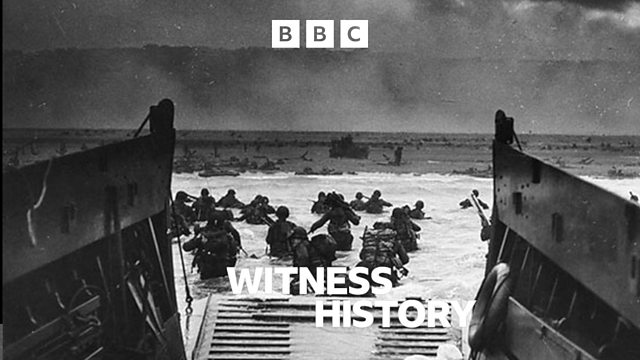
(Photo: Omaha Beach, D-Day, 1944. Credit: US National Archives/AFP via Getty Images)
Last on
Broadcasts
- Thu 10 Sep 202607:50GMTBBC World Service
- Thu 10 Sep 202611:50GMTBBC World Service
- Thu 10 Sep 202617:50GMTBBC World Service except East and Southern Africa, News Internet & West and Central Africa
- Thu 10 Sep 202621:50GMTBBC World Service East and Southern Africa & West and Central Africa only
- Fri 11 Sep 202602:50GMTBBC World Service except East and Southern Africa, East Asia, South Asia & West and Central Africa
Podcast
![]()
Witness History
The story of our times, told by the people who were there