Creative tensions
Donald Macleod looks at the tensions within the group of ‘The Five’ composers and their circle, as Rimsky Korsakov and Borodin join the fray.
The Mighty Handful, who collaborated between 1856 and 1881, changed the direction of Russian music, permanently freeing it from Germanic influences and setting the scene for the country’s ground-breaking music in the 20th century.
Who were these five composers? What was the dynamic between them, and what conditions fomented their musical iconoclasm?
In this episode, Donald Macleod meets the young Nikolai Rimsky Korsakov as he falls under Balakirev’s spell.
Balakirev was in a rush to develop a collection of new Russian orchestral music, urging all those within earshot to compose symphonies, Rimsky Korsakov included.
Mussorgsky felt side-lined by the new arrival, but his old friend Borodin soon joins the group, torn between composing music and his career in science.
The gregarious Borodin and Rimsky also hit it off, despite their age gap. We look at Borodin's other life in science, and the impact of his sociable character on his musical work.
We look at the rivalry between Balakirev’s Free School and Anton Rubinstein’s St Petersburg Conservatoire, established under the patronage of the Imperial family. These two orchestras had totally opposing ideologies, even though they would come to be led by the same man – Balakirev.
Was the Mighty Handful symbolic of the struggle of the Russian people against the decadent aristocracy of the time, as Soviet historians have represented them?
And we look at the tensions within the group and their circle – Stassov being especially critical of Mussorgsky: “A perfect idiot…. There is nothing inside him”. But Mussorgsky was moving in a different direction, socialising with poets and visual artists who were more supportive than The Five.
Balakirev: Islamey
Boris Berezovsky, piano
Rimsky Korsakov: Symphony No. 1 in E minor, Op. 1
I. Largo assai - Allegro
Berlin Radio Symphony Orchestra
Gerard Schwarz, conductor
Borodin: Piano Quintet in C minor
I. Andante
II. Scherzo: Allegro non troppo
Andrew Baranov, violin
Geza Hosszu-Legocky, violin
Jin Zhao, cello
Alexander Mogilevsky, piano
Nora Romanoff, viola
Mussorgsky: Souvenir d’Enfance
Giacomo Scinardo, piano
Borodin: Symphony No. 1 in E flat:
I. Adagio - Allegro
Royal Philharmonic Orchestra
Vladimir Ashkenazy, conductor
On radio

Broadcast
- Tue 3 Nov 202616:00BBC Radio 3
Beethoven Unleashed – the box set
The complete set of Radio 3 Beethoven Unleashed podcasts, with Donald Macleod.
What was really wrong with Beethoven?

Georgia Mann and neurosurgeon Henry Marsh examine the composer's numerous health problems
Composers A to Z

Visit the extensive audio archive of Radio 3 programmes about Composers and their works.
Who knew? Five eye-opening stories from Composer of the Week

The production team reflects on 5 of Donald Macleod’s best stories from the last 20 years
Five reasons why we love Parry's Jerusalem
What is the strange power of Jerusalem which makes strong men weep?
A man out of time – why Parry's music and ideas were at odds with his image...
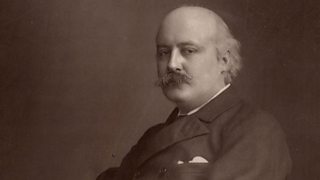
The composer of Jerusalem was very far from the conservative figure his image suggests.
Composer Help Page

Find resources and contacts for composers from within the classical music industry.
