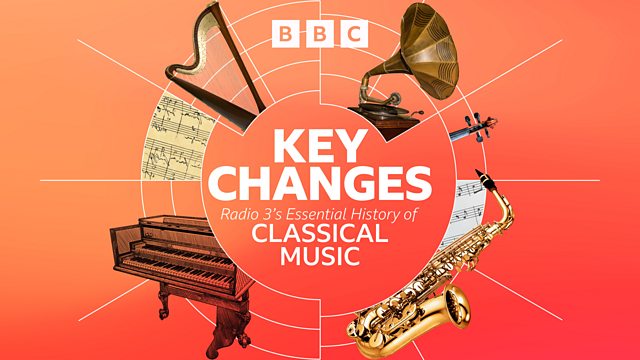
1822: Opera Fever
1822, Vienna. Rossini arrives in the Austrian capital to a celebrity welcome, as opera becomes the dominant force in popular musical culture across Europe and beyond.
1822, Vienna. When composer Gioachino Rossini arrives in the Austrian capital, he is greeted like an international celebrity. His operas pack theatres, his melodies are sung in the streets, and admirers celebrate him with everything from fashionable accessories to elaborate restaurant dishes. In an age when opera dominates musical life, Rossini has become its biggest star.
As opera houses multiply across Europe and beyond, opera becomes the primary form of musical entertainment and one of the defining cultural industries of the nineteenth century. From The Barber of Seville and The Italian Girl in Algiers to Donizetti's Lucia di Lammermoor and Meyerbeer's grand historical dramas, opera grows ever more ambitious in scale and influence. Romantic heroes, political rebels, tragic heroines and spectacular stage effects draw vast audiences.
Gillian Moore is joined by a roster of distinguished historians for this major new BBC Radio 3 series, charting a course through 1000 years of classical music history. Today, historian Simon Schama is in the chair.
Producer: Chris Taylor
Academic Consultant: Professor Laura Tunbridge, University of Oxford
Story Consultant: Kate Leys
Series Editor for BBC Audio: Emma Harding
Key Changes theme tune composed by Joseph Howard and performed by the BBC National Orchestra of Wales, conducted by Kerem Hasan.
Gioachino Rossini: Il barbiere di Siviglia – "Largo al factotum"
Roberto Servile (Figaro, baritone)
Budapest Failoni Chamber Orchestra
Will Humburg (conductor)
Gioachino Rossini: L'italiana in Algeri – "Va sossopra il mio cervello"
Patrizia Pace (Elvira, soprano)
Anna Gonda (Zulma, soprano)
Agnes Baltsa (Isabella, mezzo-soprano)
Frank Lopardo (Lindoro, tenor)
Alessandro Corbelli (Taddeo, baritone)
Enzo Dara (Mustafà, bass-baritone)
Ruggero Raimondi (Haly, bass)
Vienna Philharmonic Orchestra
Vienna State Opera Orchestra
Claudio Abbado (conductor)
Gaetano Donizetti: Lucia di Lammermoor – "Spargi d'amore pianto"
Dame Joan Sutherland (Lucia, soprano)
Luciano Pavarotti (Edgardo, tenor)
Pier Francesco Poli (Arturo, tenor)
Ryland Davies (Normanno, tenor)
Huguette Tourangeau (Alisa, mezzo-soprano)
Sherrill Milnes (Enrico, baritone)
Nicolai Ghiaurov (Raimondo, bass-baritone)
Chorus of the Royal Opera House, Covent Garden
Royal Opera House Orchestra, Covent Garden
Richard Bonynge (conductor)
Gioachino Rossini: Guillaume Tell – Overture
Orchestra del Teatro Comunale di Bologna
Michele Mariotti (conductor)
Giacomo Meyerbeer: Le Prophète – "Roi du ciel et des anges"
James McCracken (Jean de Leyde, tenor)
Marilyn Horne (Fidès, mezzo-soprano)
Renata Scotto (Berthe, soprano)
Christian du Plessis (Le Comte d'Oberthal, baritone)
Jules Bastin (Zacharie, bass)
Jerome Hines (Mathisen, bass)
Ambrosian Singers
Royal Philharmonic Orchestra
Henry Lewis (conductor)
Gioachino Rossini: Chant funèbre à Meyerbeer
Victor Jacob
Chœur de l'Opéra Royal
Pierre-Olivier Schmitt (conductor)
Vincenzo Bellini: Norma – "Casta Diva"
Maria Callas (Norma, soprano)
Orchestra and Chorus of La Scala, Milan
Tullio Serafin (conductor)
To listen to this programme using most smart speakers, just say "Ask BBC Sounds to play Key Changes."
Last on
Music Played
![]()
Gioachino Rossini
'Largo al factotum' from The Barber of Seville
Singer: Roberto Servile. Orchestra: Budapest Failoni Chamber Orchestra. Conductor: Will Humburg.- Naxos : 866002729.
- Naxos.
- 6.
![]()
Gioachino Rossini
L' Italiana in Algeri, Act 1, Sc.13 (excerpt)
Singer: Agnes Baltsa. Singer: Patrizia Pace. Singer: Anna Gonda. Singer: Alessandro Corbelli. Singer: Ruggero Raimondi. Singer: Frank Lopardo. Singer: Enzo Dara. Orchestra: Vienna Philharmonic. Choir: Vienna State Opera Choir. Conductor: Claudio Abbado.- DG RECORDS : 427-331 2.
- DG RECORDS.
- 16.
![]()
Gioachino Rossini
La Cenerentola, Act 2, Sc.3: 'Non piu mesta'
Singer: Cecilia Bartoli. Orchestra: Bologna Municipal Theatre Orchestra. Conductor: Riccardo Chailly.- DECCA : 436-904 2.
- DECCA.
- 20.
![]()
Gaetano Donizetti
Lucia di Lammermoor (excerpt)
Singer: Pier Francesco Poli. Singer: Sherrill Milnes. Singer: Joan Sutherland. Singer: Huguette Tourangeau. Singer: Luciano Pavarotti. Singer: Ryland Davies. Singer: Nicolaï Ghiaurov. Choir: Royal Opera House Chorus. Orchestra: Orchestra of the Royal Opera House, Covent Garden. Conductor: Richard Bonynge.- DECCA.
![]()
Gioachino Rossini
William Tell Overture
Orchestra: Bologna Municipal Theatre Orchestra. Conductor: Michele Mariotti.- PENTATONE : PTC 518 6719.
- PENTATONE.
- 9.
![]()
Giacomo Meyerbeer
Le Prophete, Act 3: 'Roi du ciel et de anges'
Singer: James McCracken. Orchestra: Royal Philharmonic Orchestra. Conductor: Henry Lewis.- SONY : 88875194782.
- SONY.
- 18.
![]()
Vincenzo Bellini
'Casta Diva' from Norma
Singer: Maria Callas. Choir: Chorus of La Scala, Milan. Orchestra: Orchestra of La Scala, Milan. Conductor: Tullio Serafin.- EMI.
- CDS 5-56271 2.
- 9.

Broadcast
- Sat 12 Sep 202613:00BBC Radio 3
