Episode 2
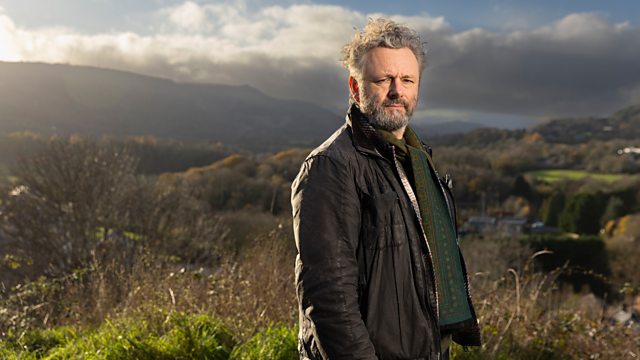
Ten years after a dying whistleblower's warning, Michael Sheen follows a trail of toxic chemical dumping in Wales and asks whether it could still be harming people’s health.
Michael’s search leads him to Ruabon in north Wales, where many locals have voiced concerns about what they believe is a high incidence of cancer in the community. Ruabon was home to the second-largest Monsanto factory in Wales, and a major research and development centre.
Michael meets a former Monsanto employee, who speaks publicly for the first time about what he believes was inadequate health and safety provision for workers. He tells Michael that Monsanto even paid farmers to spray chemical waste on their fields.
Michael also meets 94-year-old Hirwaun, whose family switched from farming to chemical waste disposal in the 1960s and 1970s. Hirwaun recalls supervising dozens of lorry loads of chemical waste tipped onto his land and neighbouring sites every week, providing a rare eyewitness account of industrial waste disposal before modern environmental regulation.
Chemical waste did not only go into the ground. The nearby Llwyneinion lagoon was used to dispose of chemicals ranging from cyanide and arsenic to PCBs. Michael meets a resident who grew up playing there. He and four friends he played with have all developed cancer. Two have died, and another has the same rare cancer as him. Michael is moved to anger and tears.
Journalists Dan Ashby and Lucy Taylor discuss the lack of UK research into the impact of PCBs on human health. They conclude that there is only one way to discover whether PCBs are still entering people's bodies: blood testing. Eleven volunteers, including Michael and residents living near former chemical dump sites, undergo PCB blood testing by Dr Dave Megson at Manchester Metropolitan University.
Meanwhile, Dan and Lucy visit the Zoological Society of London, where conservation scientist Dr Rosie Williams demonstrates how PCB pollution continues to endanger wildlife decades after the chemicals were banned. Studying tissue from stranded marine mammals, Rosie explains that PCBs cling to fat and build up through the food chain, contributing to reproductive failure in vulnerable species, including killer whales now thought to be facing extinction in UK waters. For Michael, the implications are stark: if these chemicals build up through the food chain, what might that mean for human health? Rosie explains that the NHS has for decades advised girls and pregnant women to limit oily fish because pollutants including PCBs accumulate in the body and can be passed to babies during pregnancy and breastfeeding.
Michael is called to Manchester Metropolitan University for his blood results, which underline the reality of consuming PCBs. Despite not living near a landfill site, Michael has 81 different PCBs in his body, including one of the most toxic and persistent types. The wider community blood test results are also striking, especially when cross-referenced with Dr Megson’s tests on soil near former dumpsites, as they point to a potential localised link to the contamination. Residents living near one historic chemical dump site share the same profile of Monsanto-produced PCBs in their blood as identified in nearby soil. And the two participants with the highest PCB levels grew up near the sites where the highest soil PCB concentrations were also identified.
The conclusion is that more research is urgently needed, and Michael brings together affected communities, scientists, environmentalists and politicians at the Welsh Parliament. The question now is whether the Welsh government is prepared to confront Monsanto's legacy and address the concerns of the communities still living with its consequences.
More episodes
Previous
Next
You are at the last episode