15 albums that define 2006

6 Music takes a look back at 15 iconic albums turning 20 this year.
2006 was a big year for music – as well as a career-defining record from Amy Winehouse, we saw debuts from Lily Allen and Arctic Monkeys, alongside albums from many strongholds of the indie rock era including The Killers, The Strokes, Yeah Yeah Yeahs and more. You can test your knowledge of 00s indie music in this quiz, or listen to 6 Music's Indie Forever for nonstop indie hits.
Read on to find out all about 15 of the most influential albums from the year.
![]()
Listen live: 6 Music's Indie Forever
The biggest and best indie pop, rock and classic tunes, 24/7.
Amy Winehouse - Back To Black

Following the success of her debut album Frank in 2003, Amy Winehouse returned three years later with an iconic look and an iconic sound. Upon its release, Back To Black received widespread critical acclaim and was touted as a strong contender for album of the year. Twenty years on and it’s not far-fetched to say it could be one of the best albums of the 21st century so far.
Hailed as a modern soul masterpiece, the album combines raw, confessional lyrics about love, heartbreak, and addiction with a blend of Motown, jazz, neo-soul and R&B influences. Her smoky, soulful voice brought a deeper emotion and sometimes even humour to the record and cemented her as one of the greatest vocalists of all time.
Mark Ronson, who produced six tracks on the album, reflected on the impact of working with Amy on Back To Black. Earlier this year he said in an interview with Music Week that “all roads go back to the music we did”.
“I worked with Bruno [Mars] because he loved what I did with Amy, and as big as other records were, that is ground zero. Her MO, her energy and what I learned while working with her is baked into everything I do,” he said.
Today it’s no rarity to hear confessional, soul-bearing music that leaves listeners feeling a mix of discomfort and familiarity as they are let in on the intimate details of an artist’s personal life. But in 2006, Black To Black was in a league of its own with the shockingly candid lyrics of Rehab and Tears Dry On Their Own. The album’s legacy is made all the more significant and tragic due to the heartbreaking events that followed.
Arctic Monkeys - Whatever People Say I Am, That's What I'm Not

Not many artists have a debut as seismic as Arctic Monkeys. First arriving on the scene in 2002, they had already built up a dedicated following by the time of the release of Whatever People Say I Am, That's What I'm Not four years later.
Upon release, it became the fastest-selling debut album in British music history, and remains the fastest-selling debut album by a band in the country. While indie rock dominated mid to late 00s British music, leading some to label it ‘landfill indie’ by the end of the decade, Arctic Monkeys remains one of the most enduring, iconic and influential bands of the genre. The album is full of hedonism and explores the trials and tribulations of noughties youth culture in Northern England.
From start to finish it feels like an ode to British nightlife – the good (I Bet That You Look Good on the Dancefloor) the bad (Red Light Indicates Doors Are Secured) and the ugly (When the Sun Goes Down). Two decades on and the picture of the nightlife and live music industry that feature throughout is almost unrecognisable and only adds to the nostalgia of the album today. Laden with angsty, sometimes even frantic guitars and percussion, and Alex Turner’s South Yorkshire lilt – now lost to the passage of space and time – Whatever People Say I Am… marks the beginning of era-defining music from Arctic Monkeys.
Cat Power - The Greatest

Cat Power’s Chan Marshall reached wider acclaim with her seventh album The Greatest. It’s a heavily soul-influenced and deeply personal album, and is her first without cover songs. It was produced during one of the lowest periods of her life, as she struggled with heartbreak and alcoholism.
The title track and much of the album was inspired, in part, by Chan’s admiration for boxing legend Muhammad Ali, who had given himself the nickname ‘The Greatest’. The album’s cover art features a pair of boxing gloves on a chain, and in the music video for the single Lived in Bars, Marshall is seen wearing a Cassius Clay jacket - a reference to Ali’s birth name.
While The Greatest is mostly recognised for its melancholic soul and blues, tracks like Living Proof and Love and Communication show off the rockier and southern soul influences on the album, and show the backing instrumentals of the Memphis Rhythm Band in their full glory.
CSS - Cansei de Ser Sexy

The rise of Brazilian synth-punk outfit CSS was like a fever dream. No sooner had they released Let’s Make Love and Listen to Death from Above on Sub Pop, than they were swiftly selling out shows in the UK, tagged as part of a fledging nu-rave scene, and plastered on the pages of NME.
Cansei de Ser Sexy has one foot in every party (and after party), and feels assuredly of its time, but 20 years on it sounds more adjacent to New York’s wave of electro-pop hitmakers (Le Tigre, The Rapture) than nu rave contemporaries Klaxons. And the name? It’s a translation of a reported quote from Beyoncé, who apparently once said she was “tired of being sexy”.
Gossip - Standing in the Way of Control

Two decades after its release, Standing in the Way of Control still crackles with the same attitude and grit that made Gossip impossible to ignore. Arriving in 2006, the band’s third album was a rallying cry – fierce, sweaty, and defiantly political – anchored by Beth Ditto’s powerhouse voice and the band’s dance‑punk energy.
Its title track, written in response to US efforts to limit LGBTQ+ rights, remains a timeless anthem of resistance. It also served as the unofficial theme song of the seminal British teen drama Skins – one of the most culturally impactful TV shows of the noughties and early tens – and cements the album as a defining influence on the era.
What stands out 20 years later is how the record feels full of scrappiness and rebellion. Brace Paine’s jagged guitar lines and Hannah Blilie’s pounding drums create a wiry tension that pulses through every track, while Ditto’s raw and furious vocals turn vulnerability into absolute command. The album not only captured the energy of the mid‑2000s indie scene but helped shape it, bridging garage rock with disco swagger.
![]()
The Beth Ditto Show
Beth brings her warmth, wit and wisdom to Saturday mornings on 6 Music.

J Dilla - Donuts

What hasn’t been said about the sophomore (and sadly, final) album Donuts from your hip-hop producer’s favourite producer, James Dewitt 'J Dilla' Yancey? ‘Iconic’ and ‘seminal’ are words that have been thrown around to describe it, but another fitting word is 'transcendent'. It is literally timeless and every time you listen to it, Donuts truly evolves and skips ahead of time - all while being simultaneously ever-present and paying homage to the past.
Released on 7 February 2006 – Dilla’s 32nd birthday – and just three days before his passing, Donuts is a jam-packed 31-track, less-than-44-minute instrumental album that boasts samples from the likes of The Temptations, Dionne Warwick, Kool & the Gang and The Isley Brothers with a dash of The Jacksons for good measure. The album is short, sweet and constantly reminds you why - two decades since its release and Dilla’s death – he remains one of the genre's most prolific and revered producers.
![]()
Listen to 6 Music's 00s Forever
The very best alternative throwback classics from every genre; the ultimate 00s playlist. New playlists are available weekly, subscribe for more!

Lily Allen - Alright, Still

In 2026, it’s essentially a requirement for new artists to have to play the social media game if they want to debut with impact. But in 2006 Lily Allen was one of the first musicians to pioneer this trend. Growing frustrated with her record label’s preoccupation with other, bigger artists, she took matters into her own hands and began posting demos to Myspace. The result? The demos attracted thousands of listeners, bubbling interest from the media, and her label finally starting taking her seriously – allowing her more creative control.
The latter of these factors gave us Alright, Still – an album full of wit, attitude and commentary on modern life soundtracked with reggae infused pop. Her strength lies in the almost ironic contrast between the instrumental and lyrics. The lead single Smile, where the misery of a former lover is celebrated alongside a happy ska-beat tune, and second single LDN, an equally upbeat tune which clashes with gritty observations of city life, are quintessential Lily Allen. This debut album established the iconic storytelling gift that Lily still wows her listeners with now.
Muse - Black Holes And Revelations

With their fourth studio album, Muse slightly changed tack, moving away from some of the classical influences in their rock to incorporate more electronic and pop elements. As the title of the album suggests, Black Holes And Revelations explores some dystopian themes including political corruption, alien invasion and New World Order conspiracies. The themes explored in their lyrics are matched at times with an eerie space rock sound which can be heard from the opening notes. At other points the influence of dance beats and electronica are prevalent, the result of lead singer Matt Bellamy’s immersion in New York nightlife during the production of the album.
Muse's third album, Absolution, brought them mainstream exposure in the US and their follow up introduced them to an even bigger audience. The lead single Supermassive Black Hole is a sensual blend of funk and rock and became a particularly defining track for Muse. It’s been used extensively in media, most notably in the 2008 blockbuster Twilight. It feels intentional then that Black Holes is laden with anthemic tracks that sound like they were made with stadium performances in mind.
My Chemical Romance - The Black Parade

Who knew that one high G note could rally the crowds of a subculture? That's exactly what UK number one 'Welcome to The Black Parade' has managed to do since it was released back in September 2006. (However, it was not written overnight, with initial session recordings going as far back as 2001.)
This song is just one of the many theatrical tracks of this sweeping concept album. Gerard Way, ever the comic-book writer, knew that he wanted to expand on the huge themes he addressed with their second album, Three Cheers for Sweet Revenge. Death was going to be a character throughout the record.
The album is produced by Rob Cavallo, whose previous work included Green Day's American Idiot and Goo Goo Dolls' song Iris. He helped nurture a sound that meshed punk, pop, glam rock and musical theatre. Even Liza Minnelli features on raucous track Mama.
The band's commitment to exploring the boundaries of life and death even led them to record The Black Parade in the confines of the supposedly haunted Paramour Mansion. There existed an eeriness that band members have later claimed as a springboard for battle against their own personal demons. In the case of Gerard Way, it helped inspire the bravery-rousing lyrics of Famous Last Words. Flamboyant, artistic and ambitious, this record helped bring alternative pop-rock to the fore.
Razorlight - Razorlight

The development of Razorlight’s sound can be best summed up by lead singer Johnny Borrell himself. He stated that they started as a “really energetic, fun band” with a drummer Christian Smith-Pancorvo that was a “drum ‘n’ bass obsessed maniac”. He left the band after the recording of their debut album and was replaced by Andy Burrows - a “great drummer with a melodic ear” - who influenced their shift from indie-punk to a more polished pop-rock sound on this record.
Their eponymous second album escaped the curse of the follow up, debuting at number one on the album chart and producing their first and only number one hit America. In 2016 Borrell reflected that the album ”definitely opened the way for a flood of mediocrity in UK music” but that they made ”a really quality pop-rock album”.
![]()
The Rise and Fall of Britpop
What was life like before Britpop? Join Steve Lamacq and Jo Whiley as they rewind the tape to hear how the UK sounded at the start of the 90’s.
The Killers - Sam's Town

In 2006, lead singer Brendan Flowers almost committed the cardinal sin of rock and roll – believing your own hype. During the rollout of the band’s second album, Sam’s Town, he seemed to be operating solely in superlatives, claiming it would be "one of the best albums in the past twenty years" and it would be "the album that keeps rock & roll afloat".
Luckily for him, his self-belief was not misplaced. At the time the reviews were generally positive, excluding a couple of cutting reviews from the New York Times and Rolling Stone. But in the years that followed the album gained a cult following, and has cemented itself as a classic and one of the best rock albums of the 2000s. In fact it was Rolling Stone that ended up with egg on its face; Sam's Town was voted by the magazine's readers in December 2009 as the most underrated album of the decade.
So what made it such an instant classic? It’s full of huge, anthemic rock – with just the opening notes you can feel the momentum building and hear the influence that Bruce Springsteen plays throughout the album. That inspiration is heard most ardently on the band’s lead single When You Were Young. With lyrics full of nostalgia and longing, energetic yet moody instrumentals and powerhouse vocals, the song feels fitting of a coming of age movie soundtrack and displays the 'heartland rock' style synonymous with Springsteen.
The Strokes - First Impressions of Earth

A list of impossible tasks: opening a can of beans with mind control alone; crossing the Australian outback on roller skates; following up a pair of albums like Is This It and Room on Fire without upsetting somebody. The New York group’s third record took 10 months to record - a fair stint for a band who churned out their first two LPs - and was beset by tensions that brewed while making Room on Fire.
Addiction problems and creative differences began to gnaw away at the band’s zeal - and reviews were decidedly mixed compared to their first two records. But two decades later, First Impressions of Earth carries a different charm. Yes, it can sound like group of individuals firing off in different directions, rather than presenting as a united front, but it still gifts us some of The Strokes’ finest tracks, like opener You Only Live Once and the frantic Heart in a Cage. Ask Me Anything also lifts a lid on the more experimental side they’d go on to explore in 2020’s The New Abnormal.
Thom Yorke - The Eraser

The Eraser is the debut solo album from Radiohead frontman Thom Yorke, written during a hiatus following the tour for the band’s 2003 album Hail To The Thief. Yorke was curious to try writing on his own, having always written with the band since they formed in their teens, but naturally there is some overlap - the album includes samples adapted from Radiohead recordings and production from longtime Radiohead collaborator Nigel Godrich.
However, it does feel like a diversion from the band’s work, leaning more into electronica and driven by piano melodies and hard-hitting lyrics. The songs are filled with outrage and urgency, with themes of unfairness and rebellion threaded throughout, and a particular focus on climate change and anger towards those in power. Yorke is no stranger to political content in his songwriting, but this album feels very personal and direct, a strong statement to start off a very interesting solo career.
TV on the Radio - Return to Cookie Mountain

Often dubbed the band’s finest record and a stronghold of many ‘best albums of 2006’ lists, Return to Cookie Mountain still sounds as fresh as it did 20 years ago. It’s an experimental album which transcends genre.
The opener I Was a Lover has a psychedelic rock sound and explores post 9/11 New York and the effects of gentrification. Province is a soulful and experimental rock track that features backing vocals from David Bowie, who was one of a number of notable guest vocalists on the album and a genuine fan of TV on the Radio. The single that put the band on the map was the lead single Wolf Like Me, a frantic and high-energy indie-rock track which depicts lust and desire through the metaphor of turning into a werewolf.
Yeah Yeah Yeahs - Show Your Bones

The follow up album is no easy feat and always draws comparisons, but following up from the huge success of their 2003 album Fever to Tell was especially testing for Yeah Yeah Yeahs. In early 2005, the band made the bold and risky decision to scrap all of the songs they had written for their second record so far and re-invent their style. The band said during the writing and recording that they had almost broken up, describing it as one of their "darkest" moments. The result was a more melodic and art-rock album, drawing comparisons to bands like Pixies, while still retaining Karen O’s spiky punk-rock vocals.
Show Your Bones isn’t quite as impactful as their debut, but focusing on developing their sound rather than attempting to make Fever To Tell 2.0 proved that YYYs were serious musicians and resulted in a real payoff. Their opening track and lead single, Gold Lion, is a subtle classic of any indie rock playlist with those distinctive ooh ooh ad-libs from Karen O, and the slow-burning and sorrowful Turn Into is a powerful closing song.
Even more nostalgic? Discover classic 90s albums
![]()
15 albums that define 1991
From Massive Attack and Nirvana, to Prince and Pearl Jam.
![]()
11 albums that define 1994
Featuring Oasis, Manics, Blur and Nas.
![]()
15 albums that define 1995
Featuring Blur, Oasis, Björk, D'Angelo, Goldie and PJ Harvey.
![]()
15 albums that define 1997
Featuring Daft Punk, Björk, The Prodigy and Radiohead.
![]()
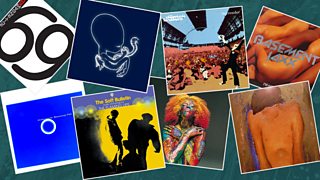
19 albums that define 1999
Featuring The Chemical Brothers, Kelis, Missy Elliot, and Sigur Rós.


Want to find more from 6 Music?
Follow BBC Radio 6 Music on Instagram and TikTok
Listen to 6 Music on BBC Sounds, or find out other ways you can listen
