Wonderwall to World In Motion: the stories behind six indie football anthems
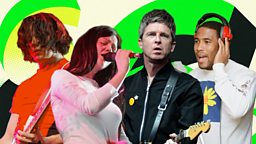
Football and music - what better combo could there be? To mark the launch of 6 Music Indie Forever, and the 2026 World Cup, we've taken a deep dive into some of indie music's biggest football anthems, uncovering how they came to be associated with the sport.
Some became football anthems by accident, others through video games or Match of the Day montages. From Seven Nation Army to Wonderwall, these indie classics have all cemented a lasting place in football folklore - tracks that unexpectedly found a second life through terraces around the world.
BBC Radio 6 Music is launching Indie Forever, a new 24/7 BBC Sounds stream dedicated to the biggest and best indie pop, rock and classics that have soundtracked listeners' lives and musical memories. Available from 22 July, it will feature indie music from the 1980s to the 2010s and beyond, alongside brand-new programmes, historic performances and unforgettable interviews from the BBC's unrivalled archive.
![]()
More on 6 Music Indie Forever
Indie Forever is dedicated to the biggest and best indie pop, rock and classics.
![]()
6 Music's Indie Forever mixes
Nothing but solid gold upbeat indie bangers.
![]()
Indie Football Playlist
Indie terrace anthems from the likes of The Fratellis, The Verve, The White Stripes, Kasabian, Kaiser Chiefs, The Jam and more!
![]()
Football Indie Bangers
Music from the terraces, from The Vaccines, CSS, Gorillaz and Royal Blood.

1. Blur - Song 2
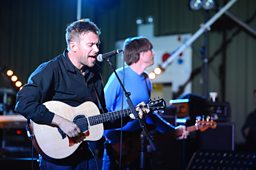
It's strange to think in hindsight, but Blur never actually wanted Song 2 to be released as a single. In fact, the entire song started as a joke - a two-minute grunge pastiche that the band knocked out as a parody. They actively resisted releasing it at all, and it took their US label, clocking just how catchy the thing was, to talk them round.
"Damon Albarn replied, 'We've got more money than we know what to do with, but what we can't get is tickets to the World Cup final.'"
Even that famous "woo-hoo" hook - arguably among the most recognisable two syllable refrains in modern indie - was never supposed to be part of the final song. Producer Stephen Street has said it began life as nothing more than a guide vocal, a placeholder while frontman Damon Albarn worked out its proper lyrics: "The woo-hoo was something he came up with to fill in a gap... but we knew as soon he did it, this is quite universal, we should keep that."
Released in April 1997, the song shot to No.2 in the UK chart and became the best-selling single of Blur's career - their only track to go triple-platinum, in fact. However, its permanent association with the beautiful game was sparked the following year, when it was used on the soundtrack of FIFA: Road to World Cup 98.
The story of how it ended up on the game is a great bit of lore. EA Sports are said to have rang the band just as they were about to walk on stage in Australia and simply asked what they wanted as payment. Rather than pay a full licensing fee, the band had a more unorthodox payment type in mind. "I think it was Damon Albarn who replied, 'We've got more money than we know what to do with, but what we can't get is tickets to the World Cup final,'" Tom Stone, EA's European marketing VP at the time, later recalled. Four World Cup Final tickets later and a deal was done.
From there the song's links to footy snowballed - the FIFA soundtrack slot opened doors for EA Sports to negotiate similar deals with Robbie Williams and Chumbawamba for the game's soundtrack and, in years that followed, it kicking off a tradition of music in football video games that's still going strong.
"That repetitive piece of music got under your skin," EA exec Steve Schnur told VICE. "It became integral to the kid playing the game, and to the gameplay, and then to actual sport." Nearly thirty years on, Juventus, the France national team and plenty of others still play Song 2 after they score.
2. The Lightning Seeds - The Life Of Riley

Ian Broudie most likely wasn't thinking about football at all when he wrote The Life of Riley, a song that's actually about the birth of his son. He wrote the verses while his wife was pregnant, capturing all that anxious, sleepless-night anticipation. "We were waiting for the baby - it was late and I was worried," he later explained. "I wanted it to feel like if you had a camera and you were 50,000 feet above the earth and you dropped the camera and it was just coming down through the clouds, getting closer and closer as it was falling to Earth. That’s how I want these strings to sound. That beginning bit is meant to feel like everything is falling onto the planet."
Despite its meteoric sound, the track only charted at No.28 on release in March 1992. The song found its true calling a few months later, courtesy of a brilliant broadcasting decision. Match of the Day picked it up as the theme for Goal of the Month for the majority of the 90s (and brought it back again for Goal of the Day in the mid-2000s). And thanks to that, it's a song that still conjures great nostalgic memories for anyone who remembers the early years of the Premier League. Just search online these days, and you'll still find hundreds of comments on compilations featuring The Life Of Riley and goals from Alan Shearer, Peter Ndlovu and Teddy Sheringham.
There's a nice bit of irony to the story too. Years earlier, during his time in the short-lived punk band Big in Japan, Broudie had written an untitled instrumental for a Liverpool indie compilation, and later recalled thinking at the time that it "would sound good on Match of the Day". Obviously he no idea that a completely different song of his would end up doing exactly that.
Broudie's footballing legacy runs deeper still, of course. Four years after The Life Of Riley, the FA came calling for him to record England's Euro 96 anthem. Most people know exact what happened after that - the iconic Three Lions was born alongside David Baddiel and Frank Skinner. Two bonafide football anthems in one career isn't bad, and Broudie has since called it fitting that he'll be remembered most for his footy-associated songs.
3. The White Stripes - Seven Nation Army
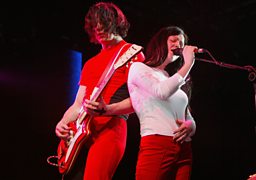
You've heard the riff, everyone's heard the riff. You probably have the riff stuck in your head right now. But The White Stripes' Jack White actually came up with that famous guitar part from Seven Nation Army when his band were on tour. More specifically, at a soundcheck in Melbourne in January 2002. Thinking he'd come up with something special, he then played it to someone from Third Man Records. Their verdict? He could "do better".
There's no need to know the language or the words of the song
Good job nobody pushed for changes though, because the track became the lead single from 2003's Elephant and the band's most enduring song of their career. It propelled the duo - consisting of Jack White and drummer Meg White - to a new level of fame and was a UK Top 10 hit that's sold upwards of three million copies, with another two million shifted in the States since too.
Its transformation into a stadium staple can actually be pinpointed to a single, specific match. It's rare that these things can be traced to one event, but the history of how Seven Nation Army became a crowd anthem dates back to a night in October 2003, when Club Brugge fans began chanting the riff - "dun, dun, DUN, dun, dun, dun, DUN", seemingly out of nowhere - in the San Siro stands as their side beat AC Milan 1-0 in the Champions League. Peru's Andrés Mendoza scored a shock winner for Brugge that night, and the stand rang out in jubilation. After that, they brought the chant back home with them and it's been part of Brugge's match-day ritual ever since.
From there, it really did seem to spread. Roma fans picked it up when they visited Bruges for a 2006 UEFA Cup tie - captain Francesco Totti later admitting that he'd never even heard the song before that night. After the song became a Roma favourite, it was then adopted by the Italian fans at the 2006 World Cup, where it earned the nickname "po po po po po". Some, like Totti before them, belted it out with no idea what the actual song even was, and Seven Nation Army became their unofficial victory anthem in the streets of Rome after Italy won their fourth ever World Cup trophy.
The chant has since crossed into other sports: American football, darts, you name it. AFC Bournemouth even use it now as their official Premier League walk-out music. It's definitely had an unexpected life, and Jack White, for his part, says he's genuinely moved by the fact that "people embrace a melody and allow it to enter the pantheon of folk music". Though he's admitted the whole thing left him baffled for years, and puts its success down to the riff having no lyrics at all, comparing it to the wordless "na na na" of Hey Jude: "there's no need to know the language or the words of the song".
![]()
Football Fix: World Cup 2026
Listen to more football and World Cup-related content, including match commentaries and post-match podcasts, on BBC Sounds.

4. The Fratellis - Chelsea Dagger
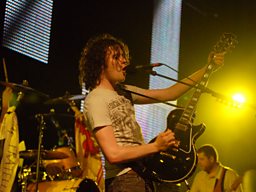
Despite eventually ending up as Chelsea's goal song, this modern indie footy anthem actually has nothing to do with football or with West London. Jon Fratelli says he originally wrote it after meeting his wife, who performed burlesque in Glasgow under the stage name of Chelsea Dagger. He's said he wasn't trying to write autobiographically so much as conjure "a slightly dodgy underworld I'd never been to," one that was full of dancers and gangsters.
The band are big Celtic fans themselves, so it was only apt that the Scottish giants were the first to embrace the song as a terrace chant. Like the White Stripes song, Chelsea Dagger has a great hook to singalong to - "duh duh duh, duh duh duh..." - and Fratelli still vividly remembers hearing 60,000 fans sing his song back at him in the rain, after Celtic's famous last-minute winner against AC Milan in 2007. After that, it somehow seemed to spread everywhere - to clubs as wide ranging as Bodø/Glimt in Norway, Perth Glory in Australia and played by Italian giants Juventus as their goal celebration music for an eight-year stretch.
"It was nice when Celtic started playing Chelsea Dagger at matches, but I think it got overused at sporting events," Fratelli later admitted. "There was a period where every third team was using it and it’s hard for any song to keep up. I understand why some journalists formed the opinion that Chelsea Dagger was music for football hooligans, but I would never give any credence to that."
Predictably, and aptly enough, Chelsea have recently started to use the song at Stamford Bridge, but you can see why it's established itself as such a footballing anthem universally too. As producer Tony Hoffer put it: "Chelsea Dagger is not the kind of track where everything is polite and organised. It’s raucous, rough and ready. I wanted the chants to sound crazy... We didn’t make Chelsea Dagger for sniffy journalists. We made it for people who like to have fun. When the Fratellis play it live, it’s rowdy, with drinks spilling everywhere."
5. Oasis - Wonderwall
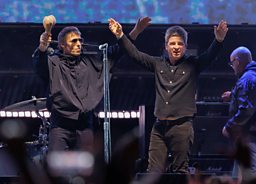
You can't point to a single match or video game soundtrack that made Wonderwall a terrace classic. Instead, it's the case of a song that gradually glued itself together to the fabric of football culture, especially in the English game.
"England fans have turned away from Three Lions and turned towards Wonderwall."
In fact, sometimes it's hard to remember a time when it wasn't sung by joyous fans whilst slowly exiting a stadium. It's a song that is entirely intwined with footy as a whole these days. After all, Britpop and the Gallagher brothers, in general, were long interlinked with the football world. But it's perhaps two teams that have been most synonymous with the song - Manchester City and, more recently, the England national team.
The City link runs deeper than matchday singalongs - it's the song players use to psych themselves up in the dressing room, a detail confirmed by John Stones, who built a Spotify playlist with Noel Gallagher in 2018. The defender revealed City "always" play it pre-match. But Noel - a lifelong City fan - wasn't exactly convinced by the choice, saying: "Would you not prefer 'Rock and Roll Star'? Wonderwall's a bit 'end of the night, my bird's left me'... It doesn't strike me as something you play before the derby."
This connection between Man City and Wonderwall was more or less sealed for good in May 2019, when they retained the league title with a 4-1 win at Brighton. Noel, who had been watching among the fans, ended up in the dressing room afterwards giving an a cappella rendition with the champagne-soaked squad.
More recently it's found a second home with England. After a 4-2 win over Croatia at the 2026 World Cup, the likes of Jude Bellingham, Declan Rice and Harry Kane were seen singing along as fans serenaded the team. Kane described it as "one of my favourite ever moments in an England shirt", adding: "just that emotional connection with the fans... We know how much it means to them. We have that connection right now but just that moment, singing Wonderwall in the stadium... Everyone knew the words and that was a really special moment."
Noel's since been wholly supportive of the song becoming England's unofficial World Cup anthem outright, saying, "That song belongs to the people", while Liam's been telling fans to "keep the biblical vibrations going" throughout the tournament. Meanwhile, Frank Skinner jokingly conceded: "I can no longer ignore the fact that the England fans have basically turned away from Three Lions and turned towards Wonderwall."
6. New Order - World In Motion

While the others on this list have been indie songs that have made their way into the football world, this last one is actually an instance of the indie world colliding with football - a genuine collaboration rather than a crossover.
It all started when the FA commissioned Manchester's New Order to soundtrack England's 1990 World Cup campaign, with the English players themselves brought on to be involved. It might have seemed like an odd pairing on paper: this was a band who'd emerged from the wreckage of Joy Division, hardly known for their rousing sporting tunes. But frontman Bernard Sumner seemed to enjoy the irony, jokingly telling NME at the time it "should be the last straw for Joy Division fans". Even drummer Stephen Morris has admitted he wasn't initially sold, later saying to Q Magazine: "I am on record as saying World In Motion was a really terrible idea".
The music for the track is said to have been repurposed from a piece that the band had originally written for a BBC Two current affairs programme, but they struggled to write its lyrics. The band decided they needed to inject some humour into the song, as Morris explained later: "so if it all went pear-shaped, at least we could say it was a joke". Eventually, they drafted in comedian (and Welshman, in fact) Keith Allen to help. "He was propping up the bar at the Hacienda at the time and he got involved – he knew all the footballers' names, which was very handy," Morris remembered.
The first attempt of the track, titled E for England, was perhaps understandably vetoed by the FA due to its title also containing a drug reference. It was then rewritten and released as World in Motion instead. Credited as ENGLANDNEWORDER, the recording session itself, held at a studio in Berkshire in March 1990, was seemingly chaotic. Some big-name England players turned up - John Barnes, Peter Beardsley, Paul Gascoigne, Steve McMahon, Chris Waddle and Des Walker - with the lyrics still somewhat unfinished when they arrived.
Its rap verse - now iconic - hadn't even been planned until Liverpool's Craig Johnston suggested it on the day. Gazza is said to have attempted a rap, of which Allen later recalled: "He's got the tempo! He's got the rhythm, everything! Bang on it. But you cannot understand one word of what he's saying".
Anyone who knows anything about English football will know fully well that Barnes ended up winning the audition, and his verse - "You've got to hold and give, but do it at the right time / You can be slow or fast, but you must get to the line... Catch me if you can / 'Cause I'm the England man... We ain't no hooligans, this ain't a football song" - became the most quoted moments of the song, still recited by fans who weren't even alive in 1990.
Barnes has said the appeal was that it broke from the genre's usual clichés, saying in 2020: "We did the song, and there wasn’t even supposed to be a rap. But a little bit of alcohol was taken and... the six players had a rap-off to decide who got the gig... Des was probably the biggest competition, and Gazza might have been in with a shout, but I’m not sure the Scouse or Geordie accents really suited it! So, being a rap fan anyway, I was chosen."
The song went to No.1 - still New Order's only chart-topper to this day - and its legacy runs deeper than the charts suggest. It's widely credited with inventing a new template for football anthems: fun, indie and actually sounding good.
![]()
More on 6 Music Indie Forever
Indie Forever is dedicated to the biggest and best indie pop, rock and classics.
![]()
6 Music's Indie Forever mixes
Nothing but solid gold upbeat indie bangers.
![]()
Indie Football Playlist
Indie terrace anthems from the likes of The Fratellis, The Verve, The White Stripes, Kasabian, Kaiser Chiefs, The Jam and more!
![]()
Football Indie Bangers
Music from the terraces, from The Vaccines, CSS, Gorillaz and Royal Blood.
