Six things we learned about Triad leader Georgie Pai
Georgie Pai was one of Britain’s most notorious Triad leaders. His reach stretched from Southampton to Glasgow, with a command post in the heart of Manchester’s Chinatown.
This unassuming, bowler-hat-wearing “gentleman” ruled the streets with violence, causing terror among Britain’s Chinese heritage community.
Who was Georgie Pai? When did he rise to power? And how did journalists manage to bring about his eventual downfall?
In a new series of Gangster for BBC Radio 5 Live, Livvy Haydock tells the story of the teenager from rural Hong Kong who rose through the ranks to become Triad top dog in the UK.
Here are six things we learned about the infamous Georgie Pai.
1. Georgie Pai was recruited to the Triads as a teenager
Georgie Pai (born Yau Lap) grew up in a quiet, remote village in Fanling in the new territories of Hong Kong, close to the border of mainland China. It was here, as a teenager, that he was recruited by the Triad society, Wo Shing Wo, a notorious criminal syndicate.
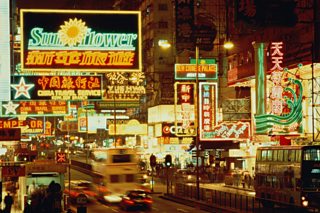
Georgie Pai impressed his WSW bosses by operating gambling dens and collecting protection fees. He was soon given more power.
In Kowloon, across the water from Hong Kong Island, Georgie Pai rose to the senior rank of ‘Red Pole’ – an enforcer.
It was his duty to lead the junior gang members and to hand out brutal retributions to those who disrespected him.
“Back in the sixties, he is a well-known Wo Shing Wo figure,” explains retired Hong Kong Detective Station Sergeant Lam. “He would join his gang brothers to gamble. He also recruited youngsters to be his disciples.”
Georgie Pai built up a hardcore following of 30 men; he had gone from being a street thug to running his own approved gang within the Triads. He was barely out of his teens but on these streets, he was in command.
2. Georgie Pai began his UK operation in Glastonbury
Georgie Pai landed in Britain on a six-month tourist visa and started working behind the counter of his parents’ restaurant – the first Chinese takeaway in Glastonbury. He lived in the flat above with his wife and baby.
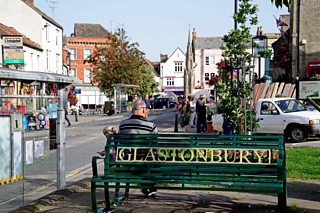
“I remember him being the sort of archetypal Chinese gentleman,” recounts Kevin, who’s lived in Glastonbury for nearly 60 years, running the local chippy. “Stood behind the counter with his wife, with his glasses, not really saying a lot.”
But Georgie Pai wasn’t really there to serve customers – he was on assignment.
Wo Shing Wo was dispersed around the country and lacked any central leadership. Pai had been sent to change that, and to plant their flag in Britain.
In just a few months, he had assembled an army of around 80 dedicated members. He divided his time between addresses up and down the country.
Pai and his disciples ran gambling dens and grew their protection racket, demanding a cut of profits from restaurants and other businesses across Chinatowns.
Failure to comply resulted in violence: paint thrown across shop fronts, premises trashed and, at worst, machete attacks.
“He certainly stamped their presence in the UK and made them one of the most active Triads,” states retired crime reporter, David Black.
3. His command centre was above a busy Chinese restaurant
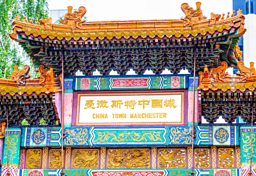
At the centre of Georgie Pai’s Wo Shing Wo empire was a popular restaurant in Manchester’s Chinatown.
Former Triad member, Musa, remembers being summoned to the restaurant from London to help with gang negotiations. He was taken upstairs to the surveillance room.
“You go through one metal gate and then you go through another metal gate. Then you get into the den,” he recounts.
“I walked into this place and I see CCTV everywhere, for the whole of Chinatown.” No one could leave or enter Chinatown without being watched by Georgie Pai’s men.
Making Manchester his central command post was a shrewd strategy. “If you look at the map of the UK, Manchester is right in the middle,” says Musa. “If you get London, you can't actually spread out like that. So, Manchester was the main base and it was a very clever move he did.”
4. Georgie Pai was charming
Georgie Pai was old school. He dressed in a long trench coat and bowler hat; a newspaper tucked under the arm. He was stylish and reportedly charming, engaging, quick and witty.
He lived in quite a fluid world, so he had to have diplomatic skills"Journalist David Black
“He lived in quite a fluid world, so he had to have diplomatic skills,” says journalist, David Black.
“People that I spoke to, and this is in law enforcement, said he was a very educated man – or appeared to be – extremely wily, very plausible, very easy to deal with. ‘Cute as a cage of monkeys’, one officer described him to me.”
Pai knew when to act and when to hold back, when to be harsh and when to show mercy.
“He was a delegator,” states David, “and he was very specific in his use of violence. It wasn’t random; always had a specific purpose. There was no casual brutality about him at all.”
Both feared and revered in equal measure, people knew where they stood with this charismatic leader. He was once described as “one of the most gentle and considerate men I have ever known.”
5. He was deported multiple times – but always found his way back to the UK
In 1977, Georgie Pai made a silly mistake: he forgot to renew his tourist visa. Police swooped in on the Glastonbury takeaway and took him to Bristol’s Horfield Prison.
Following a court case and two-year jail sentence for extortion, he was deported back to Hong Kong.
With the help of skilled forgers in his native country, he didn’t stay away long.
“It's very easy,” explains David Black. “You just change your appearance slightly. Swap around photographs, change the name – and you're an entirely different background.”
Four years after he was deported, Georgie Pai was spotted sauntering down a street in Manchester in his trademark trench coat. In 1983, he’s deported for a second time.
Then in 1986, he’s seen driving a BMW in Bristol. Undercover officers track the car and Georgie Pai is arrested for breaching his deportation order. Detectives still can’t pin him to a single crime, but he’s sent back to Hong Kong once again.
He’s managed to come back three times and beat the authorities”Crime reporter Steve Panter
“No doubt when he came back a third time, his legendary status would have increased,” says Manchester crime reporter Steve Panter. “He’s managed to come back three times and beat the authorities.”
No one really knows how many times Georgie Pai slipped in and out of the country.
“He wouldn’t take no for an answer. He kept coming back,” states Steve. “Certainly, even when he’s thousands of miles away, his presence was still in Chinatown.”
6. It was a team of journalists who eventually dethroned Georgie Pai
With police unable to pin any crimes on Georgie Pai, it fell to journalists to expose him.
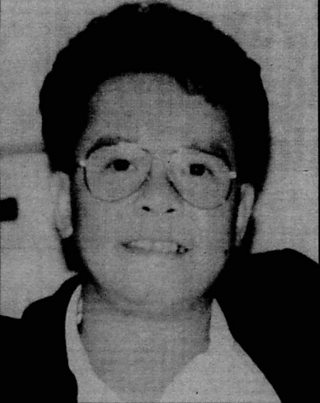
In 1991, after his latest arrest and bail for breaching his deportation order, Georgie Pai was required to check in every Saturday at a police station.
The crew from The Cook Report – a current affairs TV programme in which Roger Cook and his team investigated and unmasked criminals – confronted the Triad boss at his weekly check-in.
“I remember jumping out with Roger, going up to confront him,” recounts one of the show’s cameramen, Mike. “He just wanted to leg it.”
Newspaper reporter Steve Panter knew the exposé was coming, and wasn’t keen to let a TV crew scoop him on his own turf.
The journalist found his own exclusive: Georgie Pai was about to win his deportation appeal and be allowed to stay in Britain.
The Manchester Evening News went to print with Pai’s face splashed across the front page and the headline, ‘Triad’s Boss Now Stays… Police Anger as The Duck Beats Exile.’
“It got me an exclusive on page one on the same day as The Cook Report were about to out-scoop me,” recalls Steve.
Georgie Pai was humiliated on national television. His empire was exposed, his aura shattered and his reign was over.
The fallen kingpin left Manchester with his family and settled in Cheltenham, where he worked front of house in a Chinese restaurant. He died during the COVID pandemic and was buried in Bristol.
![]()
Want to listen to the whole series?
Search "Gangster" on BBC Sounds, where you can find The Story of Georgie Pai and every other series of Gangster and Gangster Presents now.