 | 13 November 2014 |

| |
| BBC Homepage | | |
| |||
| Contact Us | | |
Local historyYou are in: North Yorkshire > History > Local history > They shall not grow old... 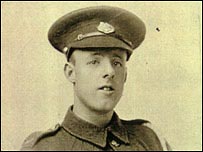 They shall not grow old...For Ken Sayner an old, white, mug, filled with coins, was the starting point for a journey back to the trenches of the First World War. When his father died the family heirloom helped him uncover a story of patriotism, heroism and tragedy. Ken Sayner grew up in Cawood in the 1930s where his Grandma and Grandad grew vegetables. The money they made from selling their crop they put into a large, white, World War 1 commemorative pint pot. 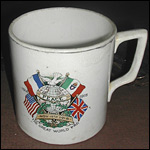 World War 1 commemorative pint pot A porcelain drinking vessel, decorated with national flags and a globe with the word PEACE, inscribed on it. Ken’s known that mug ever since. But when his father died the family heirloom and other memorabilia he'd uncovered took on a new significance "When my Dad died, I was cleaning his house out and found two pairs of broken spectacles, a knife which wouldn't open and a broken cigarette case. I just put them in a box which I didn't look at again until I retired." Ken discovered those few items had belonged to his Great Uncle, George Palframan, Private Palframan as it turned out, of the 8th Battalion East Yorkshire Regiment. "When I retired I became interested in tracing my family history and sent for some army records. With them I found some army papers with a list of items which were in George Palframan's posession when he died. They were exactly the same items I'd stored away in the box, wondering whose they were." Ken now started to think about what his Great Uncle’s life had been like – then another family heirloom, added to the picture 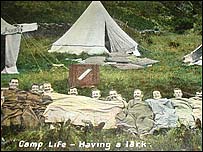 A postcard sent by George Palframan "I had also inherited as a boy a lot of postcards. I never saw the writing on them, because they were always in a Victorian Postcard album, back to back. When that album collapsed I saw what was on the back of them." Ken says the postcards were sent by George Palframan, from the front line trenches of the first world war and revealed him to be a sensitive and humorous 23 year old. "Here's one written to his sister, Elizabeth. She was a teacher and it says, 'Dear E, received your postcard tonight - thought I should answer by return, as I may be working tonight!'... There's another showing them in a tent which says, 'this is how we're camping, unfortunately no girls!' The postcards are all written in that sort of humour." Further research revealed George Palframan’s army career had been heroic – heroic, but sadly, very short
"He went to France on the 1st of July 1916, which was the Battle of the Somme. On the 23rd of July he won the Military Medal - he rescued his officer who was injured and carried him back to the lines. He wrote to his Father about the medal and sent him the ribbon to wear. After the Battle of the Somme he went to Arrass and was killed." The final piece of Ken’s historical jigsaw is perhaps the most poignant. Six days after Ken’s Great Uncle, George Palframan, was killed, his father in England received through the post, the Military Medal his son had been awarded, for saving the life of his officer.  "He'd just served his apprenticeship and begun to earn a living as a young man. Then he gave up everything and within a short time, 23 years old he was, was killed. Makes me so sad that a life could end so abruptly." last updated: 22/10/2008 at 16:30 Have Your SayTell us the interesting facts you discovered when researching your family history Frederick Burnard Coatham Anna Steven Durham Ian Cook Steve Lindley Craig Chambers laraine cox Mike Greatorex SEE ALSOYou are in: North Yorkshire > History > Local history > They shall not grow old...   |
| | About the BBC | Help | Terms of Use | Privacy & Cookies Policy |
