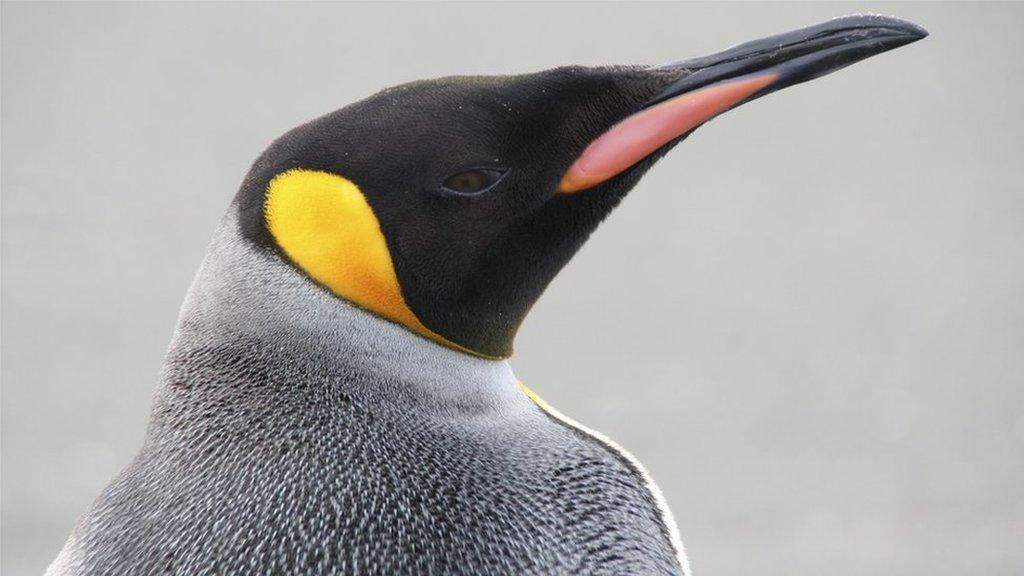
Baby penguin halts air traffic on airport runway
- Published

It's one thing your travel plans being held up due to bad weather - but what about because of a penguin?
This little blue penguin, known as a kororā, was spotted on a runway when the pilot was just moments from take off.
He was spotted on a particularly hot day at Wellington Airport, in New Zealand's capital city on 12 January.
The pilot and passengers patiently waited while Wellington Airport's airside staff Alex McGregor and Kaleb Woodcock raced out to collect and help the visitor.
New Zealand Department of Conservation said that the penguins are rarely seen on land and usually only come onshore at night, so this is definitely an unusual visitor.
Wellington Airport's Wildlife Officer Jack Howarth says the kororā was in a less than impressed mood, given the 50C heat on that day.
He said: "We were unsure how long they'd been exposed to the sun without shelter, so I thought it best to take him to The Nest at Wellington Zoo as they've helped us with recovery of other wildlife in the past.
"They happily took him in to cool down and monitor for any further issues."
So how did his unusual airport visitor end up on the runway to begin with?
The staff team think he may have wriggled under the fence but said they have now done some "penguin proofing to keep our flippered friends out of trouble in future".
"It's a very unusual occurrence and there's no record of a penguin visiting us like this before."

The penguin was cared for after being rescued
A native to New Zealand, the kororā is the smallest species of penguin in the world.
A typical little blue penguin stands at just 25cm, weighs a little over 1kg and can live to be about eight or 10 years old, if it avoids airport runways that is.
This one was transported to the Nest Te Kohanga at Wellington Zoo which specialises in rehabilitating native wildlife.

The zoo said the penguin was around six weeks old when it was brought through its gates.
The centre described it as hungry and a little underweight, but otherwise healthy.
It will be cared for until its feathers become waterproof and then it can be returned to the wild.
- Published22 April 2023
- Published27 February 2021

- Published20 January 2022