Summary

  • Thousands of people have taken to the streets in Tehran for the funeral procession for Iran's former Supreme Leader Ayatollah Ali Khamenei

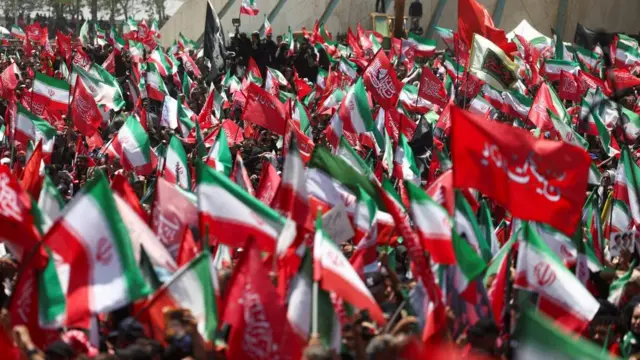
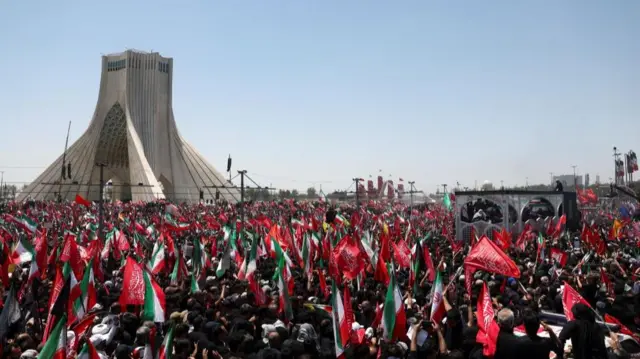
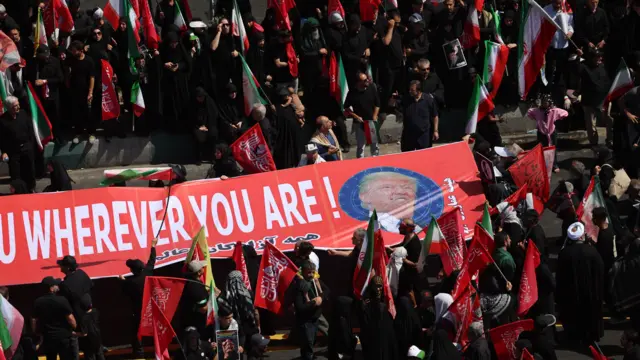
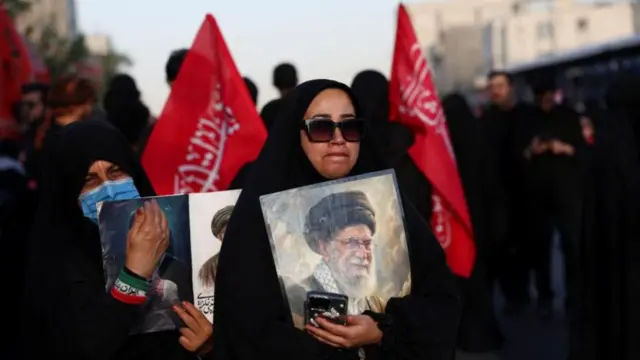
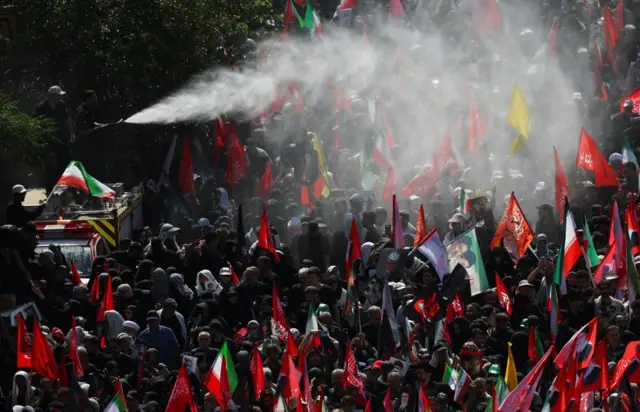
  • It began its journey through the Iranian capital early on Monday, with crowds seen waving flags and holding up pictures of the late ayatollah

  • Khamenei, who ruled Iran for more than 35 years, was killed in US-Israeli air strikes in February - his funeral began on Friday, with events planned over the coming week

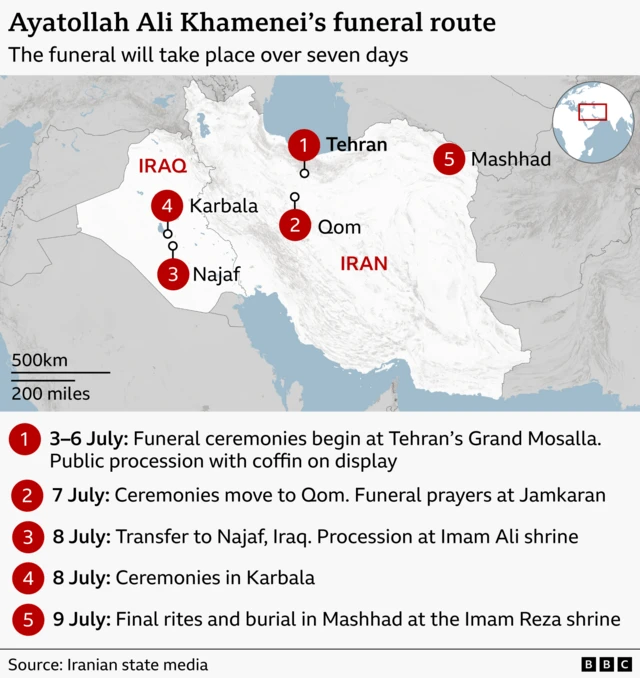
  • The burial is scheduled for Thursday in the north-eastern city of Mashhad following stops in Qom and the Iraqi cities of Najaf and Karbala - Iranian authorities say millions are expected to attend the "funeral of the century"

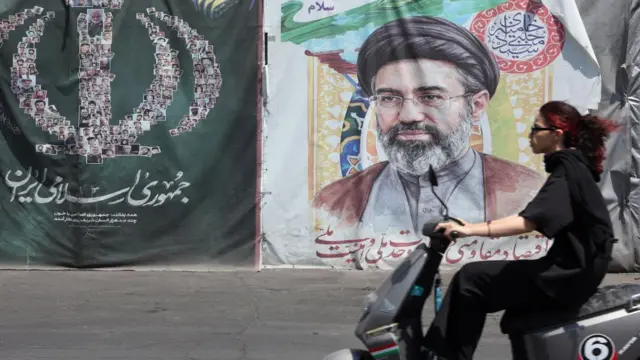
  • Khamenei's son Mojtaba has been named his successor - though he hasn't been seen publicly since taking power and has so far been absent from his father's funeral

  • A fragile ceasefire between the US and Iran is currently holding while talks on a permanent peace deal continue - Axios quotes US President Donald Trump as saying that talks had been paused for events surrounding the funeral

Media caption,
Watch: Lyse Doucet reports as emotion and politics merge at Tehran funeral on Sunday
  1. Several days of events to mark Khamenei's funeralpublished at 08:11 BST

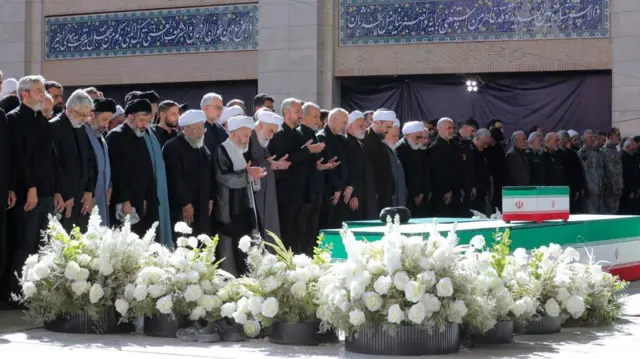
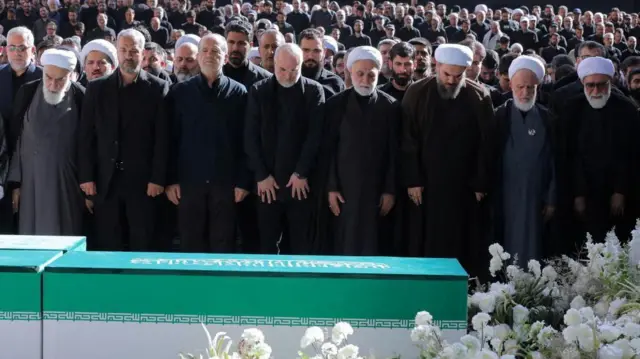
    Funeral events for Iran's late supreme leader started with a tribute ceremony attended by international dignitaries on Friday, 3 July.

    A two-day mourning ceremony held in Tehran's Grand Mosalla Mosque followed over the weekend.

    The funeral procession began in the Iranian capital this morning.

    Authorities have ordered public and private offices in Tehran to close through Monday, with traffic restrictions shutting down most of the city centre to private vehicles, according to AFP. The airspace over Tehran has also been fully closed.

    Organisers have selected a route running across Tehran, saying that no single street could accommodate the expected crowds. Authorities say they hope the event will conclude by the evening.

    This is the schedule for the days ahead:

    • 7 July: Funeral procession in Qom, with the body reaching Iraq in the evening
    • 8 July: Processions in Najaf and Karbala - among the holiest cities in Shia Islam after Mecca and Medina - before the body returns to Iran
    • 9 July: Burial in the north-eastern city of Mashhad
    A map shows the locations in Iran and Iraq where the funeral celebrations will be found.
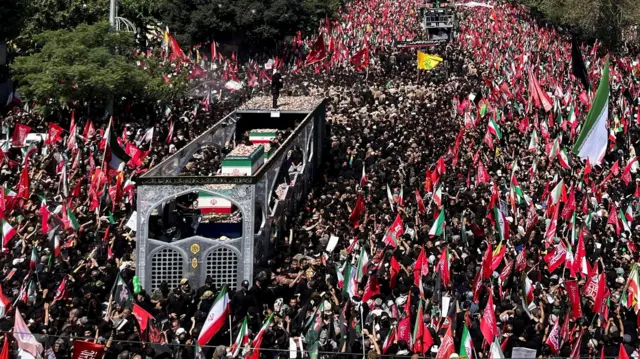
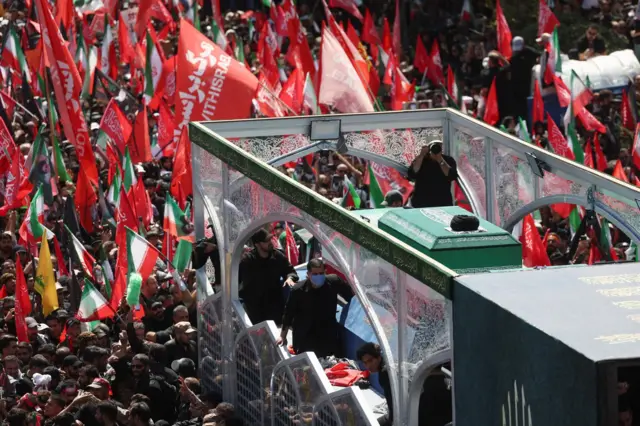
  2. Pictures show coffins passing through crowdpublished at 07:47 BST

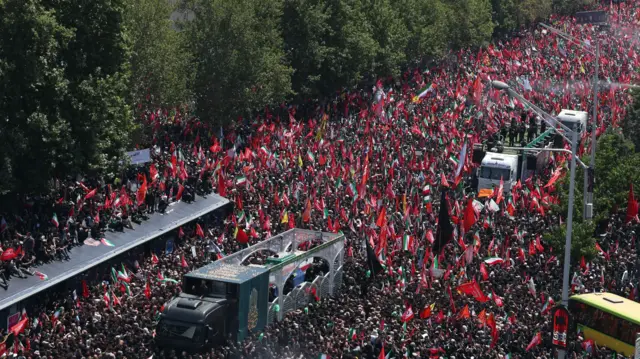
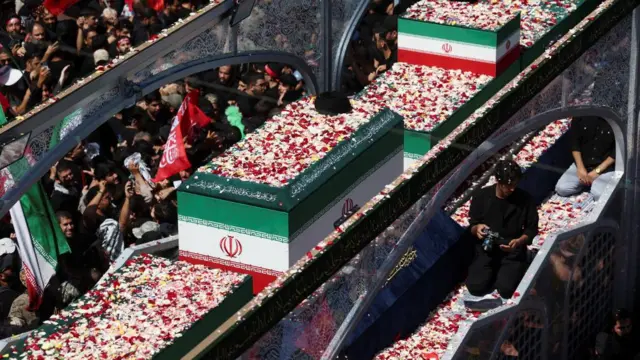
    A vehicle carrying coffins of Iran's late Supreme Leader Ayatollah Ali Khamenei and his family members has been pictured from overhead.

    The vehicle has ornamental sides, which are open and allow mourners to see through.

    A vehicle carrying coffins makes its way through large scores of peopleImage source, Reuters
    A vehicle carrying coffins of Iran's late Supreme Leader Ayatollah Ali Khamenei and his family members, makes its way as people attend a funeral processionImage source, WANA via Reuters
  3. Analysis

    Iran's new regime is very different to what came beforepublished at 07:42 BST

    Paul Adams
    Diplomatic correspondent

    Iran is in the midst of profound change.

    The country is saying farewell to its former supreme leader, Ayatollah Ali Khamenei, who was killed more than four months ago in the devastating joint US-Israeli airstrikes which began the war and decapitated much of the regime in Tehran.

    It's a big moment: a grand reminder that the old guard has given way to the new. And with the new faces comes a new approach with its own implications.

    The new leadership is not made up of the sort of people Washington is used to calling "woolly-brained apocalyptic ideologues", says Vali Nasr, professor of International Affairs and Middle East Studies at Johns Hopkins' School of Advanced International Studies.

    At 56, the country's new supreme leader Mojtaba Khamenei is 30 years younger than his father, Ali Khamenei, who was believed to be in frail physical condition when he was killed at the start of the war.

    The president, Masoud Pezeshkian, is older at 71, but the generation that mounted the 1979 revolution are all gone.

    Two key figures, the parliamentary speaker and chief negotiator Mohammad Bagher Ghalibaf and the commander-in-chief of the Revolutionary Guard, Ahmad Vahidi, are both in their 60s.

    But having stood up to the combined might of the US and Israel, can Iran's new leadership capitalise on this potentially fleeting opportunity to rebuild the regime's shattered legitimacy?

    After six tumultuous months, the region has started to look different. But a lot has to go right for this plastic moment to solidify into something better.

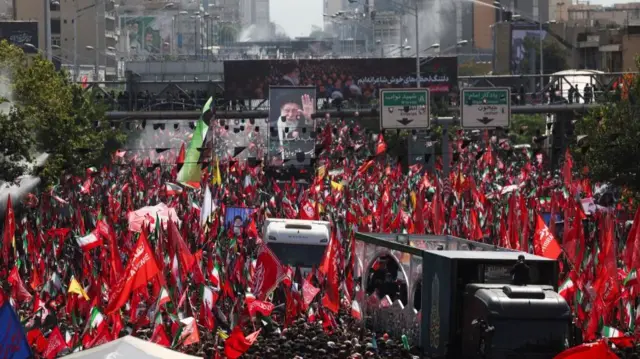
  4. Vehicles pass through the crowds in Tehranpublished at 07:29 BST

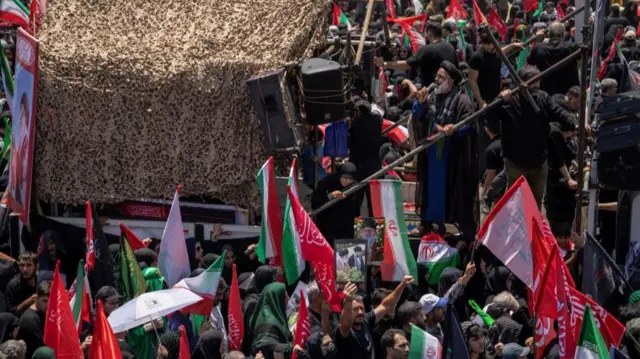
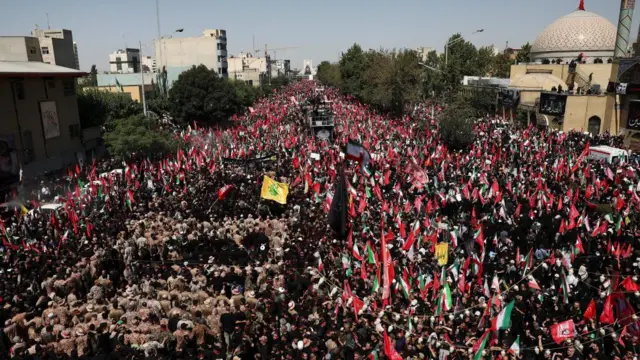
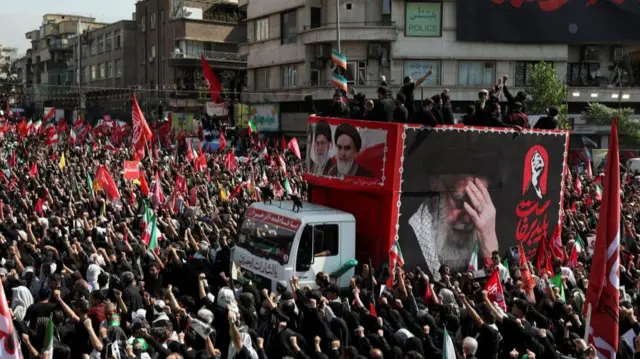
    The procession in Tehran is under way with huge crowds gathered to pay their respects.

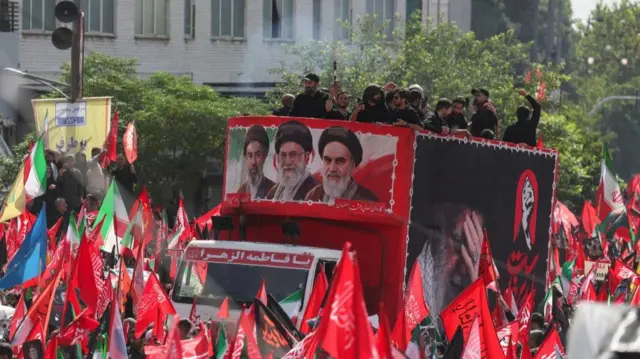
    A number of vehicles - which reportedly contain the coffins of Iran's late Supreme Leader Ayatollah Ali Khamenei and his family - can be seen making their way through the scores of mourners.

    Two vehicles make their way through crowds of people holding flagsImage source, Reuters
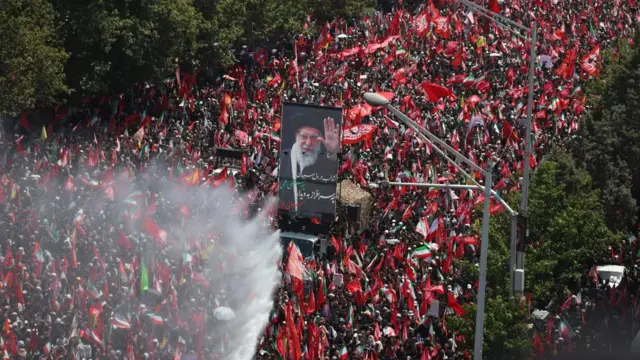
    Mourners wave flags around a lorry-type vehicle with images of the late supreme leaderImage source, Reuters
    A vehicle featuring an image of late Supreme Leader Ayatollah Ali Khamenei makes its way through the crowdsImage source, Reuters
  5. How the war delayed Khamenei's funeralpublished at 07:12 BST

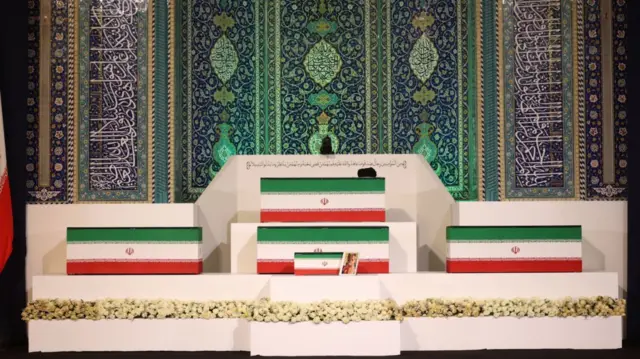
    Five wooden coffins painted in the colours of the Iranian flag rest on top of a white platform in Tehran. At the very top of the platform, is Ayatollah Khamenei's coffin with a black turban resting in the right hand corner. Below it, a matching coffin and a smaller one, a picture of a young girl in pink clothing in a white frame propped against itImage source, EPA

    With the war still raging on, Iranian officials planning for a March funeral decided to delay the ceremony entirely.

    At the time, an official said there had been many requests from people wanting to attend the three-day event at a Tehran prayer complex and that infrastructure needed to be prepared.

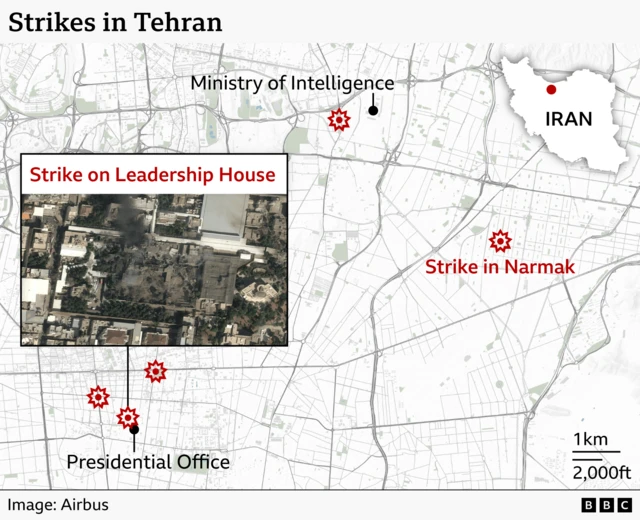
    Khamenei was killed at his compound in Tehran in the first wave of US and Israeli strikes, along with his daughter-in-law, one-year-old granddaughter Zahra Mohammadi Golpayegani and several top officials. His wife was also reportedly killed in the attack, though one Iranian outlet has since said she is alive.

    The funeral ceremony for the 86-year-old cleric had been due to take place on 4 March, with mourners invited to pay their respects as he lay in state at the capital's Grand Mosalla Mosque.

    Seyyed Mohsen Mahmoudi, the head of the Islamic Propaganda Co-ordination Council of Tehran, said the delay was because of "the high volume of requests to attend this ceremony and the need to provide appropriate facilities to host the people".

    Media caption,

    Watch: BBC in Tehran on Saturday as mourners gather for funeral

  6. Former supreme leader was killed on first day of warpublished at 07:03 BST

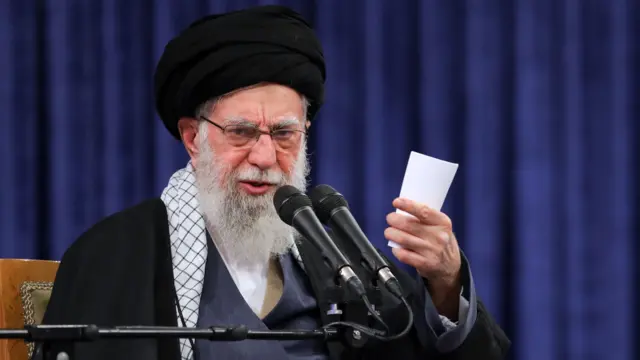
    A man, Ayatollah Ali Khamenei, addressing a ceremony in Tehran, speaking into black microphones while holding white paper in one hand.Image source, EPA/Shutterstock

    Ayatollah Ali Khamenei was killed in joint US-Israeli strikes on 28 February - the first day of the Iran war.

    Satellite images after the strikes showed damage to Khamenei's compound in Tehran.

    Reports soon began to circulate that Khamenei had been killed, and Israeli PM Benjamin Netanyahu said there were growing signs he was “gone”.

    US President Donald Trump later wrote on his Truth Social platform: "Khamenei, one of the most evil people in History, is dead."

    Having initially denied Khamenei was dead, Iranian state media confirmed the news in an address by a tearful presenter, who said the country would enter 40 days of mourning.

    Khamenei has been succeeded by his son, Mojtaba Khamenei, who was selected by Iran’s Assembly of Experts - the clerical body that chooses the supreme leader.

    He has not been seen publicly since the start of the war and was reported to have been injured in the initial strikes.

    Map shows location of strikes in Tehran close to strategic locations
  7. Thousands gather in Tehran as procession beginspublished at 06:53 BST

    We're seeing some images from the Iranian capital on Monday morning, as the procession gets under way.

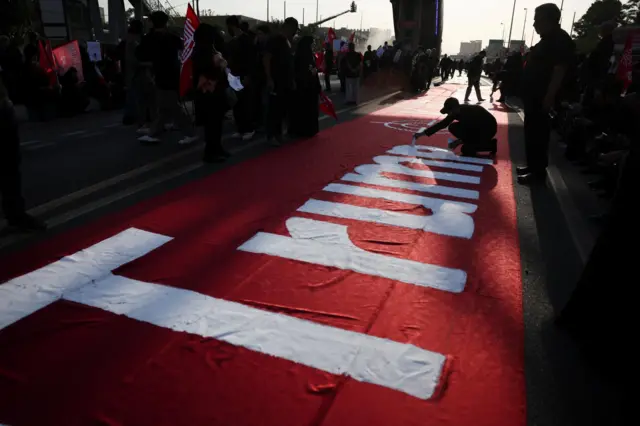
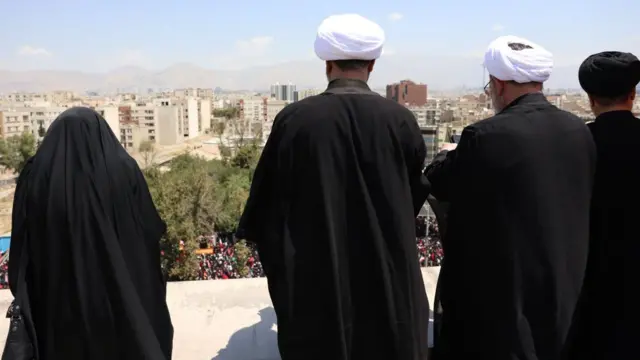
    Thousands of people can be seen gathering on the streets. Official media has warned of a risk of crowd crushes and strict security measures have been imposed.

    A mourner holds an image of Iran's Supreme Leader Mojtaba Khamenei as people gather for the funeral processionImage source, Reuters
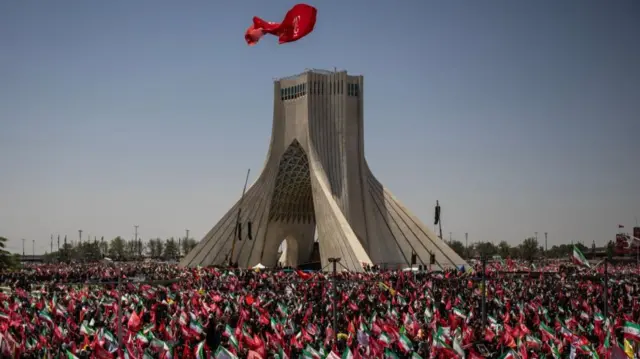
    A landscape shot of a large crowd of people gathered under rows of flagsImage source, Reuters
    Mourners holding flags and banners gather in a squareImage source, Reuters
  8. Watch: BBC reports as emotion and politics merge in Tehran at funeralpublished at 06:50 BST

    Vast crowds loyal to the Islamic Republic have gathered in Tehran for the funeral ceremony in recent days.

    The BBC's chief international correspondent Lyse Doucet sent this report from the Iranian capital on Sunday.

    Lyse Doucet is reporting from Tehran on condition that none of her material is used on the BBC's Persian Service. These restrictions apply to all international media organisations operating in Iran.

  9. Funeral procession for Iran's former supreme leader begins in Tehranpublished at 06:40 BST

    A woman weeps as people gather at the Imam Khomeini Grand Mosalla for a farewell ceremony for Iran's late Ayatollah Ali KhameneiImage source, Getty Images

    The funeral procession for Iran's former Supreme Leader Ayatollah Ali Khamenei has started its journey through the capital Tehran.

    Khamenei ruled Iran for more than 35 years, before he was killed in US-Israeli air strikes in February.

    His funeral began on Friday, and will take place across seven days with events in locations within both Iran and Iraq. Iranian authorities have said 12-20 million people are expected to attend the various ceremonies.

    Khamenei's successor, son Mojtaba Khamenei, has so far been conspicuously absent from his father's funeral - which has been attended by a number of senior regime figures

    Speculation about Mojtaba's condition - fuelled by rumours he was wounded in the same US-Israel air strikes that killed his father - has continued as he has not appeared in public since his appointment in early March.

    A map shows the locations in Iran and Iraq where the funeral celebrations will be found.