Summary

  • Pakistan's prime minister says a peace deal has been reached between the US and Iran which will end "military operations on all fronts, including in Lebanon"

  • The deal will be officially signed on Friday in Switzerland, Shehbaz Sharif adds; details of what it contains - and doesn't - are still emerging

  • Donald Trump says "oil will flow" once peace deal is signed on Friday

  • The announcement is a very welcome 80th birthday present for Trump, but details of the deal are still scarce, writes our North America correspondent

  • Iran's deputy foreign minister confirms on state TV that a deal has been finalised

  • The war began on 28 February, with US and Israeli strikes across Iran. It prompted Iran to attack Israel and US-allied states in the Gulf and effectively closed the Strait of Hormuz, a key oil and gas shipping route

  1. Iranian state media reports 14 points of memorandumpublished at 00:30 BST

    Iranian state media is reporting what is says are the draft details of a 14-point memorandum of understanding between the US and Iran.

    The specific points have not been officially confirmed by either country.

    Mehr News Agency, a semi-official Iranian state news outlet, says the points include:

    • A permanent ceasefire on all fronts, including Lebanon
    • US commitment not to interfere with Iran's internal affairs
    • Lifting of US naval blockade within 30 days
    • US withdrawal of forces from Iran
    • Reopening the Strait of Hormuz within 30 days "under Iranian arrangements"
    • The US and its allies delivering reconstruction plans for Iran worth at least $300bn
    • Ending sanctions on Iranian oil and energy products
    • Reiteration of Iran's commitment not to produce nuclear weapons
    • US commitment not to increase its forces in the region and not impose new sanctions

    Mehr also reported that "final negotiations will not begin before half of Iran's frozen funds are released, Iran's oil sanctions are suspended, and the naval blockade is lifted".

    It said the final agreement would be approved by a UN Security Council resolution.

  2. UK, France, Germany and Italy welcome peace deal to 'restore regional stability'published at 00:18 BST

    In a joint statement about the deal, the leaders of the UK, France, Germany and Italy say they will work closely with the US, Iran and regional partners to "seize this moment".

    "We congratulate the United States, the Iranian government and all those involved, including Pakistan, Qatar and all other mediators, on this diplomatic breakthrough," the group, known as the E4, says.

    “This is a moment of opportunity to restore regional stability and stabilise the global economy."

    The leaders called for the agreement to be "implemented rapidly and comprehensively" and that the "urgent reopening of the Strait of Hormuz with unconditional and unrestricted freedom of navigation is essential".

    The group emphasised that Iran "must never acquire a nuclear weapon" and that they are "prepared to lift relevant sanctions in response to clear, verifiable steps by Iran on its nuclear programme".

    “We will work intensively with the US, Iran and regional partners to seize this moment, maintain momentum and achieve a long-term diplomatic settlement."

    The leaders also reaffirm their support to the "stability, sovereignty and territorial integrity of Lebanon".

  3. Analysis

    How quickly shipping will return to Strait of Hormuz remains to be seenpublished at 00:08 BST

    Jonathan Josephs
    BBC business reporter

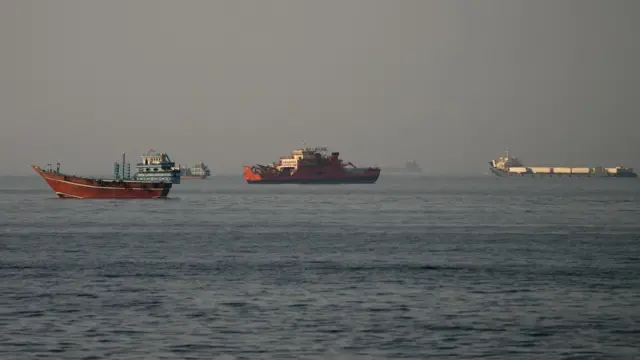
    Donald Trump's post suggests that the Strait of Hormuz will reopen as part of what has been agreed with Iran.

    It’s a vital waterway for global trade - before the conflict 20% of oil and gas supplies flowed through the Strait.

    But it's likely to take some time before maritime traffic returns to pre-war levels because shipping companies will want to see that the deal is holding.

    The world's biggest shipping lines have repeatedly emphasised that the safety of their crews and vessels is their top priority.

    The first movements are likely to be eastwards so that the approximate 2,000 ships with some 20,000 seafarers can leave the Persian Gulf for the first time since the fighting began at the end of February.

    The most relevant precedent is the closure of the Red Sea route in the aftermath of October 7 attacks. After that it took the major shipping lines two years to start to phase in a return.

    It's likely the return to the Strait of Hormuz will be faster because it is more important to global trade and there is no alternative route.

    But how quickly that happens remains to be seen.

    Vessels at the Strait of Hormuz, as seen from Musandam, Oman, June 14, 202Image source, Reuters
  4. Macron says G7 leaders to discuss reopening of Strait of Hormuzpublished at 23:59 BST

    French President Emmanuel Macron says G7 leaders, who are meeting this week in the French resort town of Evian, will discuss the long-term reopening of the Strait of Hormuz as part of the US-Iran deal.

    "The aim will be to see the consequences of this agreement, support for Lebanon, the lasting reopening of Hormuz and of course the concluding of an accord on nuclear and ballistic activities in Iran," Macron said in a video on Instagram.

    Leaders from Britain, Canada, Germany, Italy, Japan and the United States are meeting from Monday 15 June for the three-day summit with other countries such as India and Brazil also taking part in the gathering.

  5. Iran top military command frames the deal as 'defeat' for US, Israelpublished at 23:51 BST

    Ghoncheh Habibiazad
    Senior reporter, BBC Persian

    Iran's top military command, Khatam al-Anbiya Central Headquarters, has said that Iranians, together with the country's armed forces and Tehran's proxies and allies in the region, have shown the US and Israel that they have "no option but to accept defeat and surrender".

    The statement is in line with the way Iran's state television has been trying to portray the deal as a victory for Iran. There had been mounting criticism within Iran from hardliners opposed to the deal.

    Some of those who criticised the deal accused Iran's foreign minister and parliament speaker, both of whom played key roles in the negotiations, of "betraying" Iran's late Supreme Leader, Ayatollah Ali Khamenei, who was killed in US-Israeli strikes on the first day of the war, on 28 February.

    Khamenei had said weeks before his death that negotiations with US were not "wise" and would not "resolve" the country’s problems.

  6. Trump says 'oil will flow' once peace deal is signed on Fridaypublished at 23:42 BST

    US President Donald Trump has just posted again about the US-Iran agreement, saying he has succeeded where others have failed.

    "This Great Deal will bring Peace and Security to the whole Region," he writes on Truth Social.

    "Many presidents have tried to make Peace with Iran, and all have failed before me. The Leaders of the Region have, for the first time, found a President who can help them achieve real Peace.

    "With the opening of the Strait upon the signing of the Deal on Friday, for purposes of mine removal, oil will flow on both ends again for the Region, and the World!"

  7. Starmer describes deal as 'a hugely important step'published at 23:39 BST

    Responding to news of an Iran peace deal, UK Prime Minister Sir Keir Starmer calls it "a hugely important step forward in ending the war, ensuring regional stability, and re-opening the Strait of Hormuz".

    "I congratulate President Trump and the mediators from Pakistan, Qatar and elsewhere who have contributed to this breakthrough. We have long urged de-escalation and this is the progress we had hoped to see.

    "We are clear that toll-free freedom of navigation must now be restored in the Strait of Hormuz, to begin easing the severe economic impacts that have been felt for several months – on families here in the UK and around the world.

    "We will continue to work with partners to support this – including, if required, through standing up the defensive, independent multilateral mission which the UK and France have taken a leading role in planning up to this point, particularly to offer support on mine clearance in an agreed way.

    "For any peace to endure, it is essential that the commitments made, particularly in relation to Iran’s nuclear programme, are robust, verifiable, and fully implemented. It remains the UK's firm and longstanding position that Iran must never have a nuclear weapon."

  8. Qatar welcomes agreement between US and Iranpublished at 23:33 BST

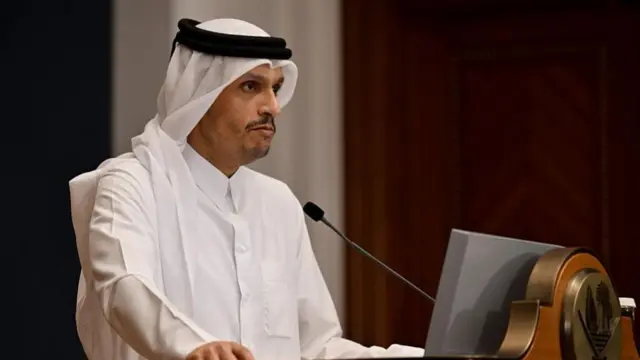
    Qatarâs Prime Minister and Foreign Minister Sheikh Mohammed bin Abdulrahman Al Thani at a news conference March 19, 2026Image source, Getty Images

    The prime minister of Qatar, who acted as a mediator alongside Pakistan, has welcomed the agreement between the US and Iran.

    "We extend our thanks to our brothers in the Islamic Republic of Pakistan," Sheikh Mohammed bin Abdulrahman bin Jassim Al Thani writes on X.

    "We look forward to all parties engaging in the forthcoming negotiations in a positive and constructive spirit that will help consolidate this progress and build upon it."

  9. Vance to attend signing in Geneva - AFPpublished at 23:28 BST

    AFP is reporting that US Vice-President JD Vance plans to attend the deal signing in Geneva on Friday, and it is possible Trump will also sign.

    Media outlets in the US in recent days had reported that Vance would be the most likely person to travel to an in-person signing of the agreement and that it was expected to be in Vienna, inspiring many to closely track the vice-president's movements as well as the positioning of US aircraft.

  10. Analysis

    Details remain scarce on US-Iran dealpublished at 23:24 BST

    Anthony Zurcher
    North America correspondent

    The announcement of an Iran deal has provided Donald Trump with a very welcome birthday present – although one that comes wrapped in uncertainty.

    In his social media post heralding the agreement, the US president said that the Strait of Hormuz would be open to commercial shipping and the US would lift its naval blockade.

    “Let the oil flow!” Trump exclaimed.

    Beyond that, however, details are scarce.

    It appears that the fate of Iran’s nuclear programme – Trump’s stated reason for beginning the war – is subject to further negotiation.

    And if there’s one thing clear after decades of efforts to cajole and coerce Iran into giving up its nuclear ambitions, there are no guarantees that progress will me made even if a "memorandum of understanding" sets out the framework for diplomatic talks.

    At minimum, however, Sunday’s deal should help alleviate, if not entirely remove, some of the strain that the ongoing conflict had placed on the global economy – and some of the political pressure that has been building on Trump as a result.

    It helps return things to the way they were before the start of the war, even if Trump’s larger goals remain unrealised for now.

  11. Iran's deputy foreign minister says peace deal to be signed on Friday - state media reportspublished at 23:13 BST

    Iran's Deputy Foreign Minister Kazem Gharibabadi has confirmed in a phone call on state TV that a deal with the US has been finalised and the official signing will happen in Switzerland on Friday.

    "An immediate and permanent end to the war and military operations on different fronts including Lebanon will be announced tonight," he says.

    He adds that the US naval blockade against Iran will also be lifted tonight.

  12. Analysis

    Israel and Hezbollah is key to whether this deal will lastpublished at 23:00 BST

    Joe Inwood
    World news correspondent

    Getting to this point has taken weeks of careful negotiation, with Pakistani mediators balancing the competing, often contradictory, demands of Tehran and Washington.

    In the end, they seem to have managed to get both sides to agree to the same deal, reopening the Strait of Hormuz and lifting the US blockade, according to Trump, and ending the fighting - including in Lebanon.

    What is interesting about the brief statement by Pakistan’s Prime Minister, Shabaz Sharif, is that it makes no direct mention of Israel or the Lebanese armed group Hezbollah.

    The fighting between the two has been - and remains - the most likely flashpoint in the region, as has been demonstrated once again today.

    Getting them to go along with this deal - which will be signed on Friday - is vital if it is to last.

  13. At the White House, there's little sign of Donald Trump - yetpublished at 22:57 BST

    Bernd Debusmann Jr
    White House reporter

    I'm currently at the White House, which has been buzzing with activity for much of the afternoon as it gears up for the highly anticipated UFC "Freedom 250" event on the South Lawn in a few hour's time.

    While we heard from President Trump on Truth Social, we haven't seen him on-camera yet today.

    According to his publicly available schedule, Trump is currently participating in a family dinner at the White House.

    He will later attend a VIP reception for the UFC event, before headed out to the South Lawn for the fights at approximately 1945e (0145b).

    If we do hear from him, he's likely to claim a victory, both in the war and the subsequent negotiations.

    While he'd been publicly dismissive of domestic pressures, poll after poll has shown that many Americans are concerned with petrol prices.

    Any indication that a meaningful deal has been reached will come as a relief to them - and to the administration.

  14. Iran yet to comment on peace deal but state media shares newspublished at 22:50 BST

    Ghoncheh Habibiazad
    Senior reporter, BBC Persian

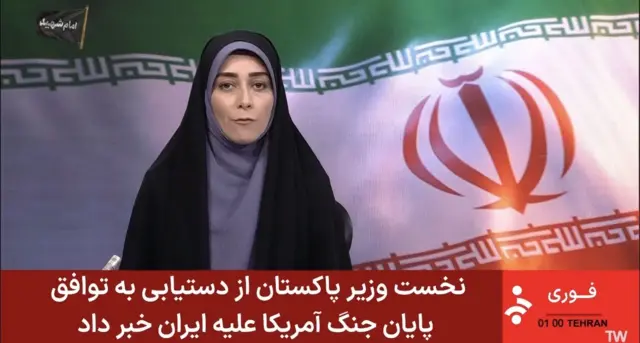
    Iran state TV news channel has announced that a deal has been reached between Iran and the USImage source, IRINN

    Iran state TV news channel has announced that a deal has been reached between Iran and the US, but attributed the news to the statement by Pakistan’s Prime Minister.

    In the announcement by state TV, the presenter says that the US “was forced to sign an agreement to end the war with the Islamic Republic of Iran and the Resistance Front”.

    State TV and some Iranian outlets are framing the deal as a victory for Iran. We are yet to see an Iranian official commenting on reaching the agreement.

  15. Trump confirms deal with Iran has been reachedpublished at 22:33 BST
    Breaking

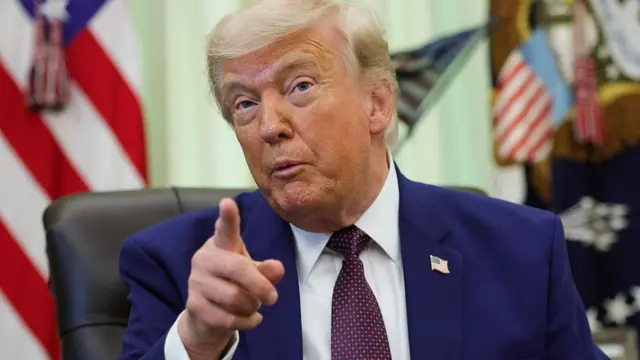
    President Donald Trump speaks during an event in the Oval Office of the White House on June 03, 2026Image source, Getty Images

    US President Donald Trump has confirmed Pakistan's report that the US and Iran have reached a deal.

    "The Deal with the Islamic Republic of Iran is now complete," he writes on Truth Social.

    "I hereby fully authorize the toll free opening of the Strait of Hormuz, and, simultaneously herewith, authorize the immediate removal of the United States Naval blockade," he says.

    "Ships of the World, start your engines. Let the oil flow!"

  16. Pakistan PM's statement in fullpublished at 22:32 BST
    Breaking

    Here is the full statement from Pakistan Prime Minister Shehbaz Sharif, who has just announced that a peace deal between US and Iran has been reached:

    "Following intensive talks, we are pleased to announce that the Peace Deal between the United States of America and Islamic Republic of Iran has been REACHED.

    "Both sides have declared the immediate and permanent termination of military operations on all fronts, including in Lebanon.

    "The official signing ceremony will be on Friday, 19 June in Switzerland. We would like to thank the United States of America and the Islamic Republic of Iran for their commitment to finding a diplomatic solution to the conflict.

    "We would also like to extend our sincere appreciation to our brothers in this mediation effort, the great leadership of State of Qatar, for their support in reaching this agreement.

    "I would also especially thank the visionary leadership of Kingdom of Saudi Arabia and Republic of Türkiye for their immense contributions in this regard.

    "With the agreement now in place, mediators will facilitate a series of meetings this week. These pre-implementation discussions will lay the foundation for the technical talks and the official signing ceremony."

  17. Pakistan PM says peace deal reached between US and Iranpublished at 22:23 BST
    Breaking

    A deal between the US and Iran has been reached, says Shehbaz Sharif, the prime minster of Pakistan, who has been acting as mediator.

    "Following intensive talks, we are pleased to announce that the Peace Deal between the United States of America and Islamic Republic of Iran has been REACHED," he writes on X.

    "Both sides have declared the immediate and permanent termination of military operations on all fronts, including in Lebanon."

    He adds that the official signing ceremony will be on 19 June in Switzerland.

    Iran and US officials are yet to comment on this announcement.

  18. US-Iran deal hangs in balance after Israeli strike on Beirutpublished at 21:46 BST

    Jack Grey
    Live reporter

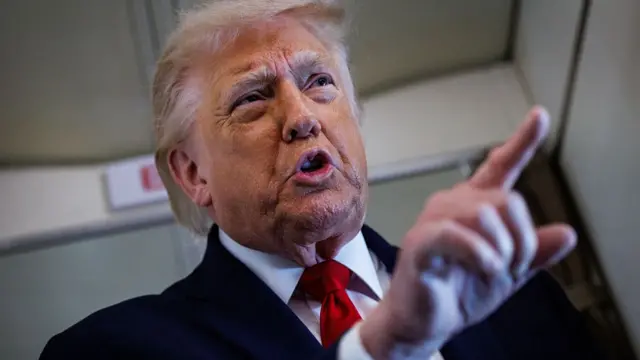
    President Donald Trump speaks with reporters while aboard Air Force One en route to Chippewa Falls, Wisconsin on June 5, 2026Image source, Getty Images
    Image caption,

    Trump said an Israeli strike on Beirut "should not have happened" at a time when the US and Iran were "so close" to a deal

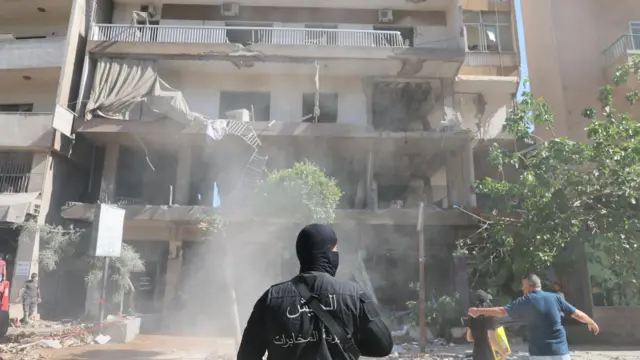
    It's been a day of uncertainty surrounding the US-Iran deal - which Donald Trump previously said would be signed on Sunday - following an Israeli strike on the Lebanese capital Beirut earlier today.

    Three people were killed and 15 injured in the attack on Dahieh, according to Lebanon's state media.

    The Israeli military said it struck a Hezbollah command centre in response to the Iran-backed armed group firing towards northern Israel earlier on Sunday.

    Iran's chief negotiator warned the strike showed the US is not is not fulfilling its commitments and there was "no point" in talking about continuing "down this path".

    Trump later said the strike "should not have happened", particularly on a "special day when we are so close to a peace deal with Iran".

    In an interview with Fox News at about 17:00 BST (12:00 EST) the US president said he still expected the deal to be signed "in the next two to three hours". However, Iran had previously cast doubt on this Sunday time frame, even before the latest strike on Beirut.

    A deal that was described as being close is now once again at risk of derailing, writes our Middle East correspondent.

    We're pausing our live coverage now, but you can read more in our news story.

  19. What is included in potential Iran-US deal?published at 21:16 BST

    Ghoncheh Habibiazad
    Senior reporter, BBC Persian

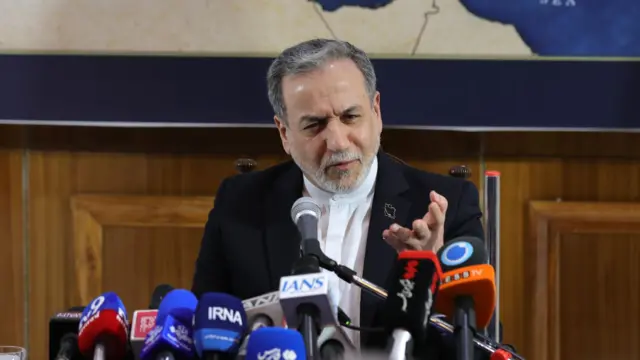
    Iran's Foreign Minister Abbas Araghchi addresses a press conference after attending the BRICS Foreign Ministers' Meeting, at the Embassy of the Islamic Republic of Iran in New Delhi, India, 15 May 2026.Image source, EPA/Shutterstock

    Iran Foreign Minister Abbas Araghchi appeared on state TV two days ago to detail what is included in the possible Memorandum of Understanding (MoU) between Iran and the US.

    Among what he said, there were some key points. Araghchi said the agreement included an end to hostilities “on all fronts, including Lebanon”. He also said that the matter of the Strait of Hormuz was also included.

    According to him, Iran and Oman were preparing to announce a new mechanism governing navigation through the strategic waterway.

    Araghchi also said that the legal framework and future governance arrangements for the strait would be determined during the 60-day negotiating period.

    He also said that some matters like as sanctions relief and Iran’s nuclear programme have been postponed to the next phase of the talks.

    There had been speculation on Iranian outlets about the deal and what’s included in it as well, but Araghchi said on X two days ago that “the media should refrain entering speculation about its content”.

    US President Donald Trump reposted what Araghchi had said on X on Truth social.

  20. Iran says US bears 'direct responsibility' for Israeli 'crimes' following strikepublished at 20:51 BST

    A Lebanese security serviceman stands near the site of an apartment targeted by an Israeli airstrike in Beirut's southern suburbs, Lebanon, 14 June 2026Image source, EPA/Shutterstock

    Iran says the United States bears "direct responsibility" for the "crimes" committed by Israel following the earlier Israeli strike on Beirut.

    Iran's Ministry of Foreign Affairs says in a statement it "strongly condemns" the strike, which it described as a "blatant violation of Lebanon's national sovereignty".

    It adds that the attack is a "gross violation" of the ceasefire agreement between Iran and the US.

    The foreign ministry says the US also has direct responsibility for Israel's "ceasefire violations" and "reaffirms its determination to take all necessary measures to exercise its inherent right to legitimate self-defence".

    Israel says the strike was targeting a Hezbollah command centre in the Lebanese capital.