Summary

  • The Bank of England keeps interest rates at 3.75%, where they have been since December 2025

  • Following the announcement, Bank governor Andrew Bailey says a recent drop in oil prices is "encouraging", but high energy costs caused by the Iran war have still left "inflationary pressure in the pipeline"

  • The Bank now forecasts that inflation for the rest of the year will be lower than previously expected

  • The governor adds that "holding [rates] is the right position to be in at the moment" - but it wasn't a unanimous decision, with two of nine policymakers voting to raise rates to 4%

  • Anxiety at the Bank continues amid a fragile jobs market, writes our deputy economics editor

  1. Interest rates held at 3.75% but uncertainty remains over inflationpublished at 14:16 BST

    Dearbail Jordan
    Senior business and economics reporter

    As many analysts expected, the Bank of England has held the UK interest rate at 3.75% for the fourth time in a row.

    But the outlook for inflation is uncertain. A deal between the US and Iran to open the key Strait of Hormuz trade route was only announced this week and while oil prices have fallen, they are still above where they were before the conflict began.

    The Bank's governor Andrew Bailey says he is "very encouraged" by the US-Iran agreement but that holding rates "is a sensible decision".

    While inflation is stable, it remains above the Bank’s 2% target. If there are any issues in re-opening the strait and crude prices spike again, that could move the Bank to lift rates – two rate-setters voted for an increase this time around.

    The conflict in the Middle East may have eased, but anxiety at the Bank continues,writes our deputy economics editor Dharshini David.

    Such uncertainty has real-time consequences - as first-time homebuyers Charlotte and Oliver have discovered.

    So, for now, it's a wait-and-see situation until the next rate decision on 30 July.

    We're ending our live coverage, but you can read more about the Bank of England's decision here.

  2. Higher mortgage rates 'changed what we were looking for'published at 13:57 BST

    Kris Bramwell
    BBC News

    Young man in blue t-shirt with a red Nike logo, wearing sunglasses stands next to young woman wearing a floral top, with a beach in the backgroundImage source, Charlotte and Oliver
    Image caption,

    First-time buyers Charlotte and Oliver

    First-time buyers Charlotte and Oliver, both 25, had been planning to move into a new home in August.

    But everything changed when the Iran war broke out in late February. A spike in mortgage rates forced them to cut their budget from £375,000 to £325,000.

    “We had a mortgage in principle withdrawn and increased from £1,275 to £1,330 within two days,” says Charlotte.

    Initially, they were looking at properties in North Hertfordshire where Charlotte’s parents live, but eventually bought cheaper home 20 minutes away in south Cambridgeshire.

    Charlotte and Oliver, who earn a combined £60,000 a year, had been “saving for a very long time,” she says.

    “We’ve had to cut back quite a lot while trying to buy a house,” she says, including on trips to their local pub and on holidays.

    “We’ve both worked really hard to have a place to call our own,” she says. “It’s not planned out as we wanted.”

    A purple banner shows the words 'Your Voice' in white lettering.
  3. Bailey 'very encouraged' by US-Iran deal but says holding rates is 'sensible'published at 13:37 BST

    Kevin Peachey
    Cost of living correspondent

    The Bank of England governor says he is “very encouraged” by the Iran-US agreement, but that holding rates “is a sensible decision”.

    Speaking to broadcasters, Andrew Bailey said: “We have had encouraging news. I'm very encouraged. We’ve obviously got now this understanding about what’s going to happen in the Middle East.

    "And energy prices have come down quite a lot, but they're still above where they were before this conflict started. Inflation is higher than we expected it to be."

    He adds that "holding is the right position to be in at the moment" but says the focus now is to "get inflation back down" to the Bank's target of 2%.

  4. Analysis

    Bank may have held rates for now, but the economic picture remains volatilepublished at 13:28 BST

    Kevin Peachey
    Cost of living correspondent

    The Bank of England is a place of thick walls and solid columns – they’ve got to keep the gold safe after all.

    This sense of dependability extends to the decisions made inside the building too.

    So, there were no real surprises today. The Monetary Policy Committee has voted for a hold and wait-and-see approach – even if two of the nine members voted for a rise. Nobody would have expected anything else.

    But, even though there are real hopes of a lasting peace deal between the US and Iran, the international economic picture remains volatile and unpredictable.

    That brings jeopardy for policymakers with future rate decisions and, in turn, for all of us who are affected.

  5. Interest rates decision comes after economy contractionpublished at 13:14 BST

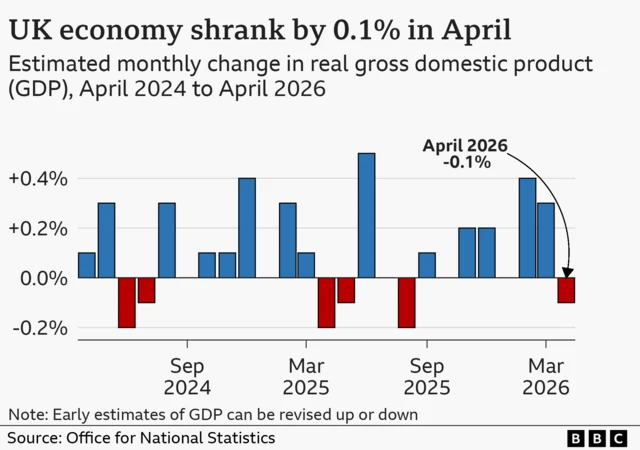
    Today's announcement from the Bank of England comes after new Office of National Statistics (ONS) showed the UK's economy contracted by 0.1% in April.

    The contraction was the first monthly fall since August 2025 but had been forecast by economists after stronger than expected growth in March.

    The ONS said that the main driver of the contraction in April was a 0.2% fall in the dominant services sector - which accounts for about three-quarters of the UK's economy.

    The conflict in the Middle East was also cited as a contributing factor.

    The ONS also added that some manufacturing, transport and travel business had also seen their trading affected by the impact of the Iran war.

    A bar chart showing the growth of the UK economy. In April 2026, it is estimated to have shrunk by 0.1% , the first time it has shrunk since August 2025 when it contracted by 0.2%
  6. Not yet clear how US-Iran deal will affect pricespublished at 12:51 BST

    Kevin Peachey
    Cost of living correspondent

    Vessels in the Strait of Hormuz near the beach of Bandar Abbas, IranImage source, Reuters
    Image caption,

    Vessels in the Strait of Hormuz, which is expected to open once again following a deal between the US and Iran

    The Bank's nine rate-setters met just before the US-Iran peace deal was signed and will gather again at the end of July, when its success and longevity should be clearer.

    The deal, which was signed on Wednesday, includes reopening the Strait of Hormuz.

    Should oil start to flow freely again through the vital waterway - which normally carries a fifth of the world's oil and gas supplies - then concerns over runaway inflation would be eased.

    Price rises are still expected to accelerate in the UK, given the delayed impact of higher wholesale energy prices on domestic gas and electricity prices.

    Millions of UK households' energy bills are governed by regulator Ofgem's price cap, which will increase by 13% in July.

    However, the committee has lowered its overall inflation expectations since its last meeting in April.

  7. Analysis

    Conflict in the Middle East may have eased, but anxiety at the Bank continuespublished at 12:36 BST

    Dharshini David
    Deputy economics editor

    That may sound surprising, given that lower energy prices and lower-than-expected inflation figures have spurred the Bank to think inflation may peak at just over 3.25% at the end of the year - 0.25% lower than previously thought.

    But its job is to return inflation to the 2% target, and it remains uncertain how higher energy costs will filter through to the wider economy - whether through wage increases or further price rises. It was the extent of such rises that caught out many policymakers during the last energy shock, when Russia invaded Ukraine.

    This time, many rate setters believe it’s different. The jobs market is more fragile, and with consumers cautious, retailers may hesitate to hike prices.

    But until things become clearer, the Bank says it remains ready to act to ensure inflation returns to target - meaning rate rises can’t be ruled out yet, even if it’s feeling more chilled about inflation.

  8. Two of Bank's policymakers voted to raise rates to 4%published at 12:27 BST

    As we've been reporting, the Bank has held interest rates at 3.75% for the fourth time in a row.

    The decision was voted in by seven members of the monetary policy committee (MPC), while two members voted to raise interest rates to 4%.

    Committee member Huw Pill, who voted to increase the rate, calls for "prompt but modest action" on the rate now - saying that it would ensure the policy is "well-placed to address the significant uncertainties" the committee faces.

    Meanwhile, Dave Ramsden, one of those who voted to hold the rate, says doing so "keeps options open" as uncertainty in the Middle East continues.

  9. Why should I care about interest rates?published at 12:18 BST

    Kevin Peachey
    Cost of living correspondent

    If you're buying a house or re-mortgaging, you should care a lot.

    The Bank of England's base rate is what it charges other banks and building societies to borrow money, which influences what they charge their own customers for mortgages as well as the interest rate they pay on savings.

    As of now, the average rate on a new two-year fixed mortgage deal is 5.59%, up from 4.83% at the start of March when the Iran war began, according to the financial information service Moneyfacts.

    For those looking for a five-year deal, the average rate is 5.57%, up from 4.95% over the same period.

  10. Bank trims inflation expectations for 2026published at 12:12 BST

    Kevin Peachey
    Cost of living correspondent

    The latest hold comes despite uncertainty over the situation in the Middle East.

    Policymakers say that oil prices remain higher than before the conflict and “continue to be volatile”. However, they also say inflation expectations by the end of the year are now lower than the Bank thought in April.

    It had expected inflation to hit around 3.6% but now forecasts it will reach 3.25%.

    Interest rate policy, to maintain low inflation, would depend on the “scale and duration” of the energy price shock and how much that filtered through to the wider economy through prices and wage demands, they say.

    “Oil prices have fallen in recent days, and that’s encouraging,” governor Andrew Bailey says.

    “Whatever happens in the future, the higher energy prices of the past four months mean there’s already some inflationary pressure in the pipeline.

    “The Bank’s job is to make sure that doesn’t turn into sustained inflation above our 2% target.”

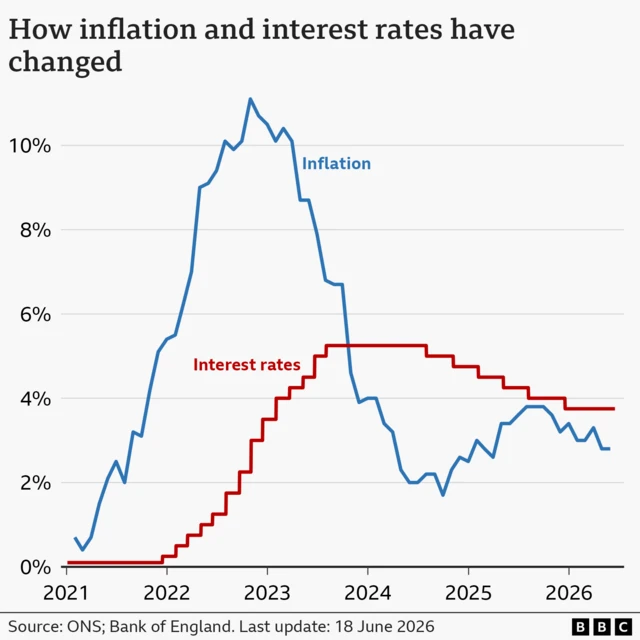
    A BBC graphic comparing the rise and fall of inflation and interest rates in the UK between 2021 and 2026
  11. Oil price drops 'encouraging', Bank governor sayspublished at 12:07 BST

    Kevin Peachey
    Cost of living correspondent

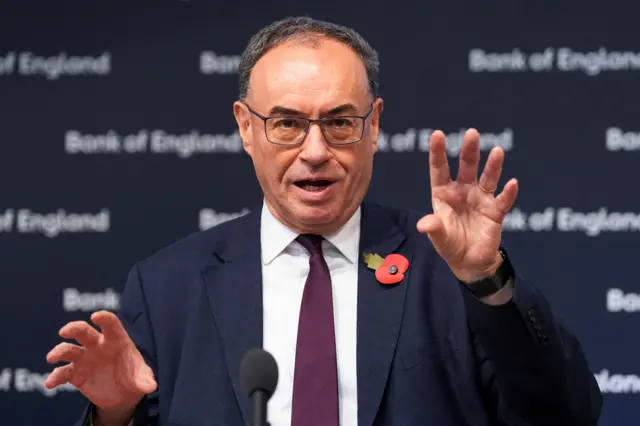
    Bank of England Governor Andrew Bailey gestures during the Monetary Policy Report press conference, in LondonImage source, Reu

    As expected, the Bank of England has voted to hold interest rates.

    It means interest rates have been kept at the same level since December.

    Bank governor Andrew Bailey says recent drops in oil prices are "encouraging" but high energy prices during the US-Israel war with Iran have still left “inflationary pressure in the pipeline”.

  12. Interest rates held for fourth time in a rowpublished at 12:04 BST

    Interest rates have been held by the Bank of England in a move that had been widely expected.

    Policymakers at the Bank kept its benchmark rate at 3.75% for the fourth time in a row.

    Interest rates are the primary tool used to control inflation, which is the rate at which prices rise.

    The UK's inflation rate remains above target, but has not risen as high as many had feared given the upheaval caused to economies across the world by the US-Israel war with Iran.

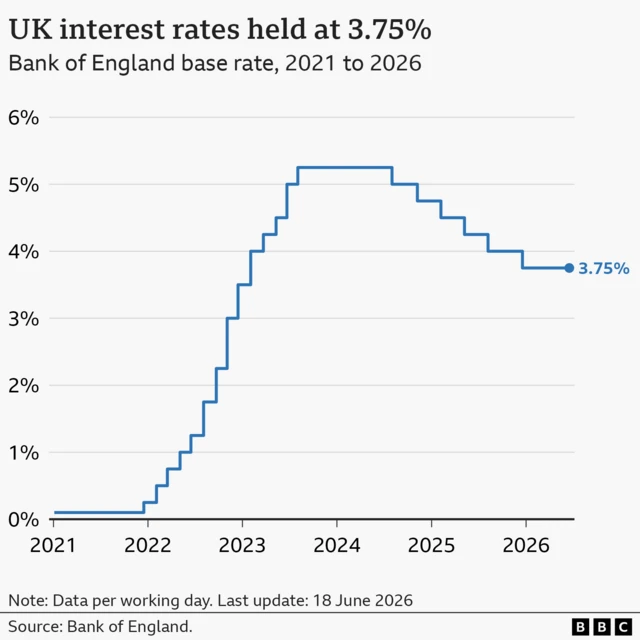
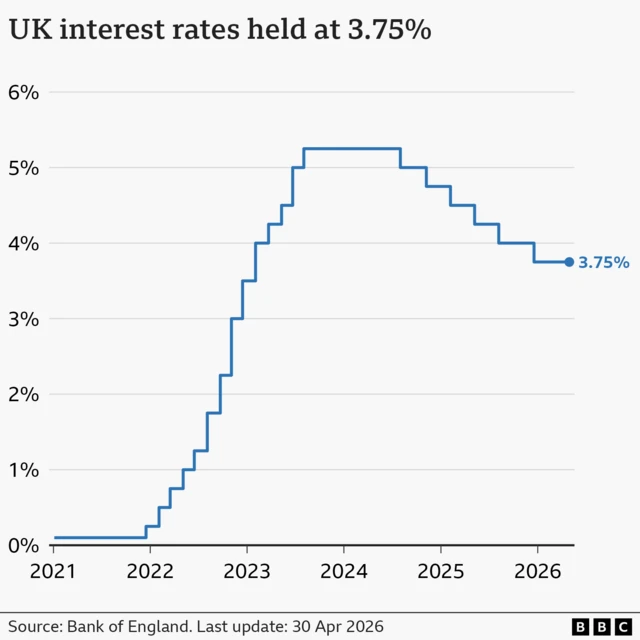
    A graph showing interest rates over time, rising from 0.1% in 2021, peaking above 5% in 2023, and coming back down to 3.75% from December last year
  13. Interest rate held by Bank of England at 3.75%published at 12:01 BST
    Breaking

    The Bank of England holds interest rates at 3.75%.

    Stay with us as we bring you more on what this means for you.

  14. Bank of England's interest rate decision expected shortlypublished at 11:57 BST

    In a few minutes we will get the Bank of England's decision on interest rates, which many analysts believe will be held at 3.75% for a fourth consecutive meeting.

    We'll bring you the figure as soon as we have it, followed by analysis from our team on what it means for you.

  15. Analysis

    Bank gets 'green light' to hold ratespublished at 11:55 BST

    Dearbail Jordan
    Senior business and economics reporter

    We've had a lot of economic data released this week ahead of the Bank of England's interest rates decision.

    There's been inflation, which is stable, and this morning employment which showed falling vacancies and unemployment as well as unchanged wage growth.

    Ben Caswell, a senior economist at the National Institute of Economic and Social Research, said the data pointed to a "gradual easing in the labour market".

    "Alongside yesterday's softer inflation figures and the tentative agreement to reopen the Strait of Hormuz, this gives the Bank of England the final green light to vote for a hold this afternoon."

  16. Here's what has happened with interest rates recentlypublished at 11:44 BST

    Before the Bank of England announces its latest decision, let's have a look at what UK interest rates have been doing over the last few years.

    The Bank's base rate reached a recent 5.25% high in 2023 and remained at that level until August 2024, when it started cutting back down.

    Five cuts brought interest rates down to 4%, before the Bank held rates at its meetings in September and November 2025.

    Another cut brought interest rates down to 3.75% in December. The Bank has been holding the rate since.

    A line chart showing interest rates in the UK from January 2021 to April 2026. At the start of January 2021, rates were at 0.1%. From late-2021, they gradually climbed to a high of 5.25% in August 2023, before being cut to 5% in August 2024, 4.75% in November, 4.5% in February 2025, 4.25% in May, 4% in August, and 3.75% in December. At the Bank of England's latest meeting on 30 April 2026, rates were held at 3.75%.
  17. How is the UK's inflation rate measured?published at 11:35 BST

    The prices of hundreds of everyday items and services across different retailers, including food and fuel, are tracked by the Office for National Statistics.

    Inflation is the measure of how those prices increase over time.

    For example, if a bottle of milk costs £1 but is £1.05 a year later, then annual milk inflation is 5%.

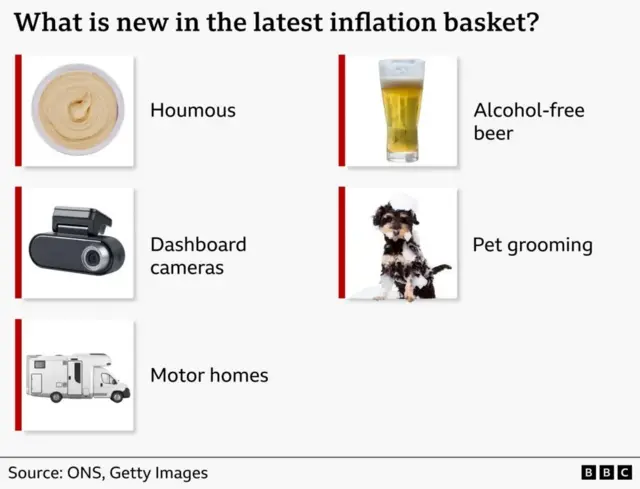
    This virtual "basket of goods" is regularly updated to reflect shopping trends, with alcohol-free beer, dashboard cameras, and pet grooming equipment among items added in March 2026, while premium bottled lager and sheets of wrapping paper were removed (the latter replaced by rolls of wrapping paper which are more commonly sold in shops).

    You can read more in our explainer.

    A graphic of items featuring pictures next to labels - houmous, alcohol-free beer, dashboard cameras, pet grooming, motor homes. Source: ONS, Getty Images
    Image caption,

    These were among 27 items added to the Consumer Prices Index in March

  18. Time to be locked up (temporarily)published at 11:24 BST

    Kevin Peachey
    Cost of living correspondent, at the Bank of England

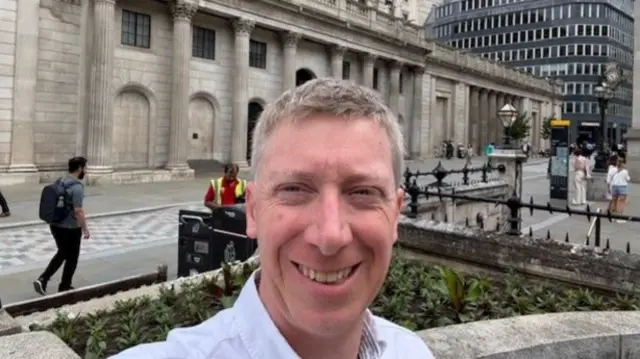
    BBC cost of living reporter Kevin Peachey stands outside the Bank of England
    Image caption,

    A sunny day in London town: Kevin Peachey prepares to enter the Bank

    It is a warm day outside the Bank of England - I just saw a man wearing a suit jacket and shorts.

    But it's time for me to head inside to be locked in a windowless, basement room.

    Why? Because a number of us get a market-sensitive preview of the rate decision, in order to bring it to you on time at midday.

    These things are tightly controlled to prevent any unscrupulous traders making money off leaks.

    See you on the other side!

  19. What are interest rates?published at 11:10 BST

    Interest is the extra amount you get charged when you borrow money. So, if someone lends you £10 at a 10% interest rate, you'll pay them back £11. That's the £10 you borrowed plus an extra £1 (10% of £10) in interest.

    The Bank of England sets a base interest rate, also known as the Bank Rate, which is what it charges other lenders to borrow money.

    The base rate is the most important interest rate in the UK as it influences all other interest rates. When it changes, it affects the loans and savings deals that High Street banks and building societies and other lenders charge their customers.

    What happens when interest rates change?

    When interest rates rise, it becomes more expensive to borrow money and, when they drop, it becomes cheaper. Interest rates rose after the Covid pandemic - climbing to more than 5% before falling back.

    If the base rate goes up, the monthly repayments on mortgages tend to go up too, but this depends on the type of mortgage you have.

    If you have savings, higher interest rates should mean the interest you earn goes up - since you're basically lending the bank your money.

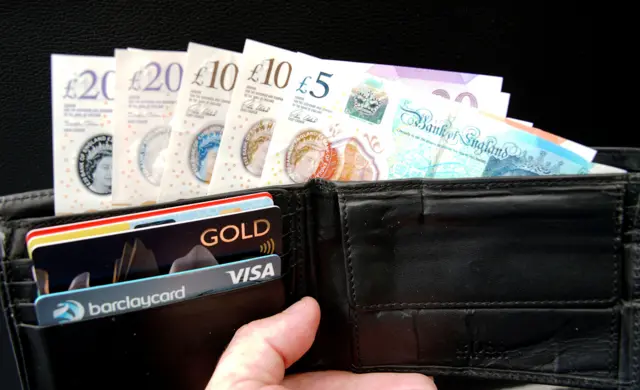
    A five pound note, two ten pound notes and two twenty pound notes poke out of a black leather waller that is also holding several credit cards in the frontImage source, PA Media
  20. Analysts predict a hold ahead of latest interest rates decisionpublished at 11:06 BST

    Dearbail Jordan
    Business reporter

    The Bank of England is preparing to announce its interest rate decision, which will come at midday.

    The big question is will they or won't they?

    The consensus is no, analysts predict the Bank of England won't change interest rate from the current 3.75%.

    However, it is impossible to say one way or the other. On the one hand inflation is relatively stable - it has remained at 2.8% for the last two months.

    It is above the Bank's 2% target, but not horrendous.

    On the other hand, UK economic growth continues to be pretty subdued. A rate cut could provide a boost for business. It's always a balancing act.

    We'll know at midday and bring you the latest until then.