Two Weeks in August cast and creatives tease Greece-set holiday drama about a dream vacation that turns into a nightmare
As heaven turns to hell, are bigger forces at play?
Set in Greece, Two Weeks in August tells the story of a woman who goes on holiday with her family and friends to rediscover joy in her life. But, here in paradise, what starts with an illicit kiss quickly turns the dream vacation into a nightmare. Zoe (Jessica Raine) begins to act on her deepest desires and the holiday she hoped for becomes a reckoning for a group of adults who refuse to grow up.
When they discover they are trapped on the island, and become faced with real life-or-death situations, the group soon turn on each other to find out who is to blame. Is Zoe responsible for the drama and destruction around her or, as heaven turns to hell, are bigger forces at play? We are in Greece after all, the land of the ancient Gods…
twoweeksinaugust@premiercomms.com
Interviews
Jessica Raine (Zoe)
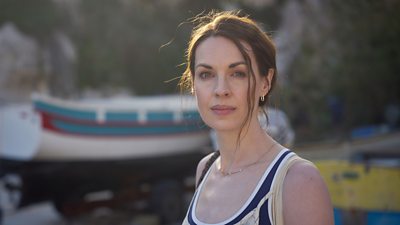
Where do we find Zoe at the beginning of the series?
It was clear the first time I read the script that Zoe was a woman on the cusp of breaking. I thought she was relentlessly polite and I found that hilarious to read. I could see this woman tamping down her real feelings to make everything okay within the friendship group; it was obvious she was in trouble.
How does the show’s Greek setting add to the story?
The island is a character in and of itself. It initially looks like paradise, but it soon becomes a hellscape. The beautiful, isolated location turns into utter loneliness and there is a sense of dread that the group can’t escape. I think what is great about this situation is that there's a real sense that everyone is being polite, which is a typical British quality. These people were great university friends, but their lives have taken different paths.
What do you think Zoe hoped to gain from reconnecting with her group of friends on the holiday?
Recently, life for Zoe has been really tough. She's been responsible for the family -financially, mentally and practically. She's been holding everyone up at the expense of herself. I think what she wants from this holiday is simply to get away from it all and reconnect with the woman she was when she was at university with this group of friends. She’s desperate to return to that Zoe. So, for her, this is a shortcut to that. Obviously, it's never that simple.
What did you make of Catherine Shepherd’s writing when you first read the scripts?
Catherine’s clever use of Greek mythology was the cherry on top for me; the show is so well written. The social dynamics are funny and serious at the same time, but then you add this mythological aspect, where strange things keep happening to and around Zoe. These mythological flashes feel very real to her. The ‘Fates’ play a huge part - the Moirai, the three figures of Greek mythology: the Maiden, the Mother, and the Hag.
I always felt the tone had to strike the right balance of comedy and tragedy. It’s a delicious mix of humour and epic philosophies and ideas. I think everyone is going to love it!
What has it been like working with directors Tom George and Matthew Moore, and what do they bring to the project?
I knew Tom George’s work from This Country and See How They Run, both of which I love.
With Matt, I’m a huge fan of Colin from Accounts and The Great, which felt like tonal tentpoles for our show. Tom and Matt are really interested in human reactions to things that are often quite funny, including how hilarious it is to watch characters in moments of great stress.
What are the universal themes of the series?
I really appreciate how Catherine grapples with quite epic topics in a very human way. For me, the big question of the series is how the audience is going to respond to a character like Zoe – the decisions she makes to get what she wants, and the consequences because of that. The idea of a woman deciding not to sacrifice everything, of choosing to put herself first, unfortunately still feels revolutionary. I think every woman feels that, and that’s what I think will appeal.
What was it like filming in Malta?
We filmed at the beginning of March, and I’ve never been so cold in my entire life, and I’ve shot in Iceland! There’s a birthday party scene we filmed early on where we’re all in summer clothes, but everyone’s secretly got thermals on underneath wherever they can fit them. We were packed with hot water bottles. People didn’t believe me when I called home at the beginning of the shoot and said it was freezing. Thankfully, the weather did change for the better. The locations were stunning - shooting on Gozo was a real treat.
Damien Molony (Dan)
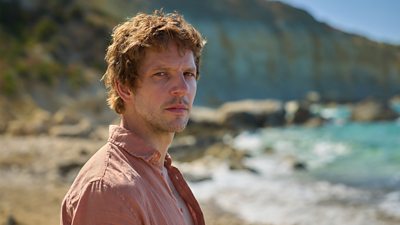
What did you make of Catherine Shepherd’s writing when you first read the scripts?
I feel like the characters reveal themselves in every single scene. There sometimes isn’t a huge amount happening in terms of plot, but the characters are exposing who they are in such a brilliant way. Even though they’re all great friends, everyone is hiding so much of themselves. It was thrilling to act, and I think it will be really fun to watch.
There’s an oxymoronic quality in the way the show juxtaposes tragedy and comedy at the same time; the funniest moments are often also the saddest. It’s incredibly real and very human. I think people will watch this show and say, ‘I went on a terrible holiday just like that one’.
What do you think Dan was hoping to get out of this holiday and what is his relationship like with the wider friendship group?
I don’t think there’s any part of Dan that’s looking forward to this holiday. For him, it’s more of an opportunity for the family to reset. Zoe especially needs a break, and he recognises that. So while it’s a trip with friends, their friendships are very different now. The group are clinging onto a bond that possibly no longer exists.
Dan’s been through a lot, and he’s coming back into a group of friends who don’t know that. There’s a lot of keeping up appearances, which he doesn’t have the energy for. Dan and Zoe are no longer as invested in one another as they once were because real life has gotten in the way and they are struggling to communicate in a meaningful manner. So maybe what’s exciting about this holiday is that it offers a chance to take a deep breath, realign, and remember why they got together in the first place.
The group go to this remote island to leave modern life behind. How does the isolation shape the story?
I see it as ‘this is idyllic and beautiful, but there is danger lurking at every possible moment’. So, when the group visit a gorgeous seaside taverna for Jacob’s birthday in episode three, the setting is picturesque, but the waves are crashing against the restaurant violently, and the footpath down to the taverna is cracked and jagged. There's an undercurrent of discomfort present everywhere you look, even though the group look to be in heaven.
It is impossible to escape the island, which adds a wonderful layer of tension. The level of isolation makes the characters confront themselves and their feelings. We've all had terrible holidays where everything seems to be going wrong, and there's nothing you can do to fix it.
What were your favourite and most challenging scenes to film?
One of the most challenging scenes was where I discovered I couldn’t say the words ‘Ionian Sea’ without laughing. I must have said it 17 times in one take. I looked around the table, and everyone was crying with laughter. Hugh and Dylan had to leave the table because they couldn't stop laughing and Nicholas was hiding under it. It was a really difficult scene to get through, but hilarious to film.
What was it like filming in Malta?
I love Malta. We were lucky to film in many incredibly beautiful locations and beaches; it was idyllic. I would urge people to visit as there is something for everyone. I loved my time here. We were in Dwejra Bay for our first day of filming which was astonishingly epic and beautiful. It’s exactly the type of place you would go to save your marriage.
Antonia Thomas (Jess)
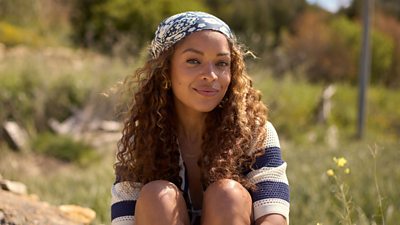
What did you make of Catherine Shepherd’s writing when you first read the scripts?
I was just excited. They were some of the best scripts I've read in a long time. The relationships between the characters are so well drawn, complicated, real and funny! I remember thinking, ‘I need to be in this’.
There's a real sense of authenticity within all the characters and there’s not a single person that you can point to and go, ‘they're good, they're bad’. Her writing is so nuanced, it's so real as human beings are. They are all made up of contradictions, which was so interesting to me - it's about people being people and humans being messy.
As the series progresses, it becomes apparent that Jess and Solomon’s marriage isn’t as perfect as it initially seemed. How did you approach these scenes with Nicholas?
When we would tackle a scene, we would sit down and ask each other, ‘what do you think about this?’ Together, we uncovered that Solomon and Jess have a great partnership; their lives work well together. They know how to deal with one another and put on a good front, but they aren’t necessarily happy. As the series progresses, you begin to see those things unravel.
Can you describe Jess's style and what it's been like to work with the hair, make-up and costume team to bring the vision of your character to life?
Jess's style and her glamour are her armour. Even if everything is going wrong, she knows that she looks good and she puts a lot of effort into that. Her style is always chic, on point and expensive. She cultivates this boho chic aesthetic and holisticness as part of her lifestyle.
I worked closely with our hair and makeup artists to ensure that every look represented a different side of Jess's character; they were brilliant collaborators. We found ways to represent the mental breakdown she experiences as the series progresses through Jess’s hair and makeup choices, which was a lot of fun. Likewise, our costume designer was incredible too - every single piece of clothing I wore, I thought, ‘I would love to have this in my own life!’
The hair, makeup, and costume choices were so important to the creation and understanding of these characters. Often, actors say that when you wear the character's shoes, you suddenly know how to walk like them, and I think that was never truer than with Jess. Her glamorous style choices made me understand how to portray a woman who channels so much of her confidence through the armour she wears.
What is Jess’ relationship like with the other women in the group?
Jess's relationship with the other women is complicated. She isn’t great with female friendships and doesn't understand why. I think one of the reasons things go awry is because she is a bit self-absorbed. She always speaks the truth, but often when the truth isn't needed, or it is too harsh.
The isolated setting informs the unravelling of every character. They all provoke and challenge one another, and there’s nowhere to hide because they’re all far from home. As a result, their true colours come out. They can't hide from each other, but more importantly, they can’t hide from themselves.
What were your favourite and most challenging scenes to film?
It's been really fun to be able to lean into some of Jess’s worst traits because I never get to do that as an actor. I don’t normally play these kinds of characters – I’m used to playing nicer people!
I really love any scenes between Jess and Zoe because there are many layers to their friendship and so much left unsaid. They both represent each other’s desires and what they don’t like about themselves; they are each other’s shadows in a way. Catherine has written these amazingly complex, real scenes where there’s so much going on, exploring what women really want and need to feel confident and happy.
What was it like filming in Malta?
Filming in Malta was absolutely gorgeous. I normally film in cold places, like Northern England, where it’s non-stop raining. I love England, but filming in the gorgeous Mediterranean was great.
However, when we got to Malta in March, we were in bikinis while filming and had to pretend it wasn’t cold and windy, which was challenging! But aside from that, the people are wonderful, and I'd love to come back again soon.
Nicholas Pinnock (Solomon)
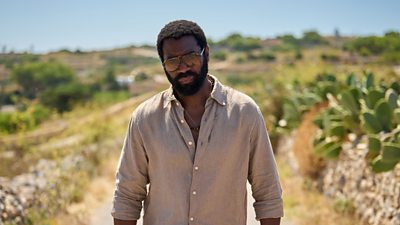
Where do we find Solomon at the beginning of the series?
Solomon doesn't struggle with work-life balance, he chooses work every time, which strains his relationship with his daughter Avery. He struggles with being a good parent, which by proxy of the type of work that he does, he spends a lot of time away, so he's just not there.
Playing someone who is an actor is interesting, because we all are, and of course Catherine, our writer, is as well. She was drawing on a lot of her own experience and the people she knows. When I read the scripts, I felt the characters were people I knew, and I could see elements of myself as an actor navigating the world within it.
What do you think Solomon hoped to gain from the holiday?
To reconnect with this group of friends that he hasn't seen in a long time. He wants to have two weeks in Greece to relax and catch up. There’s a performative aspect to him, except when he's with certain people. When he's with Zoe, he's very much himself and can let his guard down. But when he's with Jess, he's a completely different side of himself. He's quite cocky and showy. There is a lot of bravado to him. There are very few people he feels he can be himself with, and that's been an interesting dynamic to play.
What did you make of Catherine Shepherd’s writing when you first read the scripts?
When I read this, I was completely blown away. I think Catherine has a great way of depicting real people. Her language feels real and not like dialogue, creating a dynamic between the characters which I found really interesting. The scripts really struck a chord with me, which was why I was enthused about wanting to be a part of it.
As the series progresses, it becomes apparent that Solomon and Jess’ marriage isn’t as perfect as it initially seemed. How did you approach these scenes with Antonia and what was it like working with her?
Jess and Solomon are like a super couple. He's an actor, she's an entrepreneur. They are a bit like David and Victoria Beckham in the sense that they work well together. These are the optics you see at the beginning, and then we begin to uncover the truth behind them.
There was a lot of trust between Antonia and me. We had a lot of the same ideas, and being able to feel comfortable with your screen partner, especially somebody who's playing a partner, is really important. I found that immediately with Antonia.
The group go to this remote island to leave modern life behind. How does that shape the story?
These people have travelled away from their lives; this villa is effectively their life for two weeks. They don't have the normal distractions and routines, so they're all stuck in a situation that they have to navigate together. And when you have so many different personalities, things become tense. It’s a wonderful journey for the audience to come on with us.
What were your favourite and most challenging scenes to film?
Definitely the birthday dinner scene in episode three. When you're in a cast this big, it's nice to have those moments. We're all there, bouncing off each other, building those personal relationships and fictitious relationships within the characters and their dynamics.
What can viewers expect from this series and what are some of the key themes explored?
Relationship dynamics are something that no matter where you're from, you can always identify with. The complexities of when you get to middle age and you start to discover certain elements of yourself, which some refer to as a midlife crisis, others call it a midlife discovery. These elements are prevalent in all the characters, to some degree. And our friendships change - sometimes we don't realise that those dynamics have changed until we spend a lot of time with people that we either see twice a year at a function. By putting yourself in these situations, you discover things about yourself, and I think that's something that has a very international appeal.
Leila Farzad (Nat)
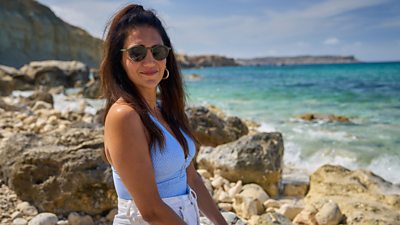
Nat appears to be high flying, with a fast-paced, high-pressure job in London. What does she want to get out of this holiday?
I think she wants to disconnect and break away from her fast-paced job, relax with her friends and hopefully not spend too much time on her phone. But what she realises is that a large part of who she is, is her work. I think it is her way of escaping sadness and voids in her life, and in having that taken away from her, she has to answer big questions that she didn’t anticipate.
Nat and Jacob have a close, unbreakable bond which is put to the test during their time in Greece. How did you approach these scenes with Hugh and what was it like working with him?
Hugh is wonderful and brilliant. We flew out to Malta together and became best friends straight away. On approaching the scenes, we talked about friendships and relationships that are codependent and based on fear. You become so scared of the other one moving on and meeting someone that it becomes your reason for wanting to spend time with them. I hope people will recognise that this is a common friendship dynamic, that this type of relationship is too close and connected, allowing no space to breathe.
What is Nat’s relationship like with the other women in the group?
I think Nat thinks she's a lot closer to Zoe than she actually is. When they were younger, they were very close as a gang, but families, life and jobs have made them drift apart. And on going on this holiday, you assume you're going to reconnect and be on the same page. But they’re not as close as they hope or think that they are. Nat likes Jess, but she’s also wary because she perceives her as an outsider. It turns from a luxury holiday into a fight for survival. In those moments, you figure out who you are close to, who you can trust, who loves you and who has your back.
Nat’s fatal flaw is her desire to people-please, which comes from a need to be loved. She’s less cynical than me, she's a glass-half-full type of person and wants the world to be full of love and happiness. She's nostalgic for a time that maybe passed a long time ago.
What are the universal themes of the series?
I think one of the big themes is appearance versus reality. On the surface, this looks like six friends with iron-clad bonds at this lovely villa, but actually they are not that close anymore. They have been lying to each other to preserve this veneer of a friendship that isn't real. I think the show explores the contrast between the faces we present in public and our true, private selves, as well as the way we lie to ourselves in a particularly British way. It’s about that reluctance to confront painful, difficult truths, and the impulse to smooth things over and pretend everything is fine.
There’s also the Greek mythology element, with magical realism running throughout. It’s Catherine’s clever device for elevating these seemingly mundane people into something almost supernatural, by weaving in ideas of fate and echoes of old Greek myths.
Hugh Skinner (Jacob)
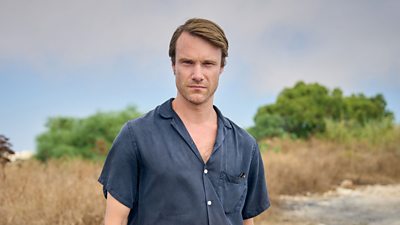
What do you think Jacob is hoping to get from his journey to Greece?
He’s hoping to reconnect with his university friends. In particular, he wants to hang out with his best friend Nat who works too hard but secretly, he needs her, because their relationship is deeply codependent. He considers himself a fair, good person, though perhaps that isn’t entirely true.
Catherine has done an amazing job of portraying Nat and Jacob’s codependent relationship. It’s brilliantly written, partly because it’s not something I’d seen explored in this way before.
What was it like working with your co-star Leila Farzad?
We developed our own codependent friendship very, very quickly. I've been such a fan of hers for a while and was so excited to get to work with her.
Tell us about Jacob’s relationship with Will.
Jacob is shocked because he never imagined Will would turn up at the villa. Will is much younger than the rest of the group, and Jacob isn’t sure how he’ll fit in. Plus, he's there with Nat, which is something else for him to navigate. Will is wiser than he first appears, and it feels like Jacob’s friends could learn something from him.
What was it about Catherine’s scripts that appealed to you?
When I first read it, I thought it was so original; the tone, humour and the weird truths within friendships were all aspects I'd never seen before. The writing feels so real and beyond categorisation. She has such an original voice, and I thought it was so funny and unique.
What was it like filming in Malta?
I love Malta. The Maltese crew were sensational and an absolute delight to work with. Honestly, what I took home with me was all the crisps; Twisties were my favourite. Very healthy! I loved them all, as well as shooting in Gozo.
Catherine Shepherd (Executive Producer, Creator and Writer)
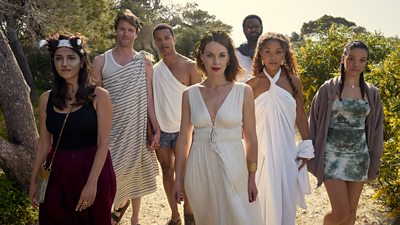
You previously described the series as heartbreaking, thrilling, funny and sad. Where do you get your inspiration from?
I suppose I’m inspired by real life. I’ve always felt that real things are funny, sad, interesting, and strange. My inspiration comes from real life and the people I know, but no character is based on a single person; they’re more of an amalgamation of different influences. Most of the time, we’re walking that line between laughing and crying, and when something feels truthful, it’s usually a bit of both.
I think the series is very character driven. I spent a week with an amazing clinical psychologist, and we looked at all the characters, created their family trees and talked about who they were and why they were like that. It was incredibly interesting and really helped ensure the psychology of who the characters were was truthful. By the time I came to write the scripts, I knew them so well. I almost knew exactly what they would do in any given situation – it was really exciting.
The series involves a range of varied and complex characters. How do you think the cast translates on screen?
I found being involved in the casting process fascinating. I wanted them to feel like a real group of friends. It’s an ensemble piece in lots of ways, and it was important that we believed not only that they knew each other, but that they cared about each other and had built long-standing relationships.
How does your experience as an actor influence your approach to creating and writing the series?
The two sides of my work merged and fed each other in a really useful and creative way. When I'm writing and it’s going well and I’m in the flow, I really feel like I’m inhabiting the characters. I often speak the lines out loud to myself which means that I can’t really work in cafes! I got to know these characters so well that it almost felt they were real. At times, it was like I was channelling them, like it was obvious what they would say and do in any situation I put them in. I love improvisation so when the writing process works like that, it’s the most fun and exciting thing.
What’s your best piece of writing advice, or the best advice you’ve been given about writing?
The best advice I would give would be ‘don't write for other people, write for yourself’. What do you find funny? What do you find interesting? What do you find truthful? If your work encompasses these elements, it will connect with someone, because we’re all more alike than we think.
I think the best advice I've been given is to be careful about who you take opinions from. It's vulnerable to create anything and you can easily have your confidence knocked. Make sure you trust the people you show your work to. You can learn so much from other people, stay open and listen. But there is no right answer. There's no formula. As William Golding says, ‘nobody knows anything’. So keep going, trust yourself and listen to people who help you do that.
In line with the script, the series is filmed in Malta and Gozo to replicate Greece. Can you tell us why this worked as a perfect location double?
Malta is a stunningly beautiful place, which is very important to the story, because it’s about trying to find paradise - a place of escape where all worries and anxieties disappear. The island has a dramatic, rugged landscape and, like Greece, is steeped in thousands of years of ancient history; it truly has everything. Filming there has been wonderful. The island is a character in its own right; it is beautiful, but a bit dangerous. When things get difficult for our characters, it won’t be there to protect them.
What do you hope viewers will take away from the series and do you think they will find Zoe’s experience relatable?
Well, I hope that most people, not just women, will relate to a female protagonist who has spent a lot of her life looking after everyone else. Zoe pushes down her own needs for her parents, family and friends.
I think that's a common thing with a lot of women that we're trained to do from birth. What interested me was what happens when something stops a person who is inherently a people pleaser and a nurturer from being that person anymore and allows them to access something truthful, which is darker and more ambiguous. I hope people will really relate to that and want to see a character whose real inner self is starting to emerge.
What are the universal themes of the series?
Trying to be happy in a world that’s anxious, uncertain, and frightening and learning how to love and be loved is something anyone can relate to. I hope this story connects with people in that way. All the characters are trying to be good, but they make terrible decisions and mistakes. They don’t get it right, which is fun to watch, but they’re trying - just like we all are.
Follow for more
Latest from the Media Centre
All newsSearch by Tag:
- Tagged with DramaDrama
- Tagged with Latest NewsLatest News
- Tagged with Media PackMedia Pack
