What has the BBC ever done for me? Chief Customer Officer Kerris Bright explains why we're asking the question
Learn more about the film making the case for a publicly funded BBC, and how it was made
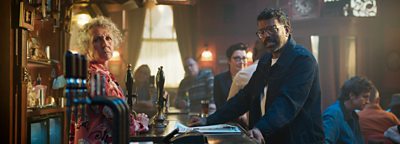

Forty years ago, John Cleese walked into a pub and asked a simple question: "What has the BBC ever given us?"
This year, as the Government begins the process of Charter renewal and debates the future of public service broadcasting, we found ourselves returning to that question.
Because the world has changed dramatically since 1986. The way people watch, listen and consume media has been transformed. Audiences have more choice than ever before. At the same time, trusted information, shared experiences and content that is available to everyone feels more valuable than ever.
So we decided it was time to ask the question again.
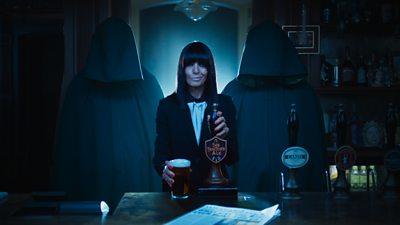
Only this time, it's Romesh Ranganathan walking into a pub – the Queen Vic, naturally – and asking: "What has the BBC ever done for me?"
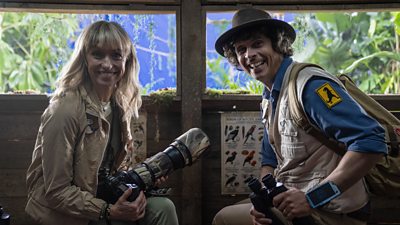
What follows is a musical journey through the BBC, set to an original score performed by the BBC Concert Orchestra and BBC Singers. As Romesh travels through some of our most iconic programmes, sets and studios, he encounters 90 familiar faces, each helping to answer that question in their own way.
And while the finished film lasts only a few minutes, bringing it to life was quite an undertaking. How do you coordinate nearly 100 celebrities across a six-day shoot, taking over everything from the Queen Vic to BBC News?
The honest answer is: with a lot of planning, a lot of spreadsheets and a lot of patience.
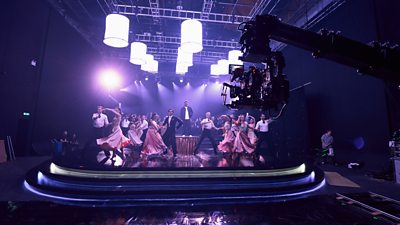
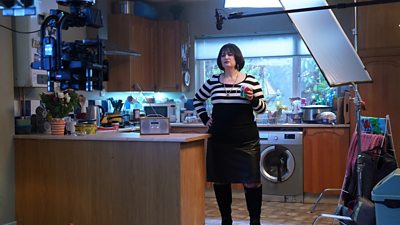
The film was shot over six days earlier this summer and took over familiar locations across the BBC that millions of people know and love. Whilst it was brilliant to have so many famous faces who wanted to be involved, coordinating the schedules of our busy stars, alongside transport, wardrobe, makeup and filming slots across so many different locations was a logistical challenge of epic proportions.
But it’s important to know that whilst there is a film at its heart, in totality this campaign is way, way more than this. Back in 1986, we didn’t have many different media channels to communicate our message. Today we have a multitude; from digital newsletters, to iPlayer pre-rolls, to cinema, to social platforms as well as TV and radio channels. We’ll be using all of these and more, to make sure we are reaching audiences from every age, all over the UK.
And whilst we want to highlight the valuable range and breadth of our output, we also want to remind people of the profound impact we have on individuals (who we seek to inform, educate and entertain every day) as well as society as a whole.
For example, in 2024/25, the BBC contributed £6.7 billion to the UK economy and supported more than 79,000 jobs. For every £1 the BBC spends, £3.49 is generated across the wider economy. As the UK's largest single investor in original content, we help support creative businesses, freelancers and production talent across every nation and region of the UK.
These contributions aren’t often talked about with audiences, yet we know that when they are heard, they have a significant impact on positive perceptions of the BBC. With this campaign then, we want to ensure the BBC gets credit for the fundamental impact it has on society, as well as the things it makes.
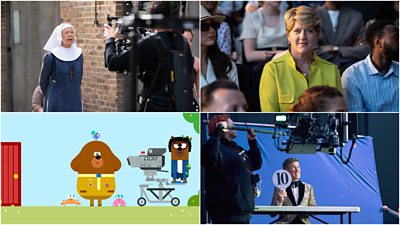
Creating this campaign has seen colleagues from news, drama, sport, children's, radio, music, entertainment and production all working together to create something bigger than the sum of their parts. In many ways, that collaboration reflects the BBC itself. Audiences may experience our services separately, but together they form something unique – a public service broadcaster designed to serve everyone.
Looking back at what was referenced in the original 1986 ad reminded us that while the BBC has changed enormously, the reason it exists has not.
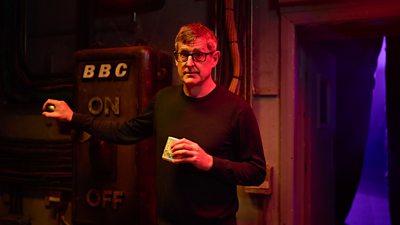
Back then, the question was answered by names including Sir David Attenborough, Sue Lawley, Alan Whicker, Sir Terry Wogan, Moira Stuart, Sir David Jason and Sir Bob Geldof, each highlighting a different programme or service that the BBC provided.
Today, the list of programmes, services and platforms looks very different. But the question remains just as relevant.
What is the BBC for?
Why does it matter?
And what would we lose without it?
The answers will be different for everyone.

For some, it is the trusted news they turn to when the world feels uncertain. For others, it is the local radio presenter who feels like a friend, the drama everyone is talking about, a children's programme that becomes part of family life, educational resources helping young people learn, or major sporting moments that bring millions together.
Given the huge range of things the BBC does, deciding what to feature in this campaign was no easy task. We used audience research to help identify the programmes, services and initiatives that resonate most strongly with viewers, listeners and users today – from Bitesize to The Traitors – while also reminding audiences of some of the things the BBC provides that they may not immediately think about.
That felt particularly important because there are very few organisations whose mission is to serve everyone, regardless of where they live, what they do or what they’re interested in.
That's also why this campaign comes at such an important moment.
As the Government begins the process of renewing the BBC's Royal Charter, there is an active conversation taking place about the BBC's future and how it should be funded.
To contribute meaningfully to that debate, we believe it is important to be clear about the value the BBC creates for audiences and for the UK.
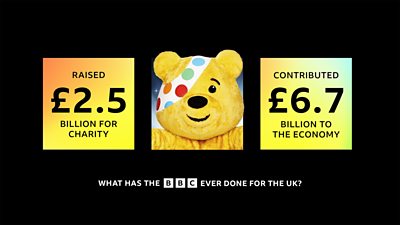
Despite unprecedented competition, the BBC remains the UK's most-used media brand, reaching 94% of adults every month and 45 million adults every week. We are the UK's most-used and most-trusted news provider, while continuing to reach audiences in new ways and on new platforms.
And as I’ve mentioned, the BBC's impact extends far beyond what people see on screen or hear on air.
Looking back at the original advert is also a reminder of just how much the BBC has evolved.
In 1986, there were two national television channels. Today there are eight. There were four national radio stations; today there are 10, alongside national services for Scotland, Wales and Northern Ireland and 39 local radio stations across England.
We have created services that simply did not exist when John Cleese walked into that pub: iPlayer, Sounds, Bitesize, CBeebies, the BBC website and a range of digital services that reach audiences around the world.
Yet for all that change, the principles behind the BBC remain the same.
The BBC exists to ensure everyone has access to trusted information, education, culture, entertainment, great storytelling and moments of shared national conversation.
More than 100 years after it was founded, we know we must continue to change, innovate and find new ways to serve audiences. But we should also be confident enough to celebrate what makes the BBC distinctive.
That was ultimately the reason for making this film.
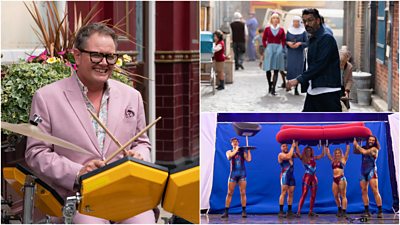
Yes, it was a huge creative and logistical challenge, involving days of filming, countless spreadsheets and lots of famous faces giving up their time to make their way to some of the BBC's most iconic locations.
But at its heart, it was an opportunity to stop and reflect on something bigger: the role the BBC continues to play in people's lives every day.
So, 40 years after the question was first posed, we're asking it again.
And as Romesh discovers, the answer isn't any one programme, service or personality.
It's millions of moments that inform, educate, entertain and bring people together.
That's what the BBC has done. And that's what this campaign celebrates.
#BBCFundedByAllOfUs #ThisIsOurBBC
What has the BBC ever done for me?
Latest from the Media Centre
All newsSearch by Tag:
- Tagged with ArticleArticle
- Tagged with Latest NewsLatest News
