| 13 November 2014 |

| |
| BBC Homepage | | |
| |||
| Contact Us | | |
VideoYou are in: London > London Local > Your Stories > Video > LDAF: So much more than a charity case 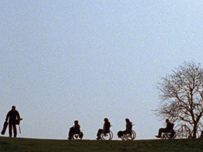 LDAF: So much more than a charity caseOllie Chase Christmas is about spreading goodwill and good cheer but it seems nobody passed the message on to the Arts Council. Drastic funding cuts imposed this time last year forced the closure of the London Disability Arts Forum.
London Disability Arts Forum (LDAF) was a disability-led organisation focused on promoting disability arts and the work of disabled artists. LDAF was founded in 1986 by a group of disabled artists and activists frustrated by the lack of provision for disabled people in the arts world. Access to the mainstream arts was very limited and the arts in no way reflected the experience of disabled people, who comprise at least 17% of the population. Registered as a charity in 1992, LDAF helped to strengthen and develop the image of disability arts and culture, not least by launching the London International Disability Film Festival in 1999 and through it's unique bi monthly magazine Art Disability Culture. This time last year 194 arts organisations around the country were informed by the Arts Council that they faced drastic or total funding cuts. Shoreditch based LDAF found they were one of 53 arts bodies in London affected by the cuts who were given just a month's notice to appeal.
Taking into account the date on which organisations received their letters and the approaching Christmas holidays actually reduced the time available to mount an appeal to a maximum of 18 working days. As can be seen in the film, it was a distressing time for LDAF's staff and trustees faced with the task of appealing against the Arts Council decision as well as finding alternative sources of funding. It's a revealing insight into the frustrations and ultimate futility of the situation and is symbolic of the times as many companies of varying sizes try to navigate their way through the economic downturn. The Arts Council stood by it's decision not renew LDAF's funding despite an appeal and released the following statement in January: - 'Despite substantial investment since 2004, London Disability Arts Forum has been unable to address serious concerns and to provide a strong service for the promotion and support of disabled artists. We believe that our funding will better serve disabled artists through investment elsewhere. We are committed to funding high quality disabled-led arts organisations and to ensuring that our whole portfolio is inclusive. Our disability arts strategy, which we will begin in 2008-09, is of course an integral part of our investment strategy. We will continue to invest in thriving organisations and our over-arching aim is to increase disability equality performance across the whole portfolio, ensuring improved access and outcomes for disabled people.' This statement was at odds with the experience of disabled artists who campaigned to save LDAF such as actor, Mat Fraser who created Thalidomide! A Musical. He's in no doubt about the debt he owes to LDAF and believes it will be harder for the next generation of disabled and deaf artists to find an organisation with the same level of experience and knowledge: 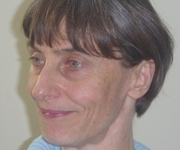 Patricia Place, LDAF chief executive “Where else will younger disabled people wanting to enter and work in the arts be able to go? We know that without a dedicated disability arts organisation, other bodies will fail miserably as they attempt to provide the necessary support to disabled artists that is second nature to LDAF. We will get lumped in with other “minority” funding already suffering from too much competition, no doubt, until we no longer have a strong voice with which to speak our own valuable arts message to the world.” As if the Arts Council statement wasn't hard enough for LDAF to take, they and other organisations affected by the cuts knew that the decisions came a few months after the Government increased the financial settlement awarded to the Arts Council. It all seemed like a strange way to celebrate a windfall. After months of adverse headlines and campaigns to save threatened companies, the Arts Council commissioned a report by Baroness McIntosh into the investment strategy process. She was very clear about the seriousness of the situation: "Before long, ACE was battling for its reputation against some of the most damaging publicity in its 60 year history, culminating in the exposure of its outgoing Chief Executive to the collective wrath of several hundred arts practitioners at a highly-charged meeting at the Young Vic Theatre in January 2008." McIntosh's aim was to "attempt to understand the processes and relationships that led to this turbulent period, and to consider what the Arts Council might learn from it". Starting from the assumption that everyone involved acted in good faith and to the best of their abilities, McIntosh made 11 recommendations that were all accepted by the new chief executive of the Arts Council, Alan Davey. 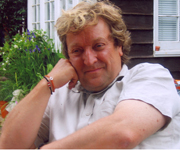 Peter Kinkead, LDAF director These proposals called for the introduction of independent peer reviews as soon as possible which means that arts organisations will be assessed by other artists and not just by lead officers from the Arts Council; recommendations were also made to audit the skills and experience of lead officers and to make the criteria for funding much clearer. McIntosh did not hold back in her report which laid bare the tensions between a bureaucratic organisation and the artists and companies it's supposed to guide and promote. The changes that are to be implemented will hopefully bring about much needed change but it all came too late to save LDAF. But while the charity may be gone the film festival and the magazine it gave birth to may still live on. Plans are afoot to revive the London International Disability Film Festival next year and to relaunch Art Disability Culture as an online magazine. Watch this space! last updated: 22/12/2008 at 11:45 SEE ALSOYou are in: London > London Local > Your Stories > Video > LDAF: So much more than a charity case |
| | About the BBC | Help | Terms of Use | Privacy & Cookies Policy |