 | 13 November 2014 |

| |
| BBC Homepage | | |
| |||
| Contact Us | | |
Local HistoryYou are in: Dorset > History > Local History > Elizabeth's D-Day 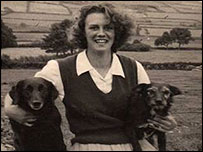 Elizabeth Gale aged 15 Elizabeth's D-DayThe 65th anniversary of D-Day this year will have special significance for Bridport author Elizabeth Buckler Gale who was 10-years-old in 1944 and living in Burton Bradstock. Help playing audio/video Bridport author Elizabeth Buckler Gale grew up on a farm in Burton Bradstock and was just 10-years-old in 1944 when the American soldiers involved in the D-Day landings were stationed in the village. The landings in Normandy, France, formed one of the greatest invasions of World War II and took place on June 6 1944. Before the attack Elizabeth has many happy memories of time spent with the American soldiers. She says: "[The American soldiers] came over here [to Burton Bradstock] in November 1943 and we had some of them for Christmas lunch. "They used to come and drink cider on the farm and enjoy themselves, and go to the pub with my dad. "Obviously they were all very young men, probably only in their twenties most of them. "[They] brought us lots of extra things such as biscuits and fruit. I think it was the first time I'd ever seen this fruit cocktail stuff that we all have nowadays, and of course lots of sweets, and my father did pretty well with cigarettes." 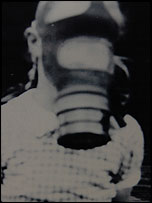 Elizabeth wearing a gas mask during World War II D-day in Burton BradstockElizabeth goes on to explain that this relaxed, joyful atmosphere soon changed on June 6 1944. She says: "All of a sudden the whole village was quiet. The had all gone and they had left me a puppy dog and it lived to be 15. "My parents kept the radio on, or wireless as it was called then, night and day, so that even though I was only 10, I was aware [of] what was going on." "The worst beach of all"The Americans Elizabeth's family befriended landed on what was considered, "the worst beach of all", during the Normandy invasion - Omaha beach. Elizabeth says: "I think it changed the village [Burton Bradstock], because we realised, or the adults certainly did, the sacrifice that they'd made, because that particular beach, of which I've done a lot of research, there were 2,000 of them dead. They landed at half past six in the morning and 2,000 were dead by mid-afternoon." 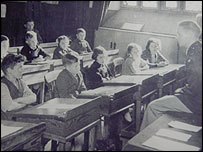 American soliders visit Elizabeth's school Long BillAlthough many of the soldiers Elizabeth knew were killed on D-Day, one man did come back alive. She says: "He'd been wounded and he told us that he'd lived in a tank for seven weeks. "They [the American Army] sent him back [to America]. We never heard from him again. "He was nicknamed Long Bill because he was a very tall fellow. "But in 1994, an American veteran came back to Burton Bradstock post office asking for my parents - who were long dead by then - and me. I hope it was Long Bill, but he didn't leave his name." 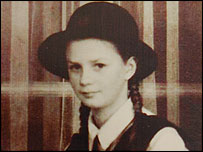 Elizabeth was 10 at the time of the D-Day landings Making sense of it allSince 1944 Elizabeth has visited Normandy many times and bought plenty of books, and has written a few of her own, about the D-Day landings in order to try and "make sense" of what happened. Elizabeth doesn't think enough people are aware of the events of D-Day. She says: "Even my own daughter didn't realise and she's grown up with me talking about it. She didn't realise what happened and how many thousands of Americans and our own troops, and from allied countries - Canada as well - lost their lives, [so] that we could be free." 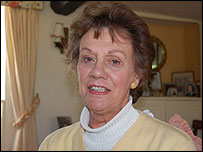 Elizabeth Gale as she looks today "Lest We Forget"One day Elizabeth hopes that the Dorset coastline will be as well known for its role in the D-Day landings, as well as for its status as a Jurassic World Heritage Site. She says: "All of this coast from even Cornwall and Devon, right along to Southampton and Portsmouth played an extremely important part in that particular part of the war [World War II]." Elizabeth Buckler Gale has written about her memories of D-Day and World War II in her latest book, The Dog Tags. Help playing audio/video last updated: 25/05/2009 at 13:04 Have Your SayShare your D-Day memories with us. Did you live in one of the areas where the troops were stationed? Should more people be aware of what happened? Edward McBride Neil Campbell SEE ALSOYou are in: Dorset > History > Local History > Elizabeth's D-Day 
| ||||||||||||||||||||
| | About the BBC | Help | Terms of Use | Privacy & Cookies Policy |

