Click here
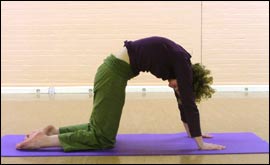
To try Emily Walker's virtual yoga class at home. |
Yoga is a Sanskrit word meaning union, the union of mind, body and spirit. There are various branches of Yoga, examples being: Jnana Yoga, whose focus is spiritual knowledge, Karma Yoga, to undertake selfless actions, without attachments to the fruits of those actions and Hatha Yoga, central to which is the practice of asanas (postures). However the objective of all yoga is the same; to develop a higher level of awareness, enabling one to be absorbed into the universal consciousness, (Brahman). In Sivananda Yoga there are five main principles:
1. Proper Exercise
2. Proper Breathing
3. Proper Relaxation
4. Proper Diet
5. Positive Thinking and Meditation. It is the first point, Proper Exercise, to which most people are introduced to in Yoga classes. A Yoga class will typically consist of a series of asanas (postures) and a period of relaxation to finish. The asanas not only tone and strengthen the body, but also regulate internal organs and systems. This in turn will have a positive effect upon your mind and body as a whole. Asanas will also help to develop good balance and concentration. Unlike many forms of western exercise Hatha Yoga helps to lengthen muscles promoting increased flexibility. Yoga practice is suitable for all ages as it can be adapted to suit all needs. However it is advisable if you have a medical condition to consult you doctor before attending a class and inform your yoga teacher prior to attending the class.
Written by Emily Walker |