Friday 12 June marks the beginning of the Women’s T20 World Cup, with 12 teams from across the globe set to battle it out to take home the trophy.
But whilst the players will pick up most of the plaudits, there’s a whole host of people required to keep the tournament running smoothly, from groundskeepers to scorers to the all-important umpires.
Amongst this year’s umpiring class is Anna Harris, who spends her hours away from the field working as a doctor for the NHS. And if a super-heroic dual identity wasn’t interesting enough, Anna made her name as an umpire alongside her mother, Yolanda.
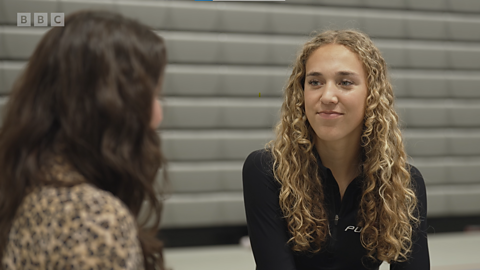
BBC Bitesize caught up with the pair to talk about their journeys in cricket, hopes for the future and what it takes to be a successful umpire.
Kimberley: Anna, Yolanda - you are a mother and daughter umpiring duo, where did your love for cricket come from in the first place?
Anna: I think it really started with me. So, it was a rainy day at primary school, as I remember it, and they just had some of the quick cricket, you know, the plastic bats lying around, and they gave us a go and I loved it. I'm pretty sure I came home to mum and just went, "mummy, I went to play cricket", and that's where mum signed me up for Chesham Cricket club, my first club.
Kimberley: Amazing. And what about you Yolanda? Did you get into cricket later on in life or were you inspired by Anna? Which way around was it?
Yolanda: Anna started it. Um, we went along to Chesham Cricket club and then they decided to create a women's team. So Anna was there training with them, and I could sit and watch the training or I could join in. So I joined in and that got me playing. So it was very much in middle age. Um, I was rubbish, I was an absolutely rubbish player. But I did like running around and making a lot of noise.
Kimberley: Yeah. And sometimes it's not necessarily about being amazing at something, it's about having fun and doing something that you're passionate about and enjoy. And since then, you've found this whole lease of life umpiring.
Yolanda: I'm a project manager in the city by trade, or I was and a bit of a control freak, and I just decided that umpiring was something I'd give a go at and see what it's like to be in charge of the match.
Kimberley: And cricket and umpiring is a sport that you can literally get into any age. As you guys have proven.
Anna: It's really nice that I grew up with cricket from a very young age and mum came to it sort of knowing about it, but really kind of embraced it from being a parent and watching the sport and loving it. And I think it's two really good examples of how you can join the game. You don't have to have played it and understood it from a young age.
Yolanda: It was a good thing to get into at the weekend. I worked in the city, so I had very long hours during the week and then being able to go and join in with Anna. I think what's really important is the fun element of it all. So, so long as you know the players are having fun and the umpires are having fun and the scorers are having fun. It just brings the whole thing together and creates a little bit of a community.
Kimberley: Absolutely. And there's more and more opportunities for women as well, crucially in the game. And I think something that was traditionally seen as a man's game for a long time, it's changing so much. What's it like for you guys seeing that, you know, from an umpiring perspective, but also just girls and women getting involved in the sport.
Anna: I mean it's amazing. A lot of the stats focus on women and girls participation and playing, which is amazing. There's been an explosion of women and girls playing cricket, and we hope that through that, from our sort of biased point as umpires and umpire tutors, that more people who are involved will then see these umpiring roles and step into it, and it always gets bandied around but if you can't see it, then how are you going to try and be it?
Kimberley: And if anyone's watching this and they think, I would like to do what Anna and Yolanda are doing, what would you say are the key attributes that are needed for a cricket umpire?
Yolanda: You have to stand for a long time, and you have to run quite fast backwards, and you do have to be able to duck. There's a lot of concentration, but again, that's a really good skill to have because it means you can stay really focused on, you know, what you're trying to achieve, but also a really good awareness of what's going on around.
Anna: If you try umpiring and you hate it at first I did and I gave it another go and I suddenly started loving it. And if it's not for you, there's so many other roles. But umpiring is fantastic because it's taught me so many transferable skills that I use in my career as a doctor.
Kimberley: And if we're looking ahead, sort of five, ten years from now. Where would you like the women's game to be?
Yolanda: We're not sort of thinking of it as women's cricket and men's cricket. It's just cricket and everybody can get in and enjoy it.
Anna: Hopefully we reach a point where there's parity between men's and women's competitions, and I'd love to see, you know, the fan engagement is incredible. Um, and let's just keep building on that momentum.
How to get into cricket
For Anna and Yolanda, the entry point to cricket lay at a very different time in life. Anna, now 27-years-old, first fell in love with cricket as a child, sparking up a passion for the sport after a game of quick cricket in primary school. Coming to the game as a player, Anna initially took up umpiring as a means to better understand the rules of the game, as well as to earn a bit of pocket money.
By contrast, Yolanda came to cricket later in life, describing her childhood memories of the sport as those of "interminable test matches on BBC Two". However, as Anna's passion for the sport grew and Yolanda found herself watching an ever-increasing number of matches, she decided to get involved herself. As with Anna, Yolanda initially came to the game as a player, but found that the skills she accumulated working as a project manager better leant themselves to umpiring.
Yolanda began umpiring Anna's matches (including one notable example, where she called Anna as 'out' during a match on her birthday), before the two formed a reputation as a dynamic umpiring duo on the Thames Valley circuit.
Anna told Bitesize: "I think it's two really good examples of how you can join the game. You don't have to have played it and understood it from a young age."
The increasing accessibility of cricket was something the pair were keen to emphasise, whether that's a growing number of women and girl's umpiring courses, or the availability of visually impaired cricket - which Yolanda also umpires.
But for anyone out there interested in taking up a role in cricket, be it in an on-field or behind the scenes capacity, what advice would Anna and Yolanda give?
How can you become an umpire?
With over a decade of umpiring experience between them, we asked Anna and Yolanda the skills and attributes needed to make a great umpire.
"Good sense of humour, patience… a good sense of humour!", Anna told us, echoing Yolanda's thoughts about the importance of having fun whilst you umpire.
But alongside the skills required of a good umpire, Anna and Yolanda also explained some of the transferrable skills you can build up whilst umpiring.
"[Umpiring's] taught me so many transferrable skills I use in my career as a doctor," Anna explained. "So much in terms of teamwork, decision making under pressure, communication skills, which would serve you so well in all facets of life."
Similarly, Yolanda explained how umpiring has taught her to be more resilient after making a mistake. "What I've learnt, actually, the hard way from umpiring is not to get fixated when I think I've got a decision wrong, but to go through and learn from it."
What will the future of cricket look like?
With the Women's T20 World Cup close on the horizon for Anna, we asked about the hopes she had for the upcoming tournament. Besides an England win (obviously), Anna's main hope was the continued increase of engagement we've seen in the women's game since the inaugural Women's T20 World Cup in 2009.
As with the 2009 edition, this year's competition is hosted on domestic shores, with Anna hoping the England Women can inspire the nation in the same way as the Lionesses and Red Roses.
As far as more long-term hopes are concerned, both Anna and Yolanda share a single unified view - a future where the delineation between the men's and women's game is irrelevant and it's simply just cricket. For Anna, this means the "best officials umpiring the best games at the top level," irrespective of gender.
Yolanda held a similar sentiment, earmarking news stories about female officials umpiring games in Men's Premier League club cricket, saying: "In five years time it shouldn't be news, it should just be the best people do the job and it doesn't matter what gender you are."
Where can I read more about the Women's T20 World Cup?
If you've come down with a case of Cricket Fever, there's all sorts to keep you engaged right across the BBC. BBC Sport Cricket is a one-stop shop for all things cricket, you can keep up with the tournament live or on-demand with BBC iPlayer, or to learn more about cricket check out these great resources from BBC Bitesize.
If you want to read more about incredible women making waves in the world of cricket, check out the ECB's 'The 53', which celebrates women making an impact on the game at every level.
This article was published in June 2026
Women’s T20 World Cup: Meet the 18-year-old taking the cricket world by storm
Tilly Corteen-Coleman sat down with BBC Bitesize to discuss all things cricket, T20 World Cup and how she juggles her cricket career with education.
World Cup 2026: How do multilingual nation players communicate on the pitch?
BBC Bitesize spoke to football journalist Valentin Schnorhk to find out how multilingual national footballers communicate.

What is it like to be the youngest player in the Netball Super League?
BBC Bitesize spoke to London Pulse's Gracie Smith to find out more about her love of netball and upcoming GCSEs.