On Wednesday 17 June, people from across the UK will come together to mark National Thank a Teacher Day. The annual campaign aims to highlight the brilliant work and dedication of teachers, teaching assistants and support staff from across the nation.
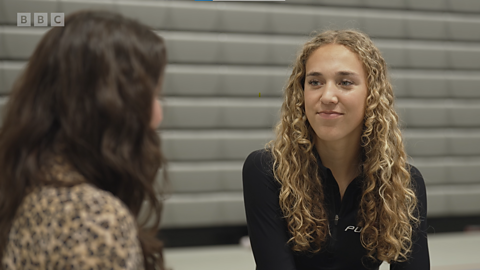
To celebrate, BBC Bitesize spoke to celebrated children’s author, poet and playwright Sir Michael Morpurgo to find out what teaching means to him.
Kim: Michael, you're President of the Teaching Awards Trust and of course, National Teacher Day is coming up on the 17th of June. Why is it so important to celebrate teachers?
Michael: Because they play a hugely significant part in our children's lives. I mean, they are the first adults they come into contact with on a regular basis, and it's from those adults that they learn so much.
Kim: One thing that you always speak about as well is how books and stories can make you feel. And I think people sometimes can be put off about what if I don't say this quite right? Or what if my spelling is not quite correct? And you've spoken in the past that your spelling hasn't been great at times and-
Michael: Still isn't.
Kim: Yeah, and it's so great that, you know, you're such a celebrated author. What advice-
Michael: I couldn't even spell celebrated.
Kim: Well, there you go. There we go.
Michael: I'm thinking about it now.
Kim: But you are celebrated. What advice would you give to a young person that would like to be a storyteller when they grow up, that they think are maybe not that good at spelling?
Michael: It's the same advice that I give to a teacher who has children, and there will be plenty of children like that who got ideas, who've definitely got feelings and all these things, and they want to express them. That's really so important for a teacher to enable a child to do that. What you do not want to do is to put obstacles between them and achievement. There is fear in this world, but leave it outside the school gates where it belongs. That should be the safest place. The most important thing when it comes to writing and reading is that they end, walking out of that school, able to express themselves either orally or on paper, and have to have developed to such an extent as a reader that they're going to go on doing it. Whether they're going to study English Literature is not important.
Kim: Yeah, if you get that right, it can make a huge difference. And Michael, you've obviously lived a full and brilliant, lively life and you've achieved so much. I wonder in amongst all that, do you have a moment of achievement that sticks out for you or a moment that is a real career highlight for you?
Michael: It actually only happened two days ago. I was down in Sussex and a lady in her 50s came up and said - I was signing a book - she said, I don't need a book signed, I've got your books. She said, I just wanted to say something to you. And she said, you taught me when I was nine. And you knew that, she said so, how much a particular book, in her case, it was a book of mine called The Butterfly Lion. She said I love that book, and I read it at least three times a year even now, and I'm the wrong side of 50. And then that gives you a huge sense of it really is worthwhile. It's not an achievement.
Kim: It's not so much a physical, tangible thing. It's more how you've made somebody feel, isn't it? And that lasting impact that you've had on that person, which is what, you know, the whole point is. With that in mind, then, Michael, if we, you know, through everything you've achieved, you're 82 now, if you're looking back across your life and if you were able to go back in time and speak to little Michael when he was at school, what do you think you would say to him?
Michael: Well, I wouldn't hand out advice. I would, though, I suppose, think to myself, I'm lucky in the balance of things. I've just been really, really lucky all the way through. People I met and my children and my grandchildren, they're now, what sustained me and reminds me of how I was then, which is why I'm not going to give any advice to my young self, because I don't give any advice to my great grandchildren. I don't think they want it, you know? They just want you to be grandpa. Not to pass on pearls of wisdom is not what they like. They'd rather untie your shoelace.
Kim: Well, that is a perfect place to leave it, Michael. Thank you so much for talking to me.
Michael: Nice to be here. Thank you.
Kim: Thank you.
Making an impact in the classroom
As President of the Teaching Awards Trust, Michael understands the weight of celebrating teachers and school staff for their hard work and dedication. “They play a hugely significant part in our children’s lives,” he told us. “They’re wonderful and they’re working their socks off.”
Before becoming the author of beloved children’s books such as War Horse, Private Peaceful and The Butterfly Lion, Michael was a teacher himself. The former Children’s Laureate taught at primary schools during the early 1970s. “That’s why I know it’s important to support the teachers that we have,” he explained.
Against the backdrop of social media and AI, the acclaimed writer believes the role that teachers play is crucial. “People are more important than ever, relationships are more important than ever,” he said. “One of the problems we've had in recent years is the distance we find ourselves from other people.”
Michael, now 82-years-old, also highlights the benefits that teachers can bring to the children who may be facing difficulties in and outside of the classroom. “Teachers can be the ones to bring that light to a child for the first time.”
Helping others find their voice
Passionate about helping children and young people build a genuine love of reading and writing, Michael emphasises the need to nurture creativity and storytelling skills.
He told BBC Bitesize, “I've had a lot of experience as a teacher in the classroom, which I loved. But even then when I was in the classroom, I used any excuse to get them out of the classroom to spend a good part of their week doing what I could outside.”
For him, this meant encouraging children to go outdoors and find inspiration that they could channel into creative writing. “I loved to encourage children to find their own voices, and they’ve all got magical voices because they’ve all got magical minds.”
Aside from his teaching career, Michael and his wife Claire founded a charity in Devon called Farms for City Children, which invites children from cities to experience life in a farm environment. The charity, which was set up in 1976, is still thriving today and now has three farms across England and Wales which have welcomed more than 100,000 children and teachers over the years.
Having had such a long and successful career as one of the UK’s most beloved authors, is there a particular moment that stands out as a highlight for Michael?
“It actually only happened two days ago. I was down in Sussex and a lady in her 50s came up to me at a book signing […] and said you taught me when I was nine.”
The former pupil explained that they were a huge fan of Michael’s novel The Butterfly Lion and read it at least three times a year. Now a mother and grandmother, she told Michael that she hoped to pass the book on to this new generation of family.
“That's why it is really important to thank a teacher,” Michael said. “I know the teachers who've made a difference to me.”
Send a free personalised thank you card with Thank a Teacher Day 2026
This article was published in June 2026

Meet the Mini London Marathon winner balancing athletics with his GCSEs
BBC Bitesize sat down with Sheffield's Hallamshire Harriers runner Thomas Thake to discuss athletics, resilience and GCSEs.

How will teenagers react to iconic David Attenborough moments?
To mark David Attenborough's 100th birthday, BBC Bitesize invited the students to react to some of his most memorable animal encounters.
What is it like to be the youngest player in the Netball Super League?
BBC Bitesize spoke to London Pulse's Gracie Smith to find out more about her love of netball and upcoming GCSEs.