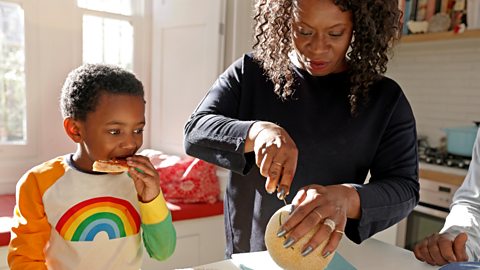
“Some people assume you have to be married. Or have been in a stable, heterosexual relationship for a very long time. None of these things are true.”
Myths and misunderstandings like these could be putting people off their dream of joining the 52,000 foster families already proudly caring for children across the UK.
Bitesize Parenting caught up with Sarah Thomas, Chief Executive Officer of The Fostering Network, to get the facts for anyone hoping to start their own fostering journey.
What types of people become foster carers?

From younger adults who’ve worked with children in health or education, to empty-nester retirees who simply want to keep on caring – there’s certainly no one type of foster parent.
As leader of the UK’s foremost fostering charity, Sarah knows just how diverse the community is: “For so many people it's a way to have a family,” she says.
Sarah says: “There are a growing number of people who decide ‘I'm not going to have biological children – I’m going to be part of a child's life in a different way.’ We have many single foster carers. We support same sex couples, non-binary individuals; lots of people thinking about how to have children in a different way.”
What are the first steps to fostering?
The fostering process has changed a lot over the past 20-30 years, and there’s now a range of defined paths. In Sarah’s words: “Try not to get too complicated”.
“My starting advice to anybody is always to phone Fosterline. There’s a Fosterline for each of the four countries in the UK; they’re run by the government, and anyone can call. You can ask all the questions that you’d really want to ask somebody – anonymously, if you like.”
Sarah warns against relying on ad-backed search engine results and hoping for the best. “It's important to think about who you speak to and how you become a foster carer – in the right area where children actually need you.
“I’d advise speaking to an independent organisation like us: we're not aligned with anybody. We can just answer questions and help people.” You can find details on how to contact the Fosterline advice line at the bottom of this article.

Do I need training to be a foster parent?
The Fostering Network developed the UK’s recognised pre-approval training, Skills to Foster, which is delivered by fostering agencies.
Open to anyone, it’s a fully funded, three-day training programme offering would-be carers a real-world understanding of what taking the next step looks like.
“You can't just suddenly decide ‘I want to be a foster carer’”, Sarah says. “You need to have a better understanding of what it is, because you can’t really know. Most fostering services will say do this course first.
“You'll have a much better idea about who the children and their families are, and crucially, is it right for me?”
Joe Swash: Teens in Care - How can I get involved in fostering?
Do foster carers get paid?
Foster carers are paid a fostering allowance to help cover the costs of looking after a child. In addition, some carers receive extra payments – often referred to as skills or fee payments – in recognition of their time, experience and expertise.
Because fostering allowances are set locally, the amount a carer receives can vary depending on where they live, as well as the age and specific needs of the children they look after. However, all foster carers should receive at least the National Minimum Allowance for their country. According to Gov.uk, the minimum you would earn as a foster carer is usually between £170 and £299 a week.
Do foster carers pay council tax?
Council tax rules for foster carers differ in each nation of the UK. About one in four local authorities in England currently provide some form of council tax exemption, with 16% offering a full exemption. However, The Fostering Network are campaigning for all foster parents to receive council tax exemption.
How long does it take to become a foster carer?
The recommended timeline from enquiry to approval is between four to six months, but this is only a guide. Prospective foster parents can expect police, medical and reference checks as part of a rigorous assessment process.
Sarah says: “You can't really beat about the bush here: this is caring for other people's children, in your home with the front door closed.” She points out: “What would you expect the assessment to be if someone was going to care for your child? It has to be in-depth. And you'd want it to be for those children.”
Sarah also says a parental learning process needs to be built into the timeframe: "What foster children need is different to birth children. They've been through trauma. They need a different type of parenting. We need people who are open to learning what they need from adults, rather than bringing their preconceived ideas of parenting.”
Do I need a big house to foster?
A large property isn’t necessary for fostering, but it’s important every child has a safe, welcoming and private space. Sarah advises: “You've got to have that spare bedroom and need to make sure that children will have enough space, right throughout the home. If you don't have a spare bedroom, if you don't have anywhere for a child to sleep, that's a challenge."
However, there are other ways of supporting care-experienced young people and children, like becoming an independent visitor or childminder.
How is fostering different to adoption?
Unlike adoption, a foster child is never permanently or legally separated from their family. The Fostering Network says the majority of children in the care system will at some point return to their family, or even reopen those connections during adulthood.
So anyone coming forward to foster needs to think about how they’d support the whole family.
"Many, many people are struggling to raise their children for a number of reasons,” says Sarah. “You really need to be able to work with these individuals and see these parents as equal members of society, who’ve had challenges that you maybe haven't yourself. It's hard to walk in their shoes and to see that, but you really have to try."
Sarah explains: “A child will only ever feel settled, loved and secure if you can also show respect and demonstrate that through your actions and words for their family as well.”
What support is there for foster parents when you become one?
When you become a foster parent, you aren't doing it alone – there is a whole network of support there to help you. From peer support and mentoring, to dedicated social workers and charity support. Foster carers can also phone the Fosterline help line for advice, support and signposting.
- England: 0800 040 7675
- Northern Ireland: 028 9164 1152
- Scotland: 0141 204 1400
- Wales: 0800 316 7664
The Fostering Network are there, whether you're starting your journey, or whether you're on it.

Head to CBeebies Parenting for advice about foster care and personal stories of fostering younger children:
Fostering under-fives: What you need to know about foster care.
More from BBC Bitesize Parenting…
School anxiety and refusal: How to help your child get through tough times
Tips to help parents understand emotionally-based school avoidance and offer support to their child.
Are you a sandwich carer?
For many parents, looking after kids is only part of their responsibility. We ask experts and carers for their experience of juggling life as a dual carer.

Five ways to manage your wellbeing as a parent
How parents can look after their mental health alongside all of their responsibilities.