On 6 February 1952, Queen Elizabeth II came to the throne, following the death of her father, King George VI.
Technology, entertainment, lifestyle and many other parts of life have been totally transformed since then.
Let’s travel back in time to 1952 and discover what other significant events happened around the world that year.
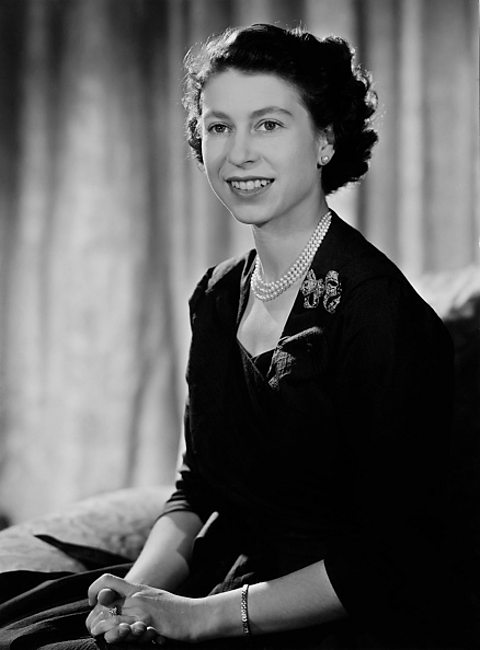 Image source, Paul Popper/Popperfoto
The day the Queen took the throne
Princess Elizabeth and Prince Philip were on a tour of Kenya when they received the tragic news that the Princess's father, King George VI had died after a long battle with illness.
King George is remembered as a very courageous and inspirational figure. Alongside his wife Queen Elizabeth, the King remained at Buckingham Palace during World War Two and visited several bombed areas, as well as workers in factories. On a personal level, he overcame his stammer – a story which inspired the 2010 film The King’s Speech, in which we hear the King deliver a moving speech to the British people at the outbreak of WW2. The young Queen had a lot of responsibility as a monarch in a rapidly changing world.
The first woman to single-handedly sail across the Atlantic ocean
It was a year when women were making positive headlines across the world. At 39 years of age, Ann Davison made history by becoming the first woman to single-handedly sail across the Atlantic, with her journey across the ocean beginning on 20 November 1952.
Just a few months earlier, in May, the amateur sailor had set out on a quest to travel the world by boat. She departed from Plymouth, on her boat ‘Felicity Ann’. Davison overcame many challenges; storms, her relative inexperience and isolation. But on 23 November 1953 she completed her undertaking when she landed in New York.
Her boat was later donated to the Northwest School of Wooden Boatbuilding in Washington, United States.
Image source, Paul Popper/Popperfoto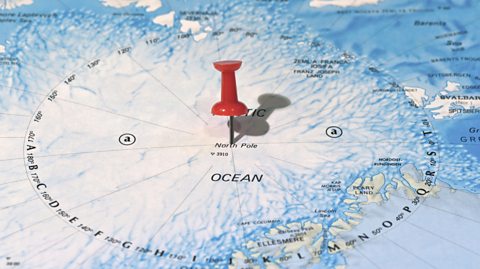 Image source, Istimages
The first plane to land on the North Pole
To follow on the trend of firsts, Arctic explorers Lieutenant Colonel Joseph Fletcher and Lieutenant Colonel William P. Benedict became the first people to land an aircraft at the North Pole in the spring of 1952.
They may also have been the first people to definitely set foot on the exact geographical point on the North Pole, but there are earlier disputed claims from at least two other polar explorers. American explorer, physician and ethnographer Dr Frederick Cook claimed that in 1908 he was the first, while Matthew Henson and Robert Peary claimed that they were the first in 1909. Henson and Peary were later found to be closer than Cook as they were somewhere between 30-60 miles away from the North Pole.
The confusion arose from being able to pinpoint where the North Pole was actually located, as it's essentially a floating piece of ice. And to make matters even more confusing, explorers didn't have the resources that we have today, so navigating could be a little tricky.
Interesting fact: Matthew Henson was a distant relative of Hollywood actress, Taraji P. Henson.
Image source, Istimages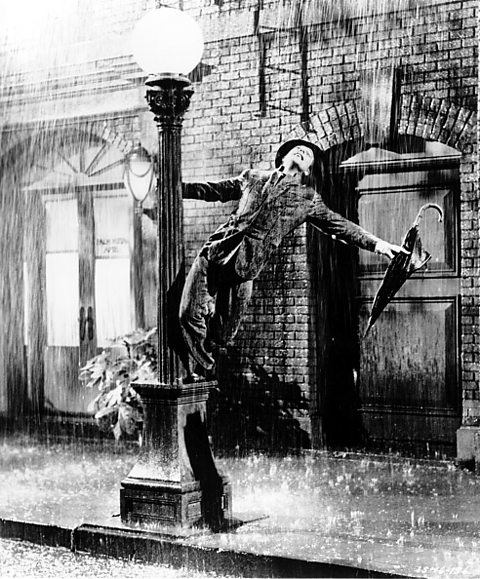 Image source, Michael Ochs Archives
Singin' in the Rain makes its box office debut
And speaking of Hollywood, 1952 marked the joyous premiere of the film Singin' in the Rain. It was a classic romantic comedy that provided social commentary on the advent of ‘talking pictures’ and what Hollywood was like in the 1920s. Singin' in the Rain quickly became a feel-good family favourite with its jazzy numbers and comedic actors; Gene Kelly, Debbie Reynolds, Donald O’Connor and Jean Hagen to name a few.
To date it has pulled in $7.2 million (£5.3 million) and there have been numerous tributes since, including a stage musical adaptation.
New kid on the block: NME newspaper makes its debut
The glory of all things musical couldn’t be celebrated enough. On 7 March 1952 the New Music Express (NME) newspaper was born – years later it became a magazine.
You could buy a copy of the paper for sixpence.
NME was the first magazine to introduce the UK singles chart line up. They would seek out emerging talent and highlight the greats, from Vera Lynn to Frank Sinatra.
You might be more familiar with the digital magazine format which features many of the musical icons of today; Adele, Lana Del Rey or Kae Tempest.
This article was published in February 2022 and April 2026
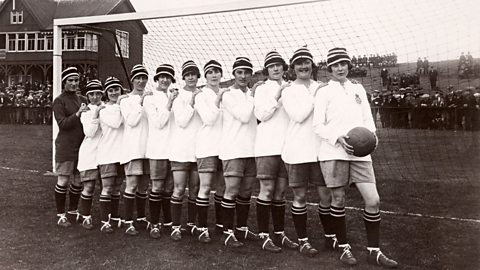
Image source, Michael Ochs ArchivesWhat impact did WW1 have on women's football?
A big one, as it turns out.
Five movie stars who’ve never won an Oscar
Sir Ian McKellen and Amy Adams are among those who have never taken home an Oscar.

The Seven Wonders of the World quiz
From the ancient to the modern, how much do you know about these famous landmarks?