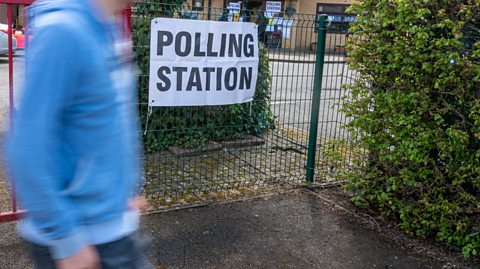
Whether it’s taking selfies in voting booths, being able to vote in two places at once, or conspiracies about using pencils, socials are rife with various claims and myths about elections.
With the local elections coming up, and the prospect of 16-year-olds being able to vote on the horizon, BBC Bitesize Other Side of the Story asked the Electoral Commission, who oversee elections held in the UK, about the claims they often hear and the truth behind them.
What are local elections?
Local elections are when voters choose councillors to help run their towns and cities. It's different to a general election where we choose the MPs who will represent our area at the Houses of Parliament. For example, a councillor is a good person to approach if you have concerns about when your bins are being collected or if your school needs new play equipment. An MP can help if you have concerns about a national issue and you want your opinion heard in Parliament where new laws and taxes are decided.
New laws are in the process of being introduced - (they have to get through Parliament before anything’s official) - that could see young people aged 16 and 17 able to vote in the next general election.
Can people under the age of 18 vote in UK elections?
It depends where you live. There may be a bill running through Parliament to lower the voting age for the next general election, but there are parts of the UK where 16 and 17-year-olds can already take part in official votes.
The Electoral Commission said: “Sixteen and 17-year-olds can already vote in the Scottish Parliament, Senedd [the Welsh Parliament] and local elections in Scotland and Wales, and many will be on 7 May."
Can you take a selfie in a polling booth?
You can't. The first time you vote is a big milestone in your life, like your first day at secondary school, or even your first driving lesson. The temptation to take a quick pic before you mark your cross on the ballot paper could be strong but hold that thought.
The Electoral Commission says that “you shouldn’t take photos inside the polling station as it might put the secrecy of the ballot at risk.
“You are more than welcome to take photos outside the polling station and share them on social media to encourage your friends and family to vote.”
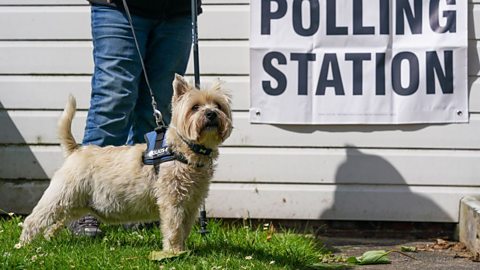
If you’ve ever wondered why #dogsatpollingstations trends on an election day, this is one of the reasons. People can’t take photos inside, so a shot of their pooch outside is a good reminder of the day - without breaking any rules.
Do I have to use a pencil to mark my ballot paper?
No. When you step into the voting booth at the polling station, chances are you’ll also find a pencil waiting for you so you can fill in your ballot paper.
This may have led some people to believe that pencil is the only authorised way to mark your paper - but that’s not true. It’s also led to some conspiracy theories appearing online that papers marked in pencil are altered later on in favour of another party. In the run-up to the 2016 referendum on the UK staying in the European Union, there was a campaign with the hashtag #usepens by people who were concerned their pencil marks would be erased.
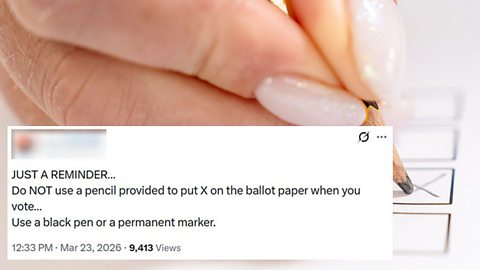
According to the Electoral Commission “there is nothing to stop a voter from using a pen to mark their vote - there is no legal requirement for ballot papers to be marked with a pencil.
“The reason that pencils are traditionally used is partly historical and practical: with ink pens there is always a risk that they may dry out or spill. Also, ink may cause some transfer of the mark the voter has made on the ballot paper when they fold it, thus potentially leading to a rejection - it may look like they have voted for more options than they are entitled to.”
Can someone be registered to vote in two places at once?
If you’ve moved away to study at college or university and an election is called, you may be wondering where you’re allowed to vote. Are you still registered in your home constituency, the one where you’re now studying, or both?
It’s a bit of a grey area, but the Electoral Commission said: “In certain circumstances, voters may be able to register to vote at two addresses, but can only vote at one place in a general election.
“At local elections, it is possible for some voters - such as students - to vote in two places.”
The Electoral Registration Officer decides in each case if it’s OK for someone to vote from two different addresses, and it depends how much time people spend at each of those addresses. There’s more information available at the Electoral Commission website.
Where is the best place to look for election information?
It is always best to look to trusted sources when you have questions about anything official, such as elections. You may see things on your socials that looks genuine but it may be misinformation - false news that people have shared by mistake, or disinformation - which has been shared on purpose. You may also have to consider party political bias in posts about elections, so make sure it comes from an independent source - such as the Electoral Commission, which doesn’t work on behalf of any party. Most of all, when you do go to vote, make sure where you place the ‘X’ is your decision and yours alone.
This article was published in April 2026

Not sure if the news you’re seeing on social media is true or false? Can you always tell if the things you see online are real or fake?
Learn how to get the other side of the story with our quizzes, videos and explainers about media skills and viral trends including popular food myths.
Concert ticket scams you'll find on social media and how to avoid them
Advice if you're planning to see BTS, Raye, Gorillaz or any big names on stage this year


Other Side of the Story
Back to our homepage for more quizzes and explainers about fake news, viral trends and media skills.