This article was first published in June 2021
Learning Disability Week 2023 is an opportunity to understand, listen to and celebrate the experiences of individuals with a learning disability.
What is a learning disability?
The phrase 'learning disability' describes a broad range of abilities, and different people will have different experiences.
Someone with a learning disability may need support with certain activities - for example, a student with a learning disability may find reading or writing tricky.
Overcoming challenges with a learning disability
We've asked actor and Mencap ambassador George Webster to tell us about what school was like for him, what he enjoyed and how he overcame some of the challenges he faced.
George's experience at school with Down's syndrome
I loved going to secondary school because it was so exciting and I made so many friends. It was great to see some of my primary school friends going to the same school. In my secondary school, they involved and included me in everything.
I enjoyed all the subjects at school, especially Food Technology, Media, Religious & Philosophical Studies and Drama. I loved these subjects because it was interesting learning about different food groups, religious views and different opinions on issues in the world, media terminology and different types of theatres.
We were all surprised that I was really good at food technology. My mum, dad, and sister loved most of the food I cooked at school!
I tried to be as independent as possible at school. There were many challenges that I faced at my secondary school. Throughout my time at secondary school, I overcame my challenges.
5 myths about Down's syndrome
In the video below, George debunks these 5 common myths about Down's syndrome:
- People with Down's syndrome are always happy.
- People suffer from Down’s syndrome.
- People with Down’s syndrome all look the same.
- People with Down's syndrome cannot be independent.
- People with Down’s syndrome always die young.
George debunks five myths about Down's Syndrome
I call myself George, because that is who I am. Not Down's George.
Hi, I'm George. I'm 20 years old and have Down's syndrome. Down's syndrome is a genetic disorder where we have an extra chromosome which can lead to health issues.
There are a few things that I do find there, but there are lots of things I can do!
Myth: People with Down's syndrome are always happy.
Hmmm, no. That is not true! People with Down’s syndrome have emotions and feelings like every other person.
Myth: People suffer from Down’s syndrome.
No! That’s not true.
I have an amazing life, it’s been very positive. I loved going to school. I went to two local amazing schools. I had support at both schools which helped me with my education. I got GCSEs and an A level equivalent in BTEC Sport Level 3.
I was part of the student council, both at primary and high, which was loads of fun.
I also performed on the stage, and made loads of friends at both schools.
Myth: People with Down’s syndrome all look the same.
I do not look like my friends like Lauren and Louise. We’ve all got talents and we are all unique.
Myth: People with Down's syndrome cannot be independent.
We can be independent, sometimes with help.
My proudest achievements are: dancing at the national final of YOU dance, being in a short film, award-winning S.A.M, Mencap ambassador and parkrun ambassador and being part of the Talent Hub.
Being best man at my best friend’s wedding was… so fun! I loved it. I was so proud. And proud to call him my mate. Thank you to my mate, thank you so much.
Don’t let anyone tell you that you cannot do anything because we can do things.
Myth: People with Down’s syndrome always die young.
Hmm… not now they don’t.
People without Down’s syndrome can make the world more inclusive by not judging us, making assumptions of us, because we exist, and we need to be treated equally and with respect.
Thank you for all watching this video.
George's experience of school with a learning disability
I needed extra support in lessons and with exams. I was rubbish at science so I didn’t do it in the end and used the extra time to focus on other important subjects such as Maths and English.
As I was littler and could be slow, I had help getting round a massive school when I was younger, and had first access to the canteen at lunchtime – so it wasn’t all bad! In cycling club I had a trike as my balance is off.
Answering questions in a test was a challenge because I found it hard to keep up with the time to write down my answers so I asked for help from my SENCO (Special Educational Needs Coordinator) to give me extra time in exams which helped me with this challenge.
The people who helped me to overcome my challenges were all my mates and the terrific staff.
I had amazing support from Jodie from years 7-9, Vicky for year 10 and Alice for year 11 to achieve my goals at school. They were part of the lessons that I took part in and we were good buddies together. We worked on things in my Education Health and Care Plan. This is a document explaining a student's special educational needs, what support they need and what they would like to achieve.
They also helped me in my exams, mostly reading the questions and sometimes writing down the answers I dictated. In English and for Maths I had to do the writing myself but had extra time.
I went to revision classes in the summer holidays of GCSE as well to prepare myself for the exams with the teacher helping us. This really helped me. So did my Mum who did lots of maths revision after school.
Getting to school meant I also needed to do travel training to ensure I could walk to school and back home safely, and Antony was my trainer. This was a big step for me.
I got a lot of GCSEs and BTEC qualifications at secondary school, including an A in Food Tech and a BTEC Level 2 double Distinction in Sport. I then went on to do BTEC Level 3 Sport and achieved double Distinction.
I felt super happy and chuffed for myself. When I got my Maths after three times of trying, my mum had a cry.
I was also super proud to be awarded the most improved student award and a sport recognition award which was presented by Alistair Brownlee.
I was also involved in different after school clubs such as choir, cycling and cooking. There were many performances that I took part in such as Into the Woods, Grease and An Inspector Calls.
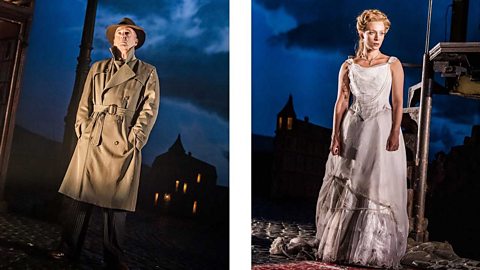
An Inspector Calls: What would you ask the actors?
An Inspector Calls actors answer questions from GCSE students.
Lucy Edwards: My disability, my career and me
TikTok influencer and journalist Lucy Edwards gives the low down on her career.